Air Force Museum
Flights to High Altitude
At high altitude, air pressure and temperature fall. Pilots receive less oxygen, engines produce less power, instruments can behave differently, and cold threatens fuel, oil, batteries, and the human body. Record attempts made these limits measurable.
In depth
Human physiology and engine performance
Oxygen equipment, warm clothing, sealed or pressurized spaces, superchargers, careful weather planning, and better instruments emerged from repeated experiments. High-altitude flight was therefore both an engineering challenge and a study of human physiology.
History & service
During World War I, the Air Service began making test flights at high altitude. On Sept. 18, 1918, Capt. Rudolph W. "Shorty" Schroeder set a world record of 28,900 feet in a Bristol airplane from McCook Field. In 1919 he established three more world altitude records, and on Feb. 27, 1920, in a LePere airplane fitted with a General Electric turbo-supercharger, he reached a world-record height of 33,114 feet. When he removed his goggles to change oxygen flasks in order to continue breathing in the rarified atmosphere, the minus 63 degree air temperature immediately froze his eyeballs.
Schroeder passed out from the lack of oxygen and carbon monoxide poisoning and the LePere plummeted nearly six miles in two minutes; at the very last moment, he regained consciousness and pulled the plane from its dive. Although he was almost totally blind, Schroeder was able to locate McCook Field and land safely.
Following the injury to Schroeder's eyes, the project for testing turbo-superchargers was assigned to Lt. John A. Macready. For the next six years, Lt. Macready flew all the tests, routinely climbing higher and higher, first in the LUSAC 11 and, beginning in October 1924, in the XCO-5, an improved high-altitude test plane.
During these tests, Macready set various world altitude records; the highest he flew in his open-cockpit plane was an indicated 40,800 feet. On practically every flight, he encountered some kind of emergency, such as the supercharger overspeeding and exploding, engine failure or cooling system freeze-up, or a propeller flying off its shaft. For courage and zeal in the face of unknown dangers and extreme hardships, Macready was awarded the Mackay Trophy for 1921.
It was not until World War II that the full benefits of these high-altitude test flights were realized, when planes such as the B-17, B-24, B-29, P-38 and P-47 were so successful in carrying the war to the enemy at high altitude. They all used General Electric turbo-superchargers based upon those primitive models tested and constantly improved in the 1920s and into the 1930s.
Details that tell the story
Lower air density reduces both oxygen availability and engine power · Temperatures can fall rapidly with altitude · Supercharging helps engines maintain power · Oxygen systems require careful operation and redundancy
A life-support system with wings
As altitude increases, the environment that supports ordinary life becomes less forgiving. Lower pressure reduces the oxygen available to the body. Cold, decompression, and the consequences of an emergency demand specialized equipment. A pilot or balloonist therefore depends on a system that includes the cabin, clothing, oxygen supply, communications, and a means of returning safely.
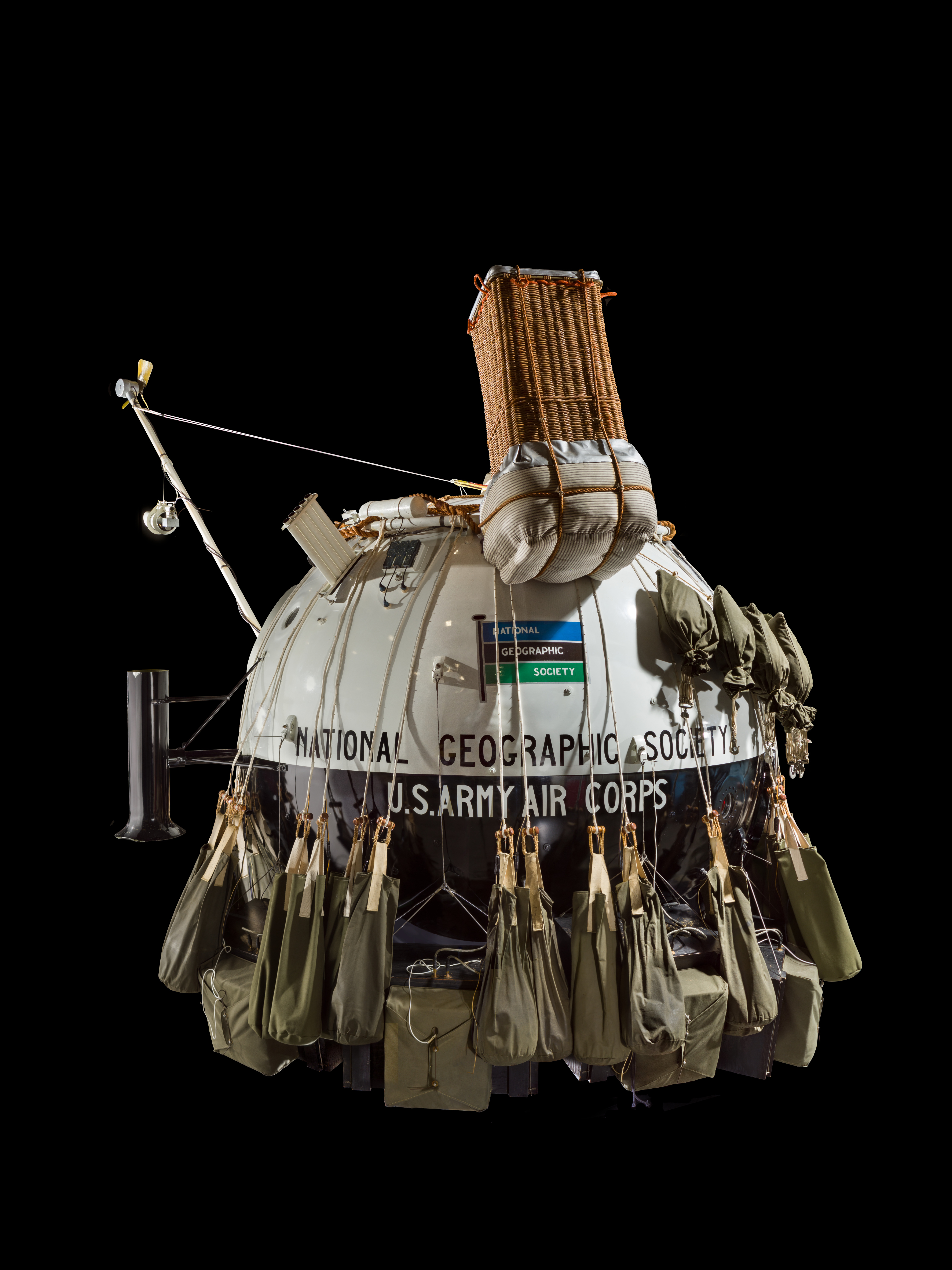
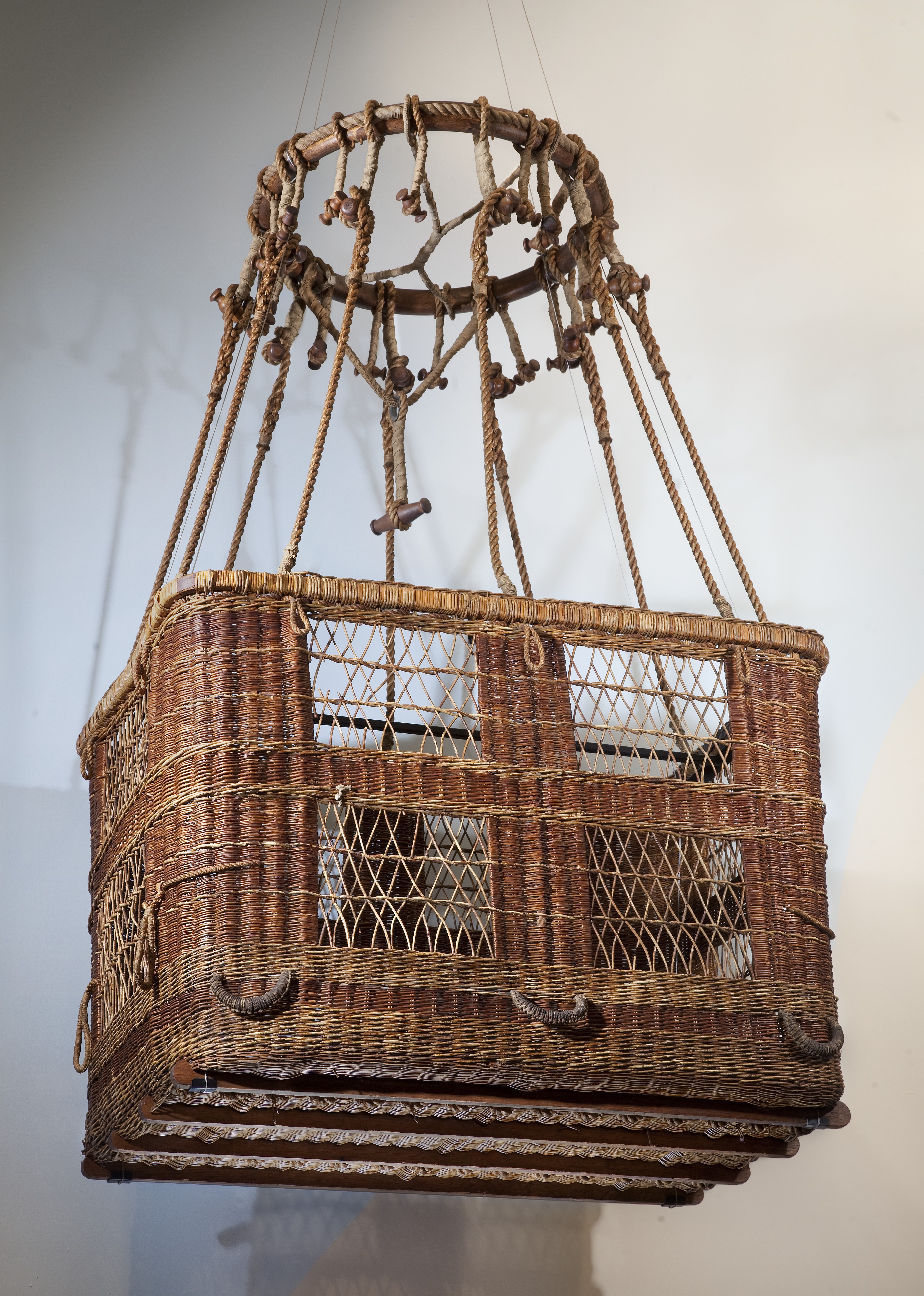
High-altitude exploration developed through balloons as well as airplanes. Balloons could carry instruments above much of the atmosphere, while aircraft offered different combinations of speed, control, and range. Pressure garments and enclosed gondolas turned the occupant's immediate surroundings into a small protected environment. The same broad problems later followed people into space.
These objects also reveal the limits of celebrating altitude as a number alone. A record flight had to preserve its observations and bring its crew home. A reconnaissance mission had to support useful photography and dependable navigation over a long route. The suit, instrument, or engine in a display case may look secondary to the famous aircraft, but it made the mission possible. Comparing balloon equipment, high-altitude aircraft, and spacecraft connects a century of efforts to keep people functioning where an unprotected body could not survive.