Air Force Museum
Four-Engine Bomber
The Boeing XB-15 began as a long-range 'super bomber' concept with a 149-foot wingspan. Its enormous airframe promised range and payload, but available engines could not provide the performance the design required. The aircraft became a research and transport platform rather than a production bomber. It demonstrates that technologies mature at different rates: structures, aerodynamics, engines, fuels, propellers, tires, and runways must advance together for a large design to become practical.
In depth
History & service
In the summer of 1935, the Boeing Airplane Co. unveiled its Model 299, a remarkable four-engine, high-speed, long-range, heavy bomber which was eventually designated the B-17 Flying Fortress. This plane, although destined to change the complexion of aerial warfare, initially failed to convince the Army's General Staff of its merits and capabilities.
As a result of the General Staff's decision, only 13 YB-17s and one YB-17A were ordered by mid-1937 as compared to 133 B-18s and 177 B-18As. The Air Corps was determined to prove the value of the four-engine B-17 with this handful of service test planes. It flew its YB-17s at every opportunity over the U.S. and even scheduled good will flights to South America to demonstrate the long-range capabilities of the plane.
It eventually proved its point, and by the end of 1938, contracts for 39 additional B-17Bs were awarded. In addition, a new four-engine bomber, the Consolidated XB-24, was ordered on March 30, 1939. At the time World War II began in Europe in September 1939, the first B-17Bs were beginning to come off the production line.
Although the Boeing B-17 was to gain greater fame, Boeing also designed and built an even larger four-engine bomber in the mid-1930s, the XB-15. Its design was actually begun before the B-17, but it did not make its first flight until 1937, more than two years after that of the B-17.
With a wingspan of 149 feet, almost half again as large as the B-17, the XB-15 was the victim of lag in engine development -- there were simply no engines available which were powerful enough to give it the performance it deserved. Numerous test projects were made with the XB-15, but in 1943 it was relegated to the role of a cargo airplane and redesignated the XC-105. At the end of World War II, it was dismantled in Panama.
Douglas became involved with the super-bomber in 1935 when it began design of an enormous airplane having a 212-foot wingspan and a tricycle landing gear. Designated the XB-19, it made its first flight on June 27, 1941. Like the XB-15, the XB-19 was underpowered, and after numerous test projects were conducted with the plane, it also began carrying cargo.
During WWII, its Wright radial engines were replaced by Allison in-line engines of greater power, but by the end of the war, bomber technology had far outdistanced the XB-19, making further development of the plane uneconomical. In 1949 the XB-19 was reduced to scrap metal at Davis-Monthan Air Force Base, Ariz.
Details that tell the story
XB-15 first flew in 1937 · Wingspan measured about 149 feet · Four engines were insufficient for intended bomber performance · Used for tests and later transport duties
Power that could be carried into the sky
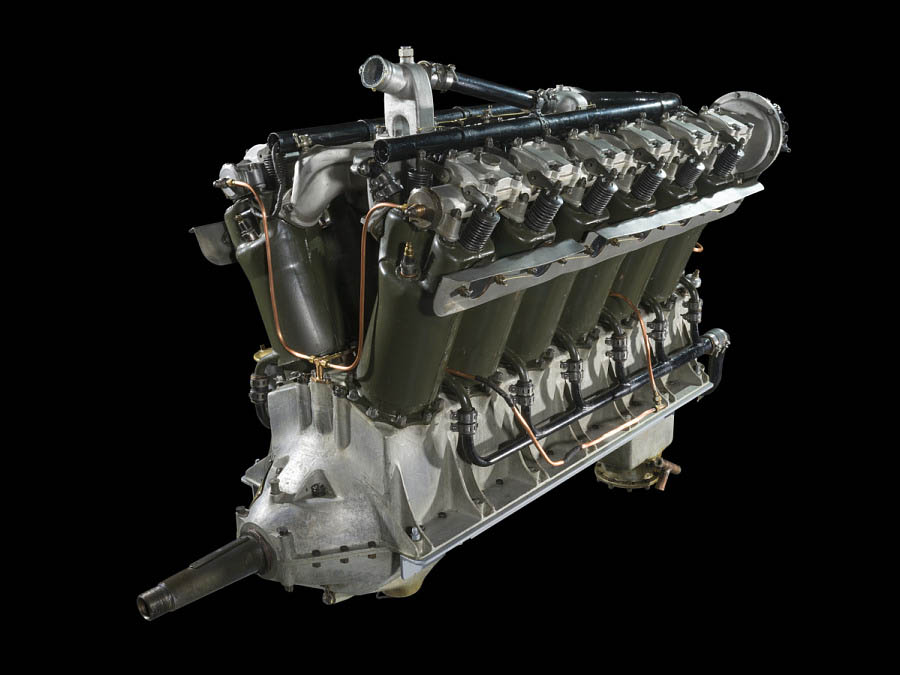
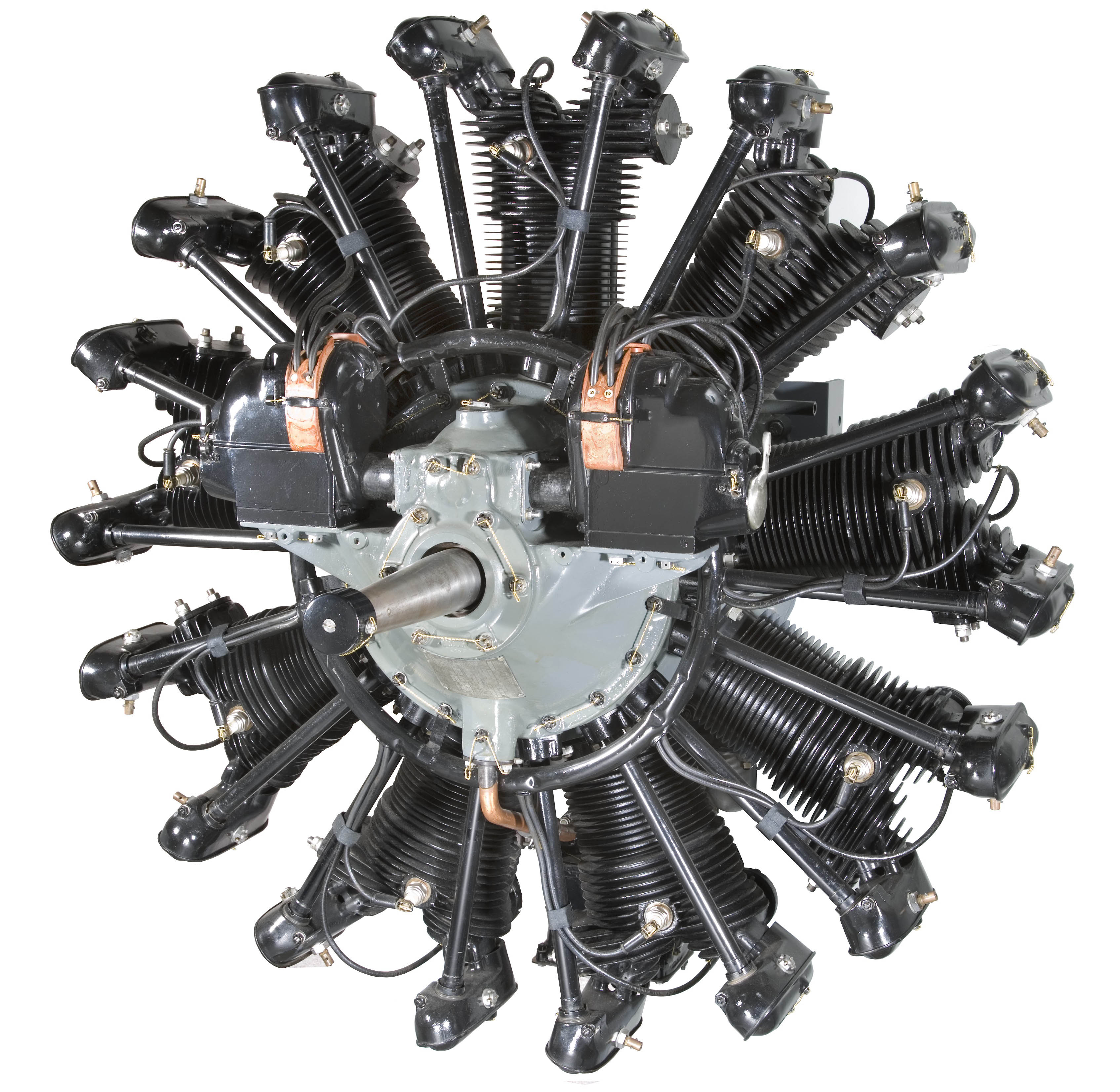
An aircraft engine must do more than make power. It has to produce useful power for its weight, keep running as conditions change, and survive sustained vibration and heat. Cooling, lubrication, fuel delivery, and the strength of moving parts are therefore central to its history. The engine's shape also influences the rest of the aircraft: frontal area affects drag, cooling systems add weight, and the location of fuel and oil changes the arrangement of the airframe.
Early designers explored several answers. Inline and V engines could offer a narrow installation, often with liquid cooling. Radial engines arranged cylinders around the crankshaft and made good use of passing air for cooling. In a rotary engine, the cylinders themselves revolved with the propeller, a solution that helped cooling but brought distinctive handling and lubrication problems. These were competing engineering choices, not simply steps on one inevitable ladder.
Reliability changed aviation as profoundly as peak horsepower. A dependable engine supported longer routes, safer training, and more regular commercial operations. Wartime production demanded another kind of reliability: factories had to build many engines to consistent standards, and mechanics had to keep them serviceable far from those factories. Seen together, the engines in these museums connect spectacular flights to the less celebrated work of metallurgy, testing, maintenance, and manufacturing.