Air Force Museum
Wright R-2600-13
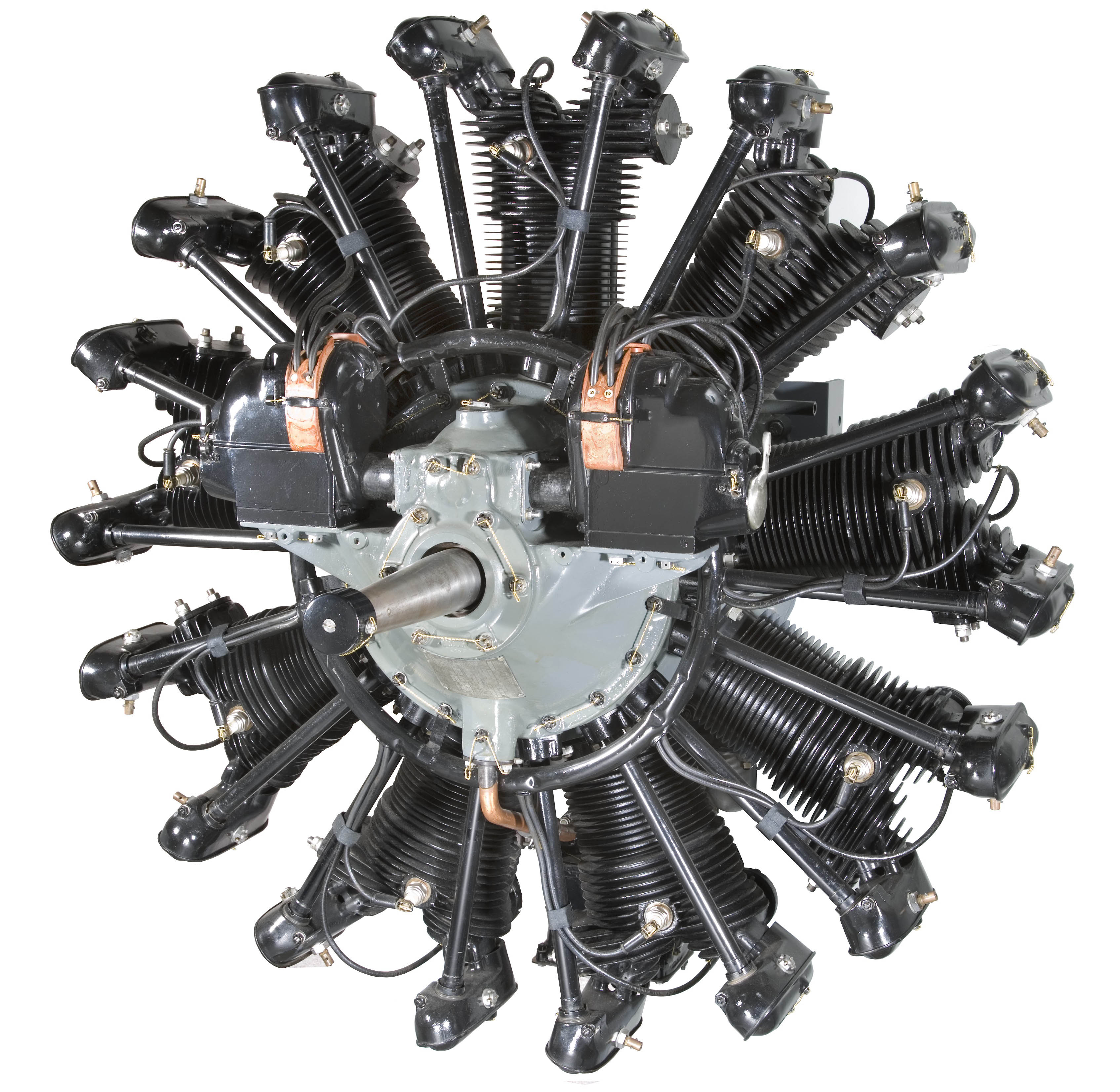
(Excerpted from North American Aviation Field Service Manual for B-25C and D) The Wright Cyclone, Model C14B, carries the Army Air Forces designation R-2600-13. The "R" stands for radial type of engine, "2600" stands for the number of cubic inches piston displacement, and the "13" is the model number.
In depth
History & service
The engines are air-cooled, static, staggered, twin-row radial type having two speed superchargers. Owing to the high compression ratio of 6.9:1, the engine operates on 100-Octane fuel. No other fuel may be used except in the event of an emergency, when a fuel of the next highest Octane rating may be used.
Under normal operating conditions, the engines develop a maximum of 1700 bhp (brake horsepower) for take-off at 44.3" Hg. (manifold pressure -- in inches of mercury -- of the fuel-air mixture in the engine intake pipes after passing through the supercharger) and 2600 rpm (revolutions per minute of the crankshaft, not the propeller).
The cylinders are numbered in a clockwise direction when looking from the rear, or anti-propeller end, forward to the propeller end. No. 1 cylinder is the top cylinder of the rear row. No. 2 is to its right in the front row. Thus, all odd numbered cylinders are in the rear row and all even numbered cylinders in the front row.
The aircraft in figures
Model: R-2600-13 (Wright Cyclone Model C14B) · Type: Static Radial, Air Cooled, Double Row · Number of cylinders: 14 · Bore: 6.125 in. · Stroke: 6.312 in. · Piston displacement: 2603 cu.in. · Compression ratio: 6.90:1 · Blower gear ratio: 7.06:1 and 10.06:1 · Blower diameter: 11.00 in. · Rated rpm of crankshaft: 2400
Power that could be carried into the sky
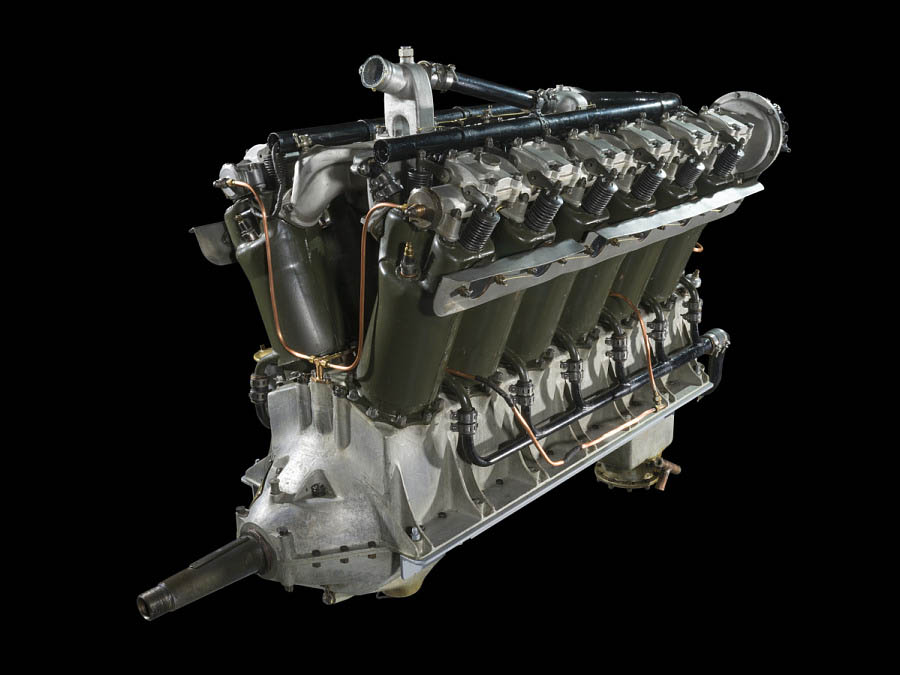
An aircraft engine must do more than make power. It has to produce useful power for its weight, keep running as conditions change, and survive sustained vibration and heat. Cooling, lubrication, fuel delivery, and the strength of moving parts are therefore central to its history. The engine's shape also influences the rest of the aircraft: frontal area affects drag, cooling systems add weight, and the location of fuel and oil changes the arrangement of the airframe.
Early designers explored several answers. Inline and V engines could offer a narrow installation, often with liquid cooling. Radial engines arranged cylinders around the crankshaft and made good use of passing air for cooling. In a rotary engine, the cylinders themselves revolved with the propeller, a solution that helped cooling but brought distinctive handling and lubrication problems. These were competing engineering choices, not simply steps on one inevitable ladder.
Reliability changed aviation as profoundly as peak horsepower. A dependable engine supported longer routes, safer training, and more regular commercial operations. Wartime production demanded another kind of reliability: factories had to build many engines to consistent standards, and mechanics had to keep them serviceable far from those factories. Seen together, the engines in these museums connect spectacular flights to the less celebrated work of metallurgy, testing, maintenance, and manufacturing.