Air Force Museum
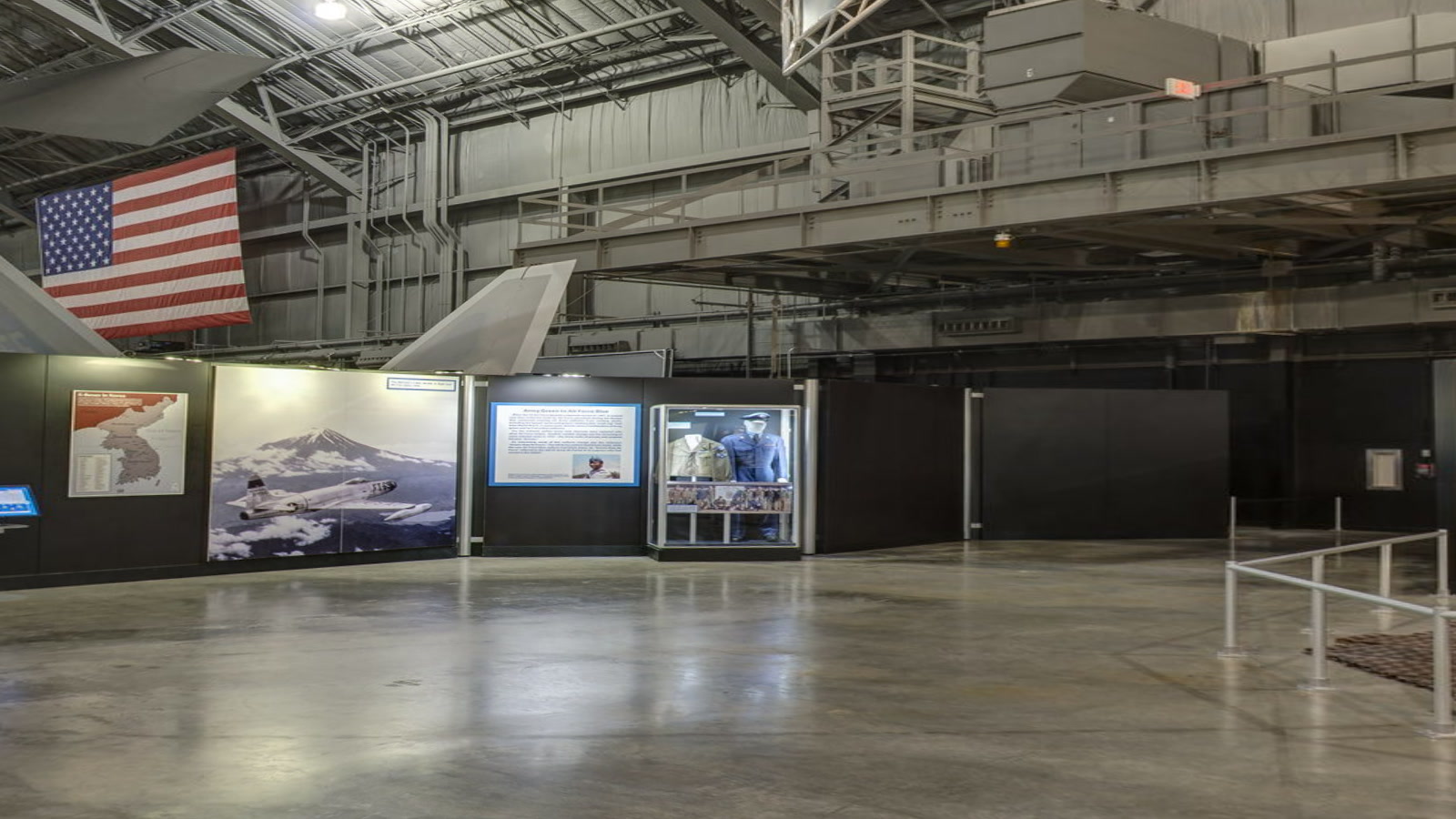
Army Green to Air Force Blue
The Korean War tested an Air Force that had become an independent military service only three years earlier. The National Security Act of 1947 created the Department of the Air Force. People, organizations, equipment, uniforms, and traditions that had belonged to the Army Air Forces did not transform overnight, and older Army items remained visible as the new service developed its identity.
In depth
The story behind the display
Korea forced that institutional transition to happen under wartime pressure. The Air Force had to organize jet combat, conventional bombing, reconnaissance, transport, close support, rescue, and medical evacuation while refining command relationships with the Army, Navy, Marine Corps, allies, and the Republic of Korea.
History & service
After the U.S. Air Force became a separate service in 1947, it created new blue uniforms. Even so, Air Force personnel during the Korean War continued to wear U.S. Army uniforms from existing stocks, including the famed "pinks and greens" clothing and "crush cap" hats from World War II. In some cases, Airmen wore a combination of Army green and Air Force blue uniforms.
For the enlisted, yellow Army rank chevrons were replaced with silver Air Force stripes. Another notable change was the renaming of some enlisted ranks in 1952 -- the Army ranks of private and corporal became "Airman."
An interesting result of this uniform change was the nickname "brown-shoe Air Force." The old Army uniform had brown shoes, while the new Air Force blue uniform had black shoes. So, "brown-shoe Air Force" referred to the old U.S. Army Air Forces or to a person who had served in the USAAF.
Details that tell the story
U.S. Air Force established September 18, 1947 · Personnel and equipment transferred from the Army Air Forces · Korea was the service's first major war · Joint and allied coordination shaped nearly every mission
Air power in a limited war
The Korean War brought early jet combat into the same theater as piston fighters, large bombers, helicopters, and transports. Different technologies served different needs. Fast fighters contested the air, while other aircraft attacked supply routes, supported troops, carried equipment, gathered information, and evacuated casualties. The mountainous terrain and severe weather made those tasks especially demanding.
The conflict also exposed the limits of air power used within a larger political and military struggle. Aircraft could damage bridges and transportation networks, but opposing forces adapted, repaired, dispersed, and moved under cover. Supporting troops required communications and coordination close to the ground. Maintaining operations depended on suitable bases and an extensive flow of supplies.
The surviving artifacts show why a gallery cannot be understood through jet fighters alone. A tent, vehicle, radio, flight nurse's equipment, or rescue helicopter belongs to the same operational history. The stories of individual airmen are compelling because they took place within that complicated setting. Cross-links to the Second World War and later Cold War galleries reveal both continuity and change: familiar aircraft found new roles, jet performance expanded, and rescue systems developed further. The war ended in an armistice, making its history one of service and sacrifice within an unresolved division as well as one of technological change.
