Air Force Museum
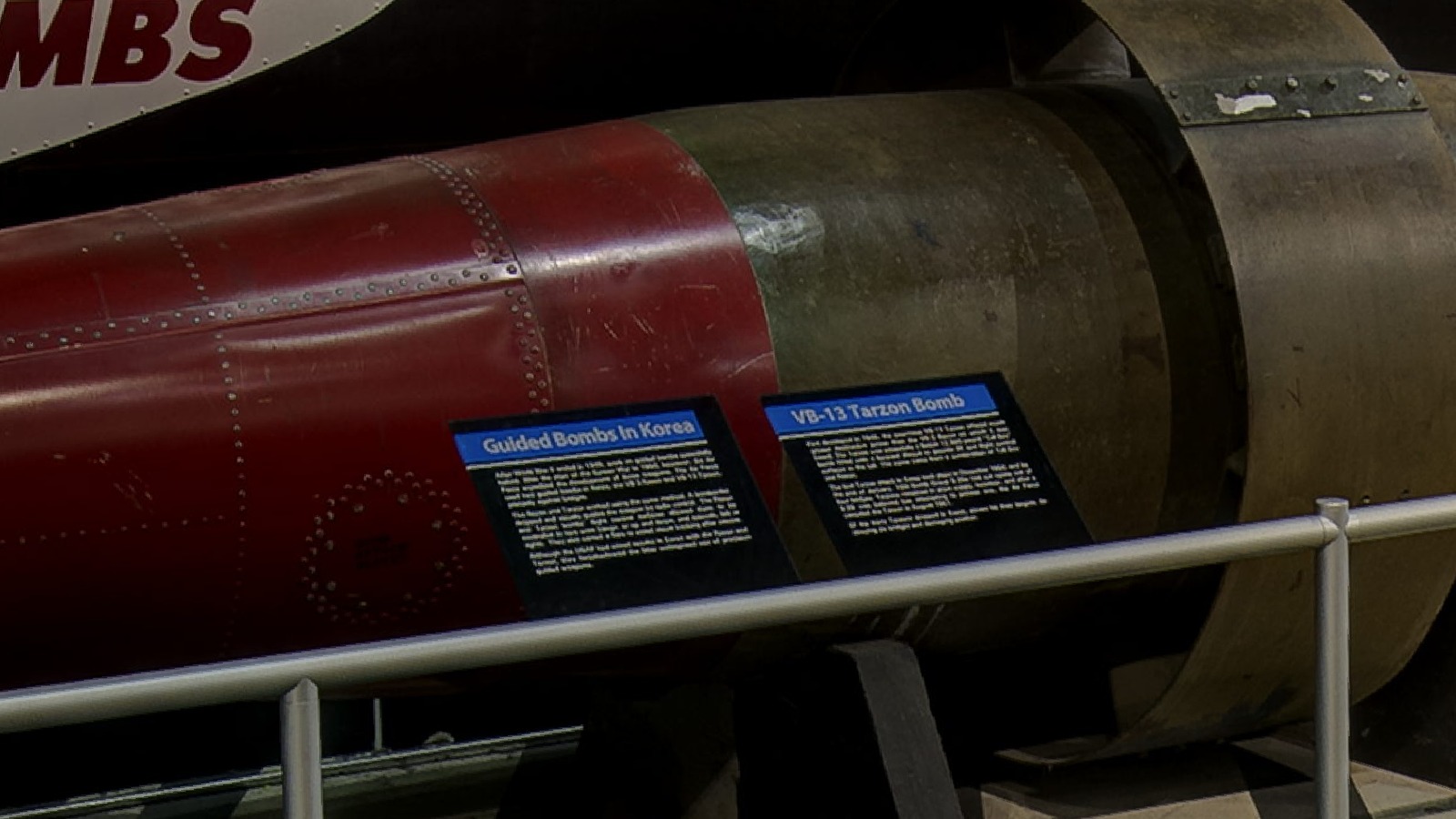
VB-13 Tarzon Bomb
Tarzon combined a large British-derived bomb with radio-command guidance in an ambitious attempt to improve heavy-bomber accuracy. A B-29 crew released the weapon and used visual tracking and radio commands to correct its path toward a point target. The very large warhead promised major effect against structures such as bridges, but the system placed a demanding workload on the crew.
In depth
The story behind the display
Limited visibility, guidance difficulty, handling problems, and accidents reduced confidence in Tarzon. Combat use ended after a short period because of these reliability and safety problems.
History & service
First developed in 1946, the enormous VB-13 Tarzon offered much greater destructive power than the VB-3 Razon on which it was based. The Tarzon was essentially a British 12,000-pound "Tall Boy" bomb fitted with a forward shroud to provide lift, with flight control surfaces in the tail. The name came from a combination of Tall Boy and Razon.
The first Tarzon attack in Korea took place in December 1950, and by the end of January, 19th Bomb Group B-29s had cut spans out of four bridges. Tarzons remained in short supply, however, and after a B-29 was believed lost attempting to jettison one, the Air Force canceled the Tarzon in August 1951.
Of the 30 Tarzons dropped in Korea, 11 hit their targets, destroying six bridges and damaging another.
Details that tell the story
Official designation VB-13 · Based on the British 12,000-pound Tallboy bomb · Guided by radio commands from the releasing aircraft · Combat use ended after reliability and safety problems
Air power in a limited war
The Korean War brought early jet combat into the same theater as piston fighters, large bombers, helicopters, and transports. Different technologies served different needs. Fast fighters contested the air, while other aircraft attacked supply routes, supported troops, carried equipment, gathered information, and evacuated casualties. The mountainous terrain and severe weather made those tasks especially demanding.
The conflict also exposed the limits of air power used within a larger political and military struggle. Aircraft could damage bridges and transportation networks, but opposing forces adapted, repaired, dispersed, and moved under cover. Supporting troops required communications and coordination close to the ground. Maintaining operations depended on suitable bases and an extensive flow of supplies.
The surviving artifacts show why a gallery cannot be understood through jet fighters alone. A tent, vehicle, radio, flight nurse's equipment, or rescue helicopter belongs to the same operational history. The stories of individual airmen are compelling because they took place within that complicated setting. Cross-links to the Second World War and later Cold War galleries reveal both continuity and change: familiar aircraft found new roles, jet performance expanded, and rescue systems developed further. The war ended in an armistice, making its history one of service and sacrifice within an unresolved division as well as one of technological change.