Air Force Museum
Lockheed U-2A
The U-2 was designed to collect photographic intelligence from altitudes believed to be beyond interception. Its sailplane-like wing carried a light airframe and powerful cameras above 55,000 feet. The 1960 shootdown of Francis Gary Powers exposed the program, while U-2 photographs during the Cuban Missile Crisis became decisive evidence for national leaders.
In depth
History & service
One of the most important U-2 missions took place on Oct. 14, 1962, when a U-2 piloted by Maj. Richard S. Heyser obtained the first photographs of Soviet offensive missile sites in Cuba. Eight days later, Maj. Rudolf Anderson Jr. was killed on a similar mission when his U-2 was shot down by a surface-to-air missile. U-2s have also been used for programs as diverse as mapping studies, atmospheric sampling and collecting crop and land management photographic data for the Department of Energy.
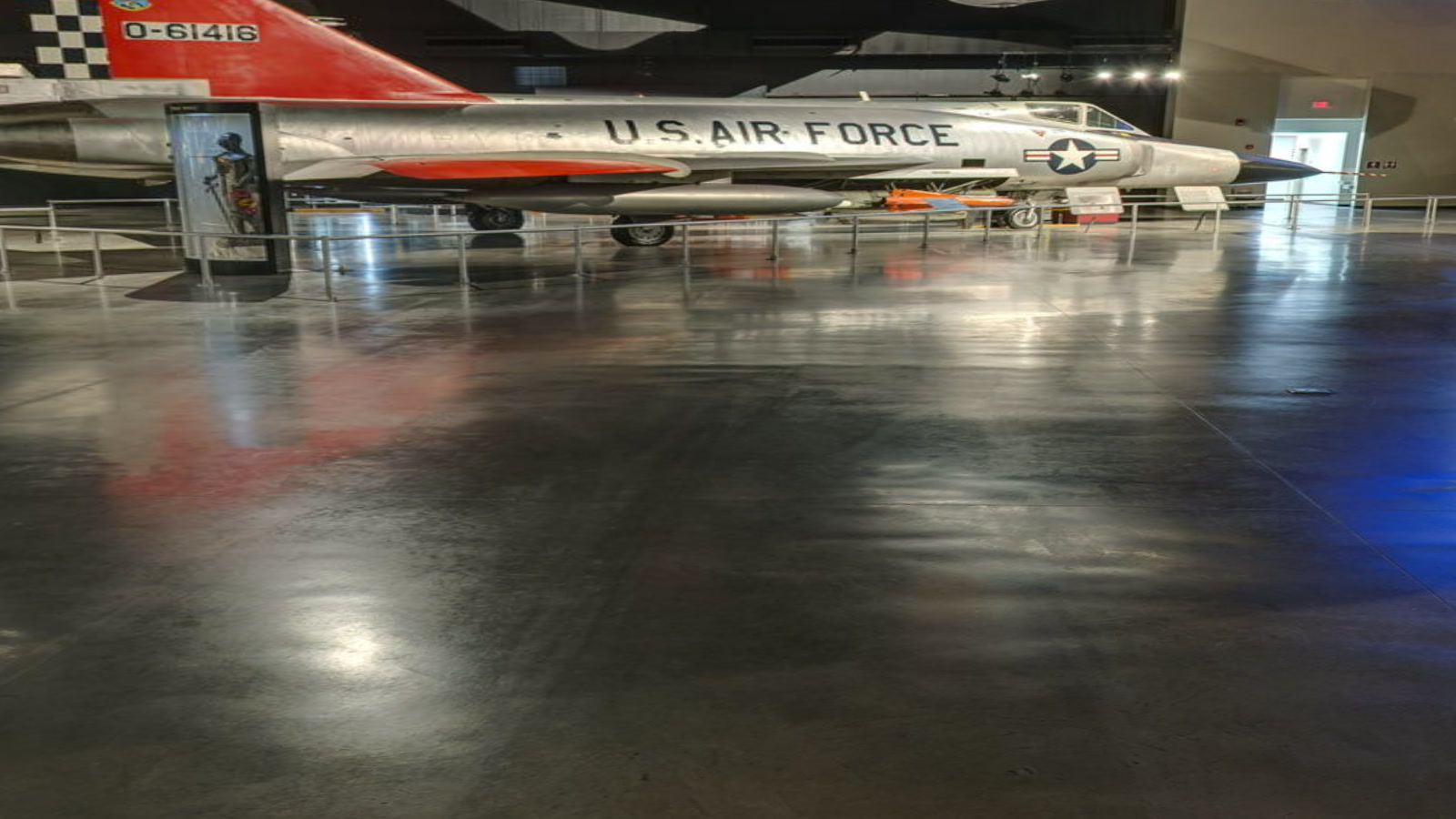
The aircraft on display at the museum is the last U-2A built. During the 1960s, it made 285 flights to gather data on high-altitude, clear-air turbulence and in the 1970s it flight tested reconnaissance systems. Delivered to the museum in May 1980, it is painted as a typical reconnaissance U-2.
Details that tell the story
First flew in 1955 · Entered operational service in 1956 · Photographed Soviet missile sites in Cuba in October 1962
The aircraft in figures
Armament: None · Engine: Pratt & Whitney J57-P-37A of 11,000 lbs. thrust (J75-P-13 of 17,000 lbs. thrust for later models) · Maximum speed: 494 mph · Range: 2,220 miles (over 3,000 miles for later models)
Seeing what could not be reached
Reconnaissance turns access into information. The earliest aerial observers used their elevated position to see beyond ground obstacles. Cameras added a record that could be studied after the flight. As aircraft became faster and reached higher altitudes, the equipment had to deal with vibration, motion, changing light, and the difficulty of locating an image precisely on a map.
The mission was not complete when the photograph was taken. Film or electronic data had to be recovered, processed, interpreted, and delivered to someone who could use it. A remarkable image could still be misleading without context. Different collection methods therefore complemented one another: direct observation, photography, radar, intercepted signals, and later satellite sensing supplied different kinds of evidence.
Aircraft such as the U-2 and SR-71 are famous for their performance, but their reason for flying was the information they could bring back. The same distinction helps connect military reconnaissance with planetary exploration and Earth observation. A spacecraft travelling far from Earth also needs to turn a fleeting encounter into useful measurements and transmit them home. Across these galleries, the camera, sensor, computer, and communications link belong beside the aircraft in the story. The real achievement is not simply reaching a distant place, but making that place more understandable.