Service & Remembrance
Military Women’s Memorial: service remembered
At the entrance to Arlington National Cemetery, the Military Women’s Memorial brings individual lives into a national landscape. Its exhibitions, inscriptions, and Register preserve women’s military experience across the services. In this digital museum it offers a place to continue beyond aircraft and equipment: from the work of flight nurses to the people who served, the records they left, and the ways their service is remembered.
In depth
A historic entrance becomes a memorial
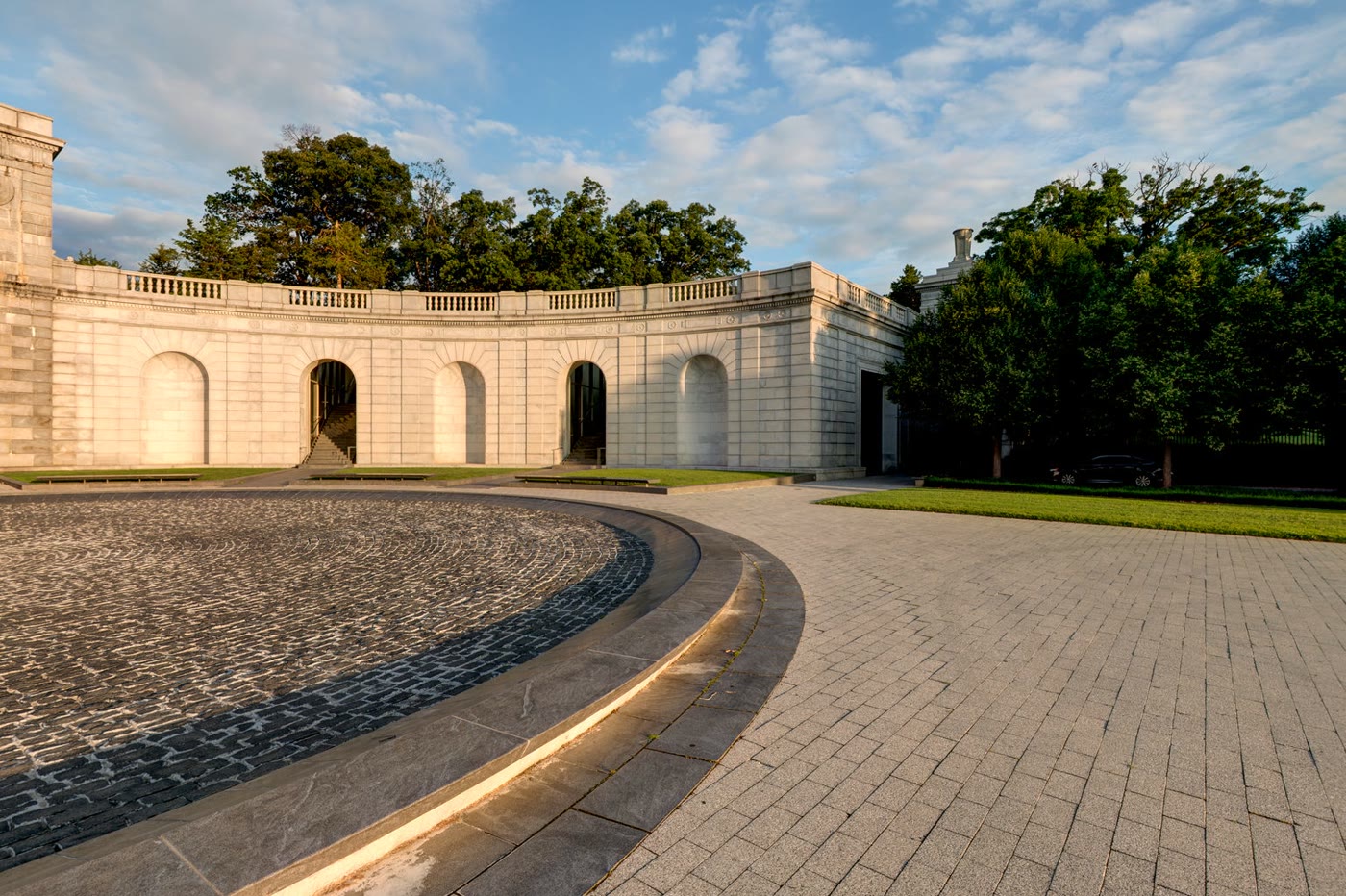
The semicircular Hemicycle was built as Arlington’s ceremonial entrance. In 1997 it became the home of a memorial honoring women who served in the armed forces. Architects Marion Weiss and Michael Manfredi incorporated the historic structure into a design with exhibition space, an upper terrace, and glass tablets carrying quotations.
The conversion makes the building itself part of the visit. Begin outside, then move into the galleries and back toward the terrace. Notice how stone, water, and daylight change the atmosphere between a public monument and a place for individual reflection.
From collective history to a personal record
The memorial’s Register preserves names, service information, photographs, and experiences. Its Hall of Honor remembers women killed in action, lost in the line of duty, held prisoner, or recognized for exceptional service. The memorial’s scope extends across the armed forces; aviation is one part of that larger history.
Follow the connection to Mary Louise Hawkins in the Air Force Museum to read about a particular flight nurse. Then return here to consider how a single account sits within a much broader record of service. This is an editorial connection between collections, not a claim that the same person or artifact appears in every display.
Explore the memorial at your own pace
The existing photographic experience offers nineteen viewpoints, from the Court of Valor through the historical exhibitions and Hall of Honor to the terrace. Its separate inscription views allow a closer look at the words in glass.
Take time with one photograph, quotation, or object before moving on. A museum story can explain a setting and offer connections; the memorial’s own records and the original testimony remain the place to pursue an individual’s history.