National Mall
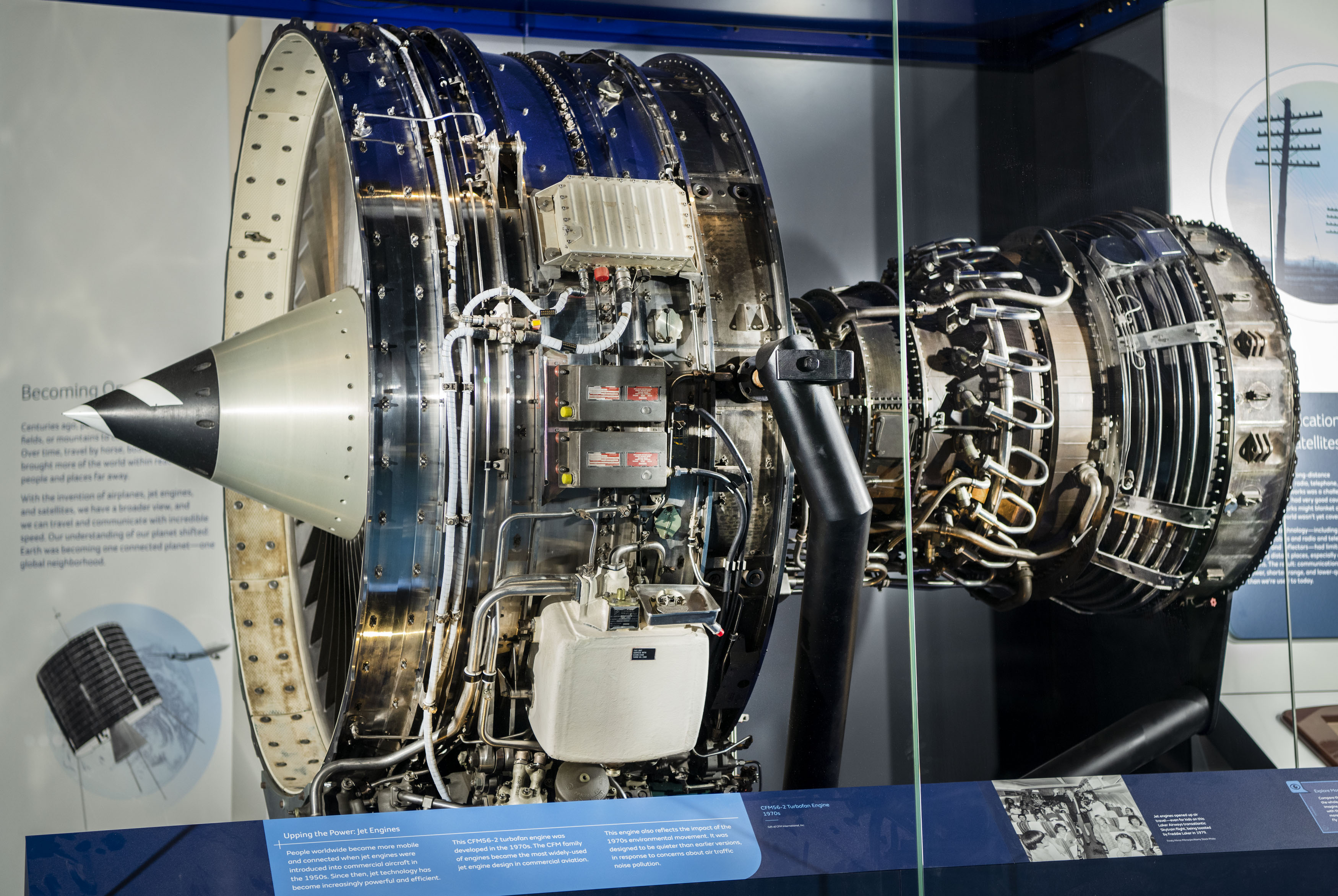
CFM56-2 Turbofan Engine
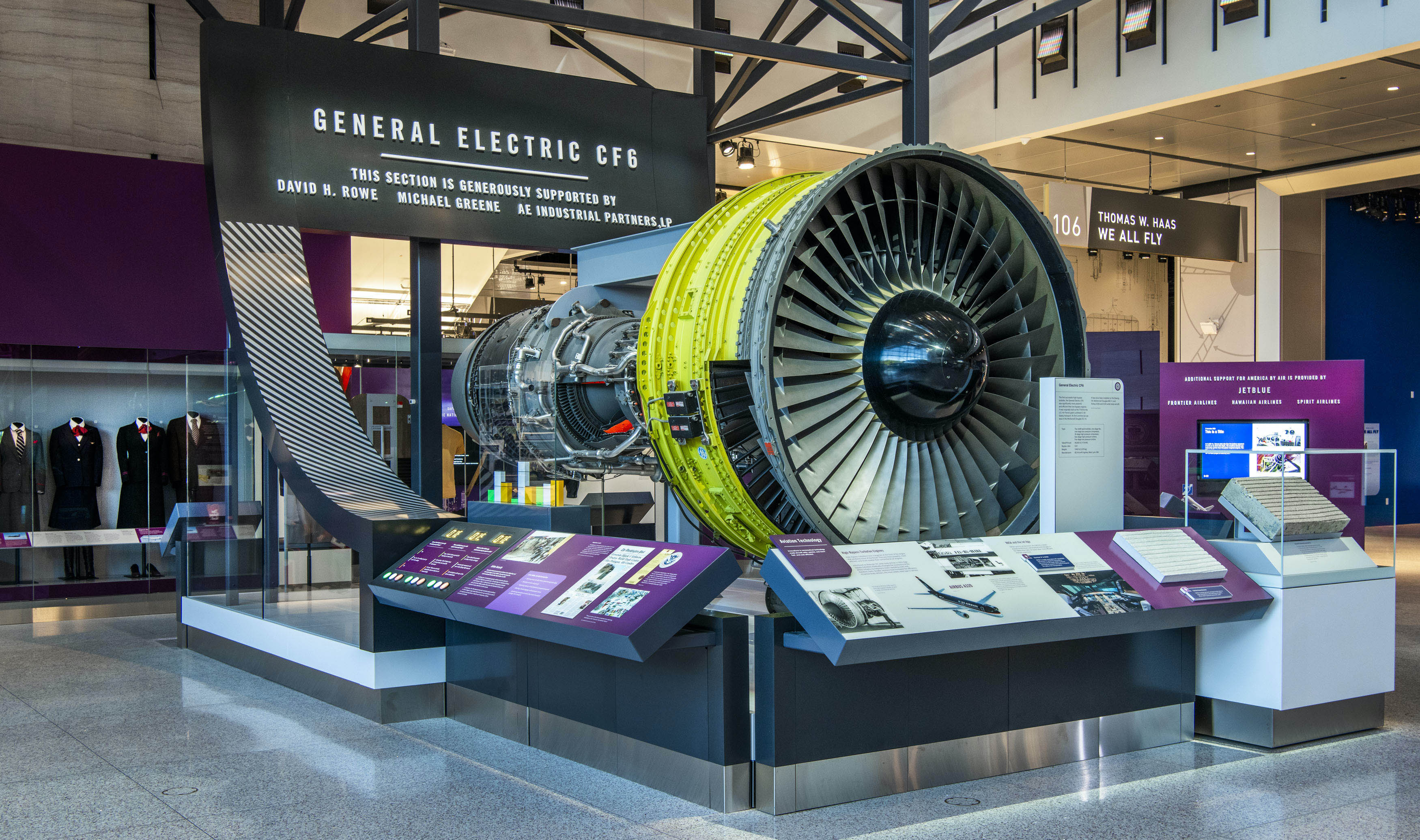
The CFM56 family powered commercial aircraft while responding to demands for efficiency and lower noise. Jet travel made distant places part of regular life for more passengers. A turbofan moves a large stream around the core while the compressor, combustor, and turbine keep the fan turning. Efficiency, thrust, noise, weight, and maintenance must be balanced together.
In depth
Most thrust can come from air that bypasses the hot core
The CFM56 became widely used because airlines valued fuel use, reliability, maintenance support, certification, and community noise alongside performance. A propulsion system reshaped travel only after institutions could operate it repeatedly.
The revolution inside the engine
A jet engine takes in air, compresses it, adds fuel, and uses the resulting hot gas to produce thrust. A turbine extracts enough energy from that gas to keep the compressor turning. The arrangement sounds straightforward, but the machinery lives in a difficult combination of heat, centrifugal force, pressure, and vibration. Early practical jets depended on advances in materials and manufacturing as much as on the basic idea.
The first generation offered great promise at high speed, but fuel consumption, engine life, and throttle response limited what aircraft could do with it. The transition did not immediately make propellers obsolete. Piston aircraft and turboprops remained effective where low-speed efficiency, endurance, or operating cost mattered more than maximum speed. Aircraft were built around missions, and different missions rewarded different engines.
Later turbofans moved a large quantity of air around the hot core, improving efficiency and changing the economics of airline travel. Military engines often accepted different compromises for acceleration, compact size, or supersonic performance. A display of engines therefore contains several parallel histories: the race for speed, the effort to carry more people at lower cost, and the persistent search for machinery that crews could trust. Cross-gallery comparisons reveal why engines that look broadly similar can represent very different priorities.