Udvar-Hazy
Pre-1920 Aviation
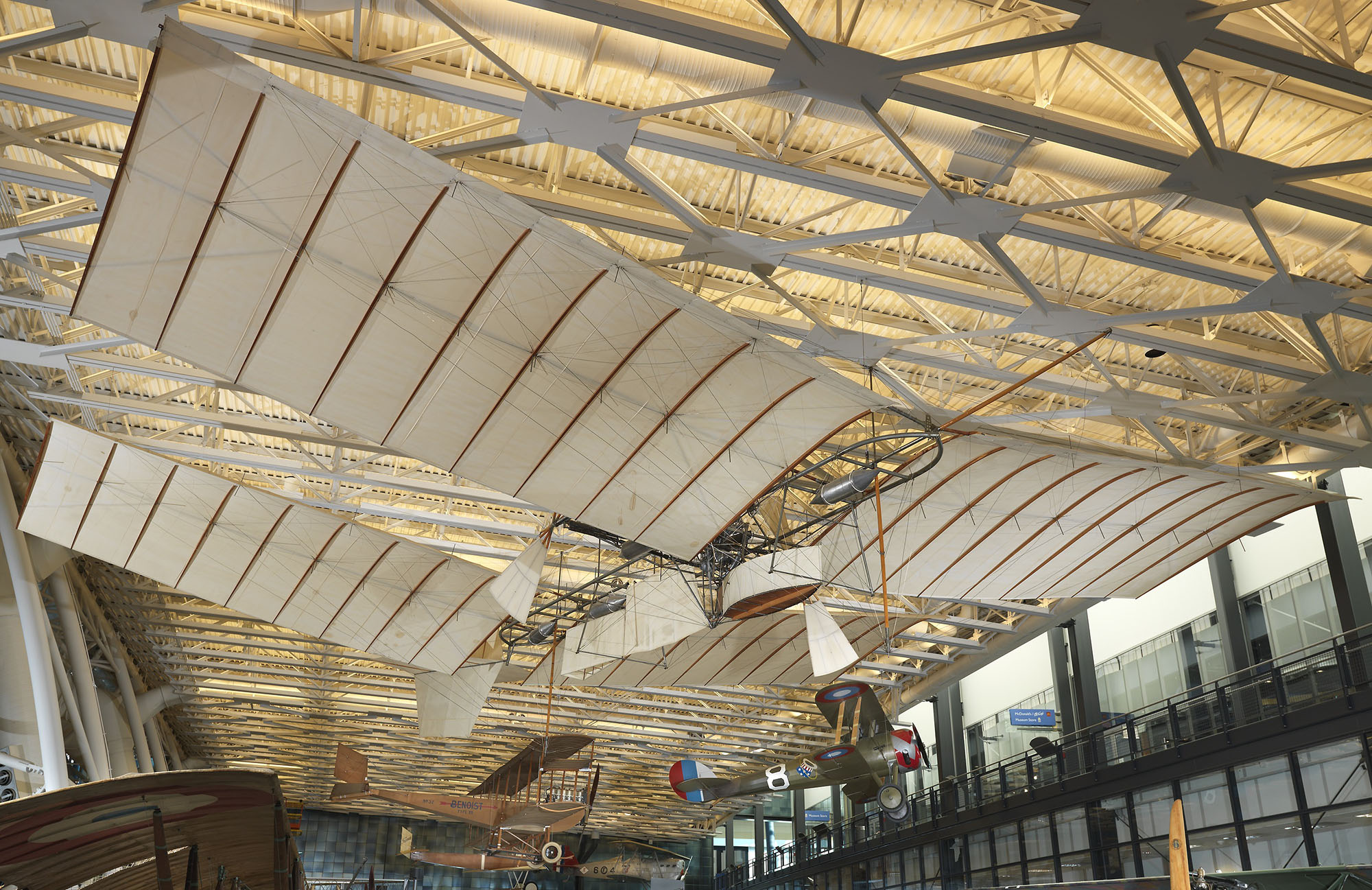
In less than twenty years, airplanes changed from fragile inventions into useful machines. Early experimenters had to discover how to lift off, stay balanced, steer, and land. World War I then accelerated development and brought many more people into aviation. The aircraft here reveal that rapid change in their exposed structures, open cockpits, and increasingly purposeful shapes.

In depth
Making the whole aircraft work
The first successful powered flights required more than a suitable engine. A machine had to generate lift, remain controllable, carry its own loads, and get into the air without breaking apart. The Langley Aerodrome and the Wright Flyer illustrate different approaches to that interconnected problem.
Scale made the work particularly difficult. A model that flew well did not automatically become a successful piloted aircraft when enlarged. Designers had to understand how weight, strength, and control changed together. Practical experience and systematic testing became as important as inventive confidence.
War creates demand and specialization
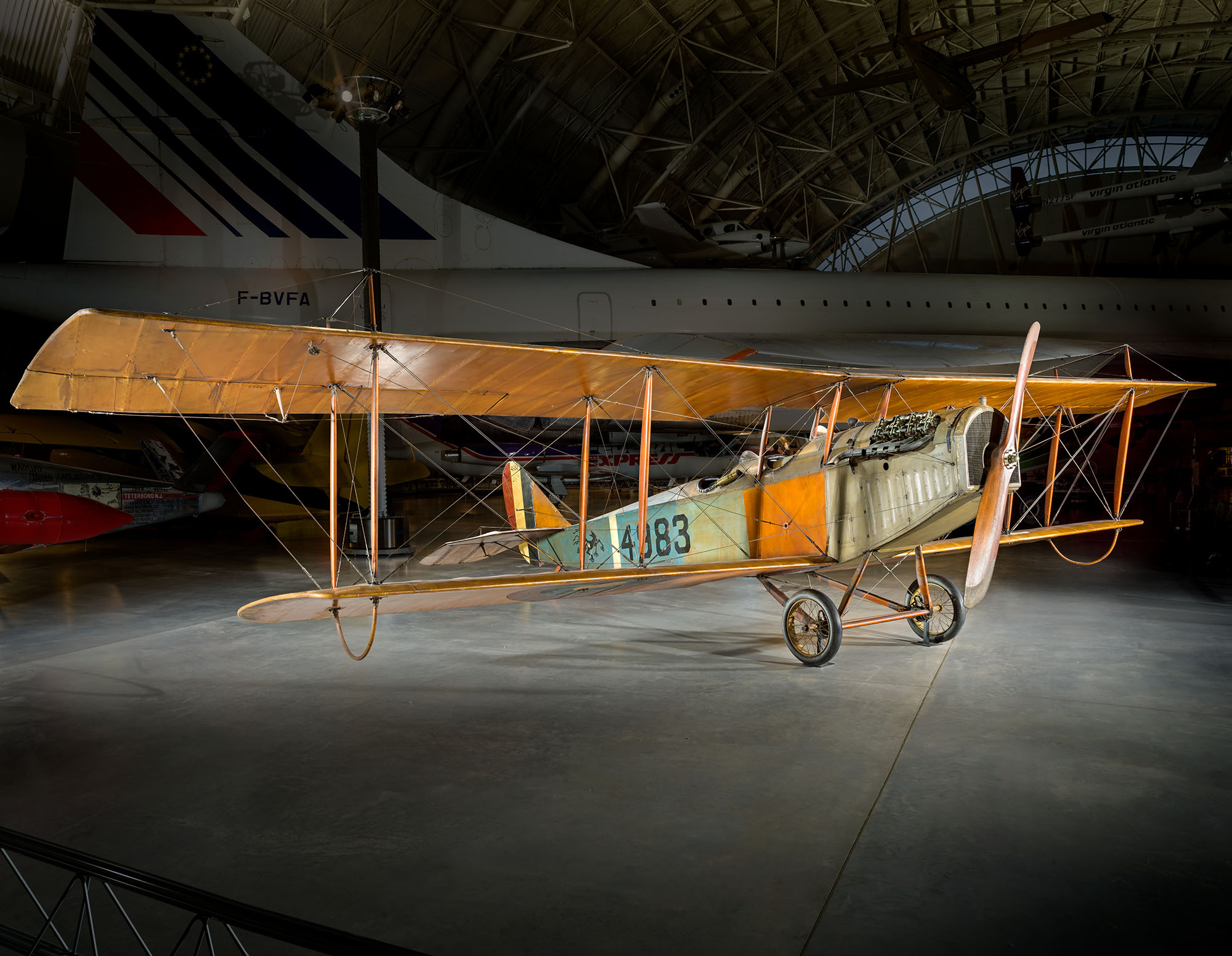
World War I transformed aircraft from novelties into equipment used for observation, fighting, bombing, and training. Different missions rewarded different qualities. A reconnaissance crew needed a useful view and the ability to bring information home; a trainer needed to help a new pilot develop dependable skills.
Production and maintenance expanded with those roles. Aviation became an organized activity involving factories, airfields, instructors, and mechanics, rather than only a small group of inventors and performers.
The next audience was civilian
The Jenny connects wartime preparation to the barnstorming years that followed. Surplus aircraft and trained pilots made flying visible in communities across the United States. The next stage of aviation’s growth depended partly on that familiarity: people were more likely to support, use, or enter a field they had seen for themselves.