Udvar-Hazy
Military Aviation, 1920-1940
Between the world wars, military aviation was full of competing ideas. Aircraft carriers, long-range bombers, faster fighters, and even flying airship hangars offered different visions of the future. Tight budgets and rapid technical change made choices difficult. The aircraft in this area show that the air forces of World War II developed through experiments, arguments, and gradual improvements rather than following one obvious path.

In depth
Building an air force before the next war
The end of World War I left military organizations with aircraft and experienced people, but no settled answer about the future balance of air power. Army, Navy, and Marine aviators pursued different missions and argued for the resources to carry them out.
Demonstrations mattered because leaders and the public needed to understand what aviation could do. Record flights, exercises, and air shows helped make technical possibilities visible, even when they could not fully reproduce wartime conditions.
The P-26 records a transition
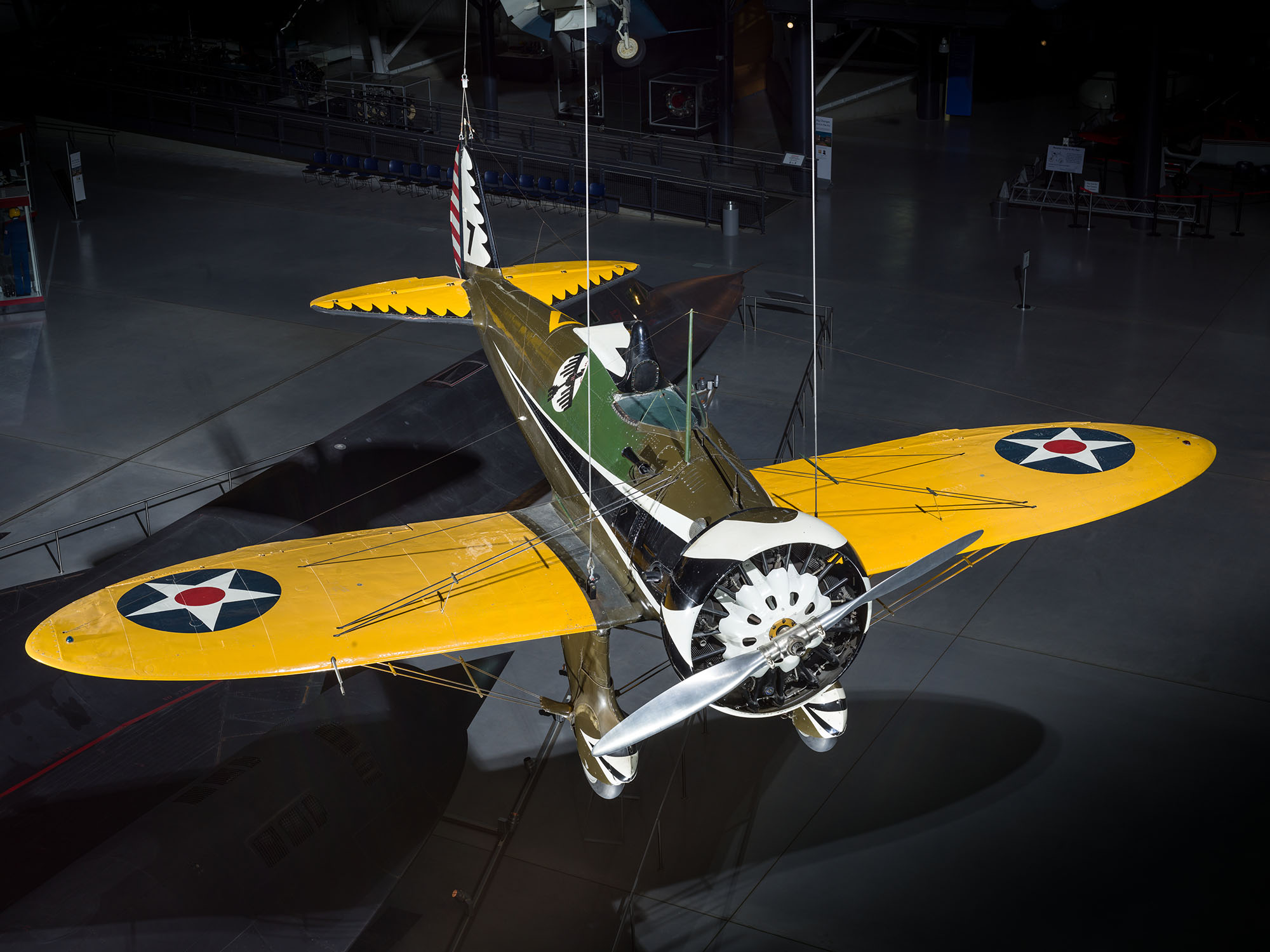
The Peashooter’s metal monoplane construction appeared alongside external bracing, fixed wheels, and an open cockpit. It is a useful reminder that new generations of aircraft emerge through mixed stages. Manufacturers and services balance improvement against cost, complexity, and confidence in unfamiliar equipment.
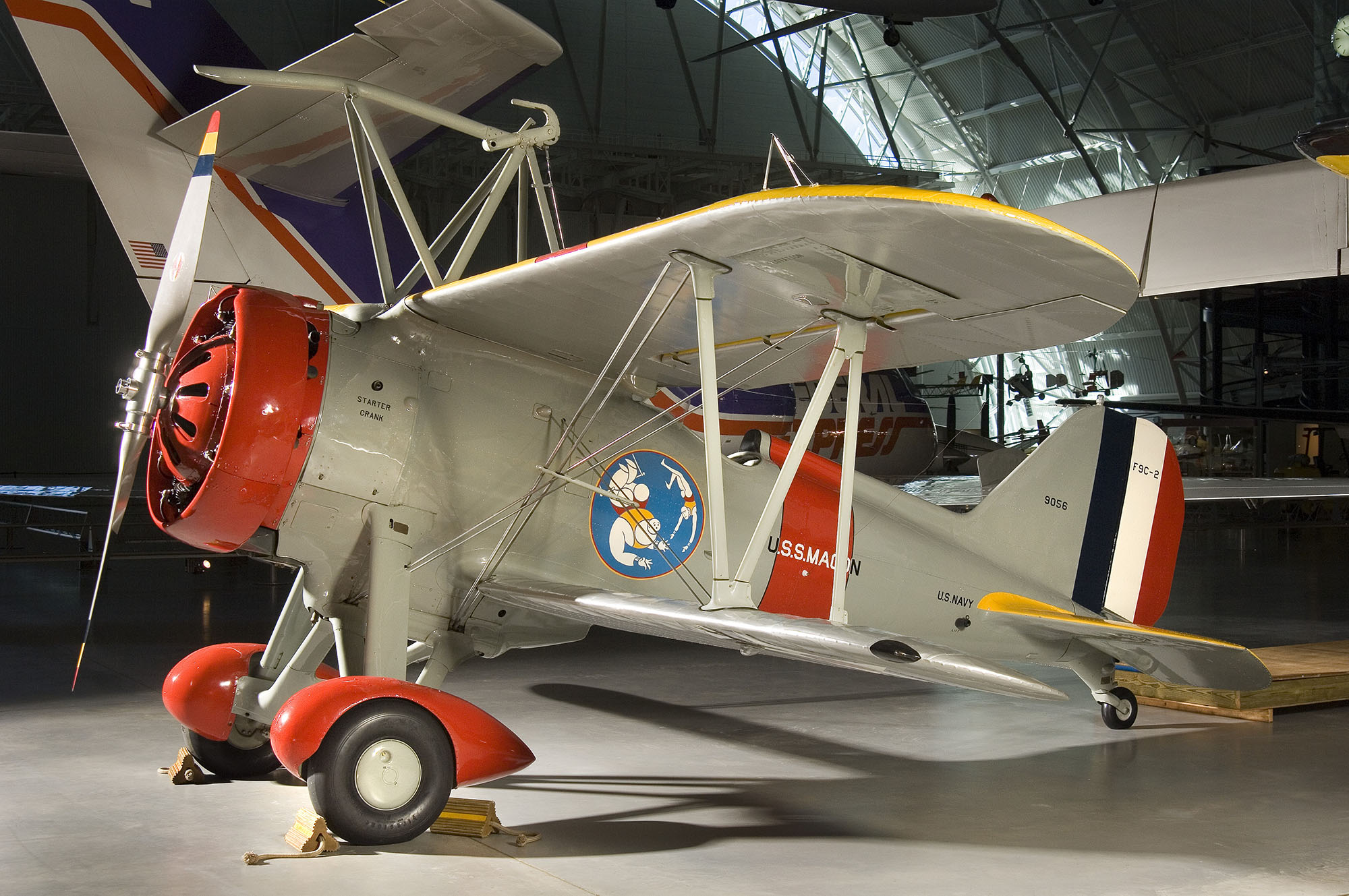
Meanwhile, the Sparrowhawk supported a very different experiment: extending an airship’s scouting reach with small airplanes carried inside it. The success of a particular component depended on the survival and usefulness of the larger system.
More than technology was being prepared
The interwar years also developed organizations, maintenance practices, training systems, and ideas about how aircraft should be employed. Those less visible investments shaped the forces that entered World War II. The preserved machines are the most tangible remains of a much broader preparation for a future that their operators could not know in advance.