Udvar-Hazy
World War II Aviation
World War II demanded aircraft on an enormous scale. Fighters, bombers, transports, trainers, and patrol aircraft worked within systems supported by factories and millions of people. New technology changed what aircraft could do, but production, fuel, maintenance, and training determined how often they could do it. These machines carry stories of service and invention alongside the destruction and human cost of the war.

In depth
Industrial power becomes air power
A front-line aircraft was the visible end of a long chain. Materials had to reach factories; factories needed skilled labor; finished machines required transport, maintenance, and trained crews. An impressive design could accomplish little without that support.
The United States built aircraft for operations across both Europe and the Pacific. Those theaters imposed different distances, climates, and basing problems. Aircraft that shared a national marking could still operate in very different worlds.
Different machines reveal different demands
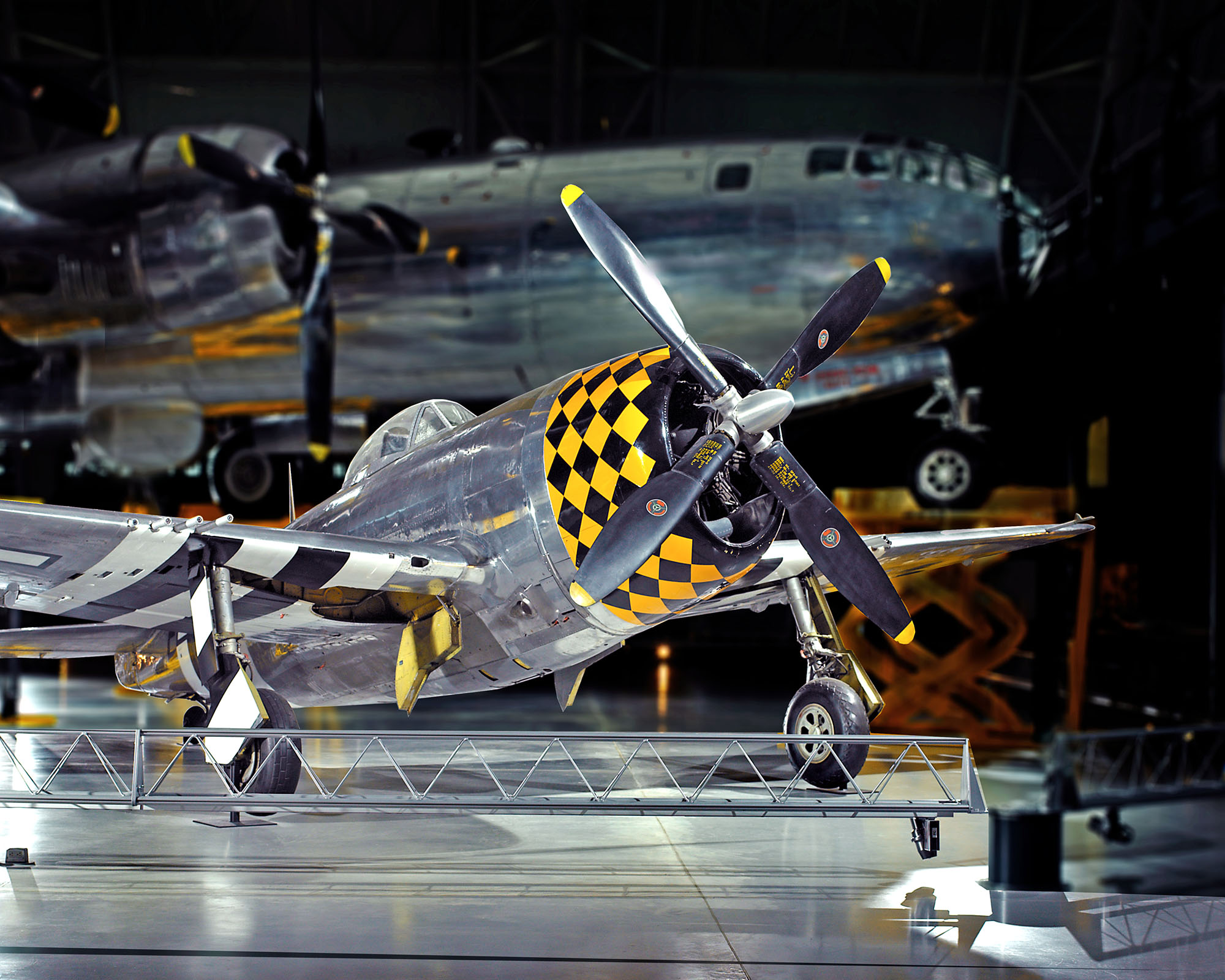
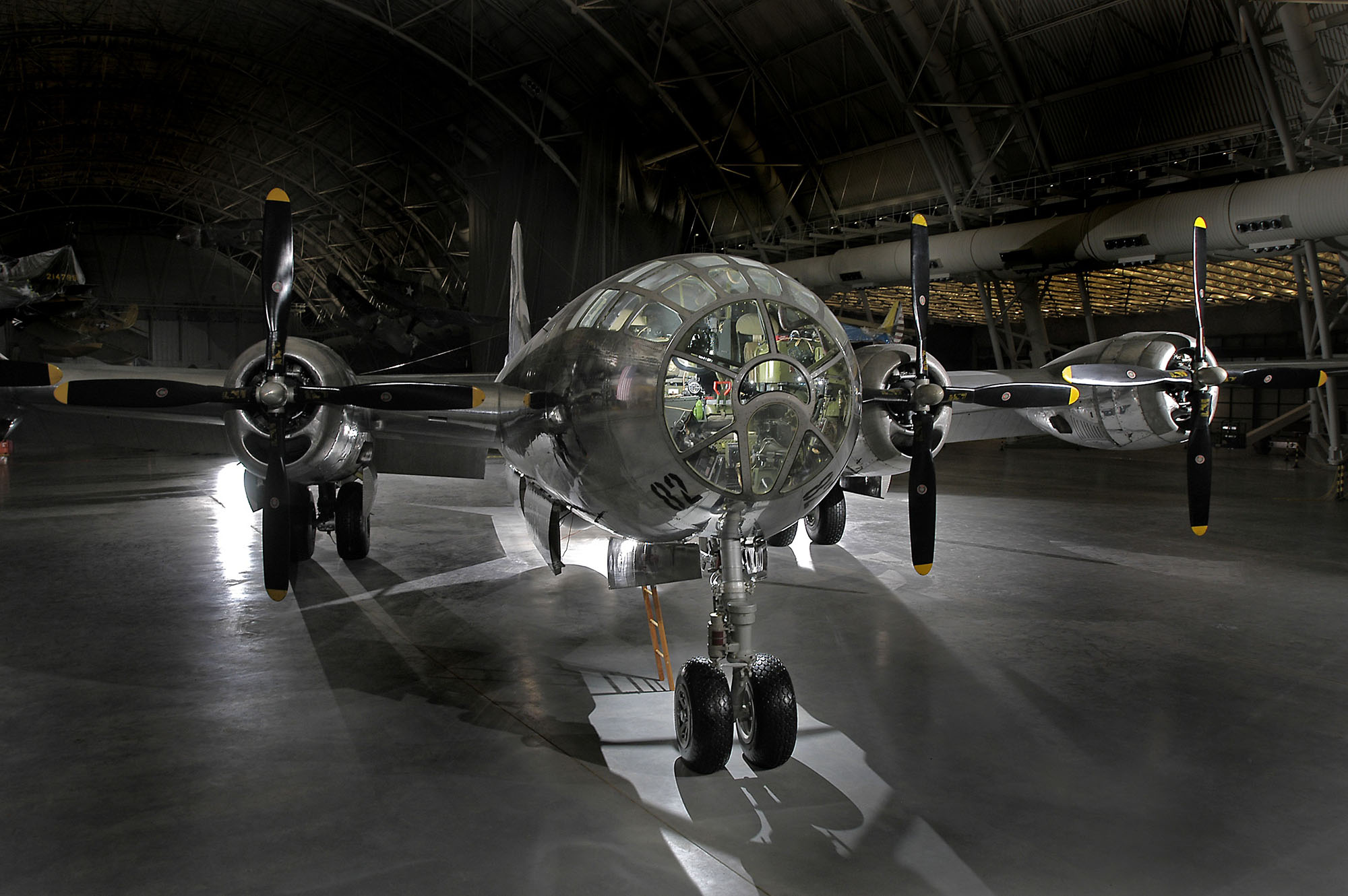
The P-47 combines a powerful radial engine and heavy armament in a fighter that also became important in ground attack. The B-29 shows the greater size and systems complexity required for long-range bombing. The Ar 234 points toward the jet age while also demonstrating the limitations of introducing an advanced aircraft late in a losing war.
Compare the artifacts’ individual histories as well as their types. A surviving trainer, a combat veteran, and a captured test aircraft may stand near each other, yet preserve different kinds of experience.
Remembering people as well as performance
The aircraft invite admiration for skill, persistence, and service. Their history also includes aircrew losses, forced labor in wartime production, devastated communities, and civilians caught beneath air campaigns. Enola Gay brings those relationships into especially sharp focus. Technical understanding becomes more valuable when it remains connected to the human consequences of the machines’ use.