Udvar-Hazy
Vertical Flight
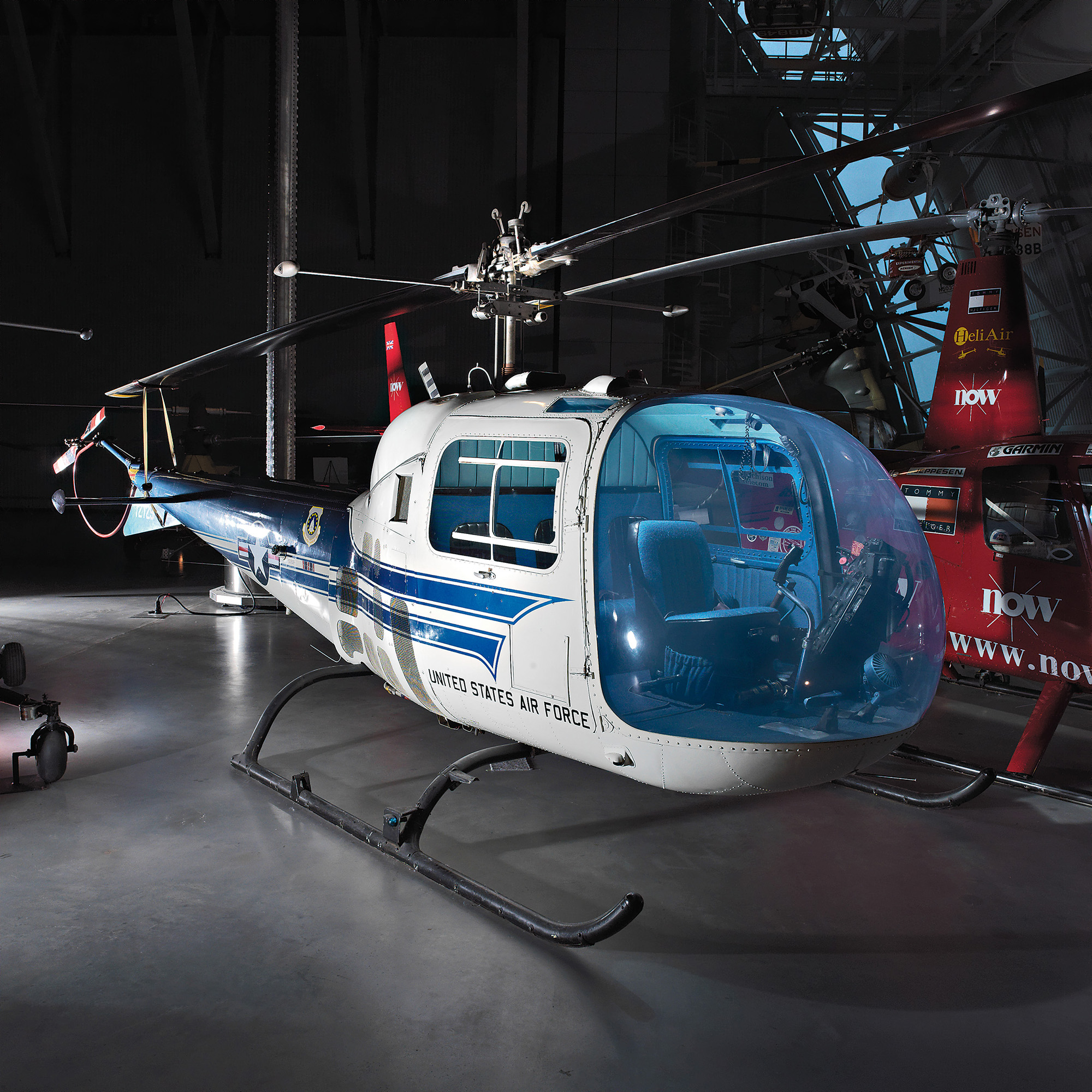
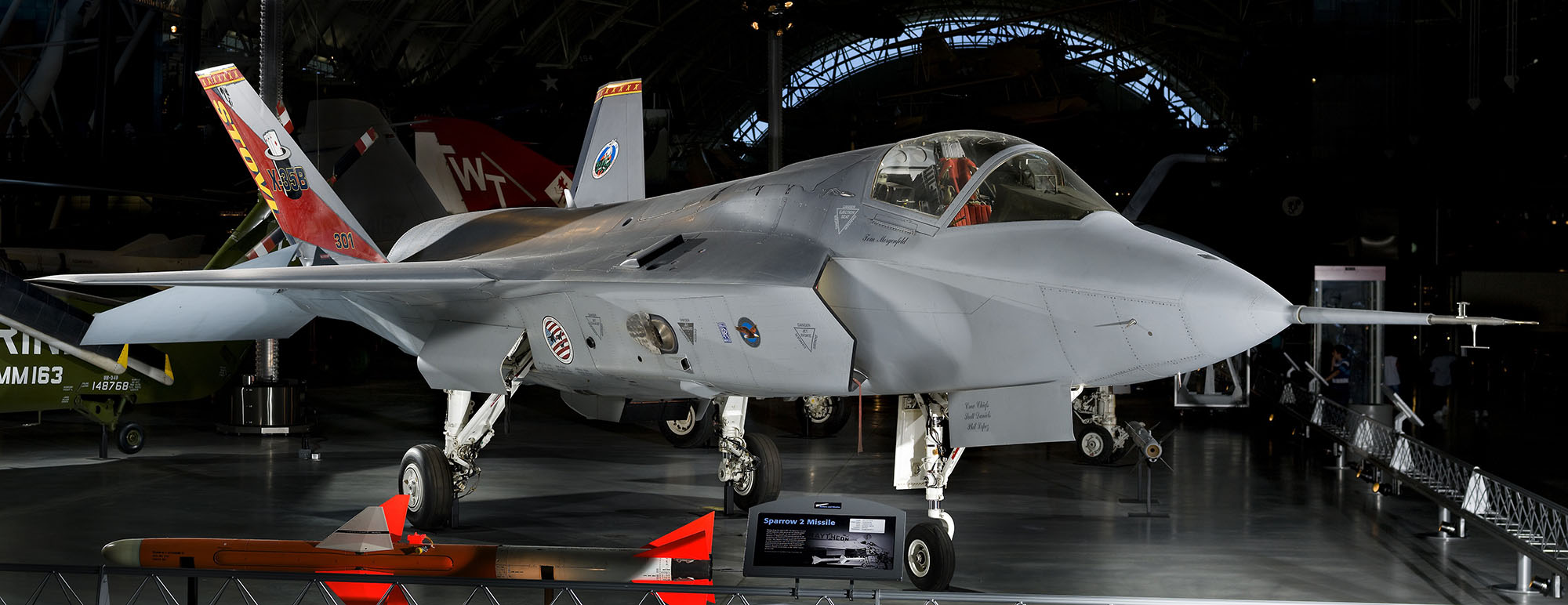
Vertical flight changes where an aircraft can work. Helicopters can hover and use landing areas too small for conventional airplanes, making them valuable for rescue, transport, and many other tasks. That freedom comes with mechanical and aerodynamic challenges. The H-13J, Huey, and X-35B offer three different ways to explore the problem of supporting an aircraft when it is not moving forward through the air.

In depth
A moving wing instead of a runway
A helicopter’s rotor blades are wings that move through the air even while the fuselage remains over one place. Their rotation allows the aircraft to produce lift without a takeoff run. Controlling the rotor also allows the pilot to manage direction and motion.
The advantage is practical access. A helicopter can bring people closer to where they are needed, provided the conditions and landing area permit the operation. The H-13J’s presidential role and the Huey’s medical and transport missions grew from that capability.
The cost of hovering
Hovering demands power and careful control. Rotor systems must handle changing loads, vibration, and complex airflow. The same configuration that makes vertical flight possible creates limits and compromises in speed, efficiency, and mechanical simplicity.
An aircraft designed mainly for fast forward flight faces a different problem if it must also land vertically. The X-35B used powered lift through a fan and directed exhaust, carrying equipment that a conventional fighter would not need.
Compare the missions, then the machines
The three aircraft should not be ranked by one measure such as speed. Each was built around a different job. Their shapes become more understandable when related to passengers, payload, operating locations, and the transition between hovering and forward flight. Vertical flight is a family of solutions to access, rather than one universal aircraft design.