Udvar-Hazy
Applications Satellites
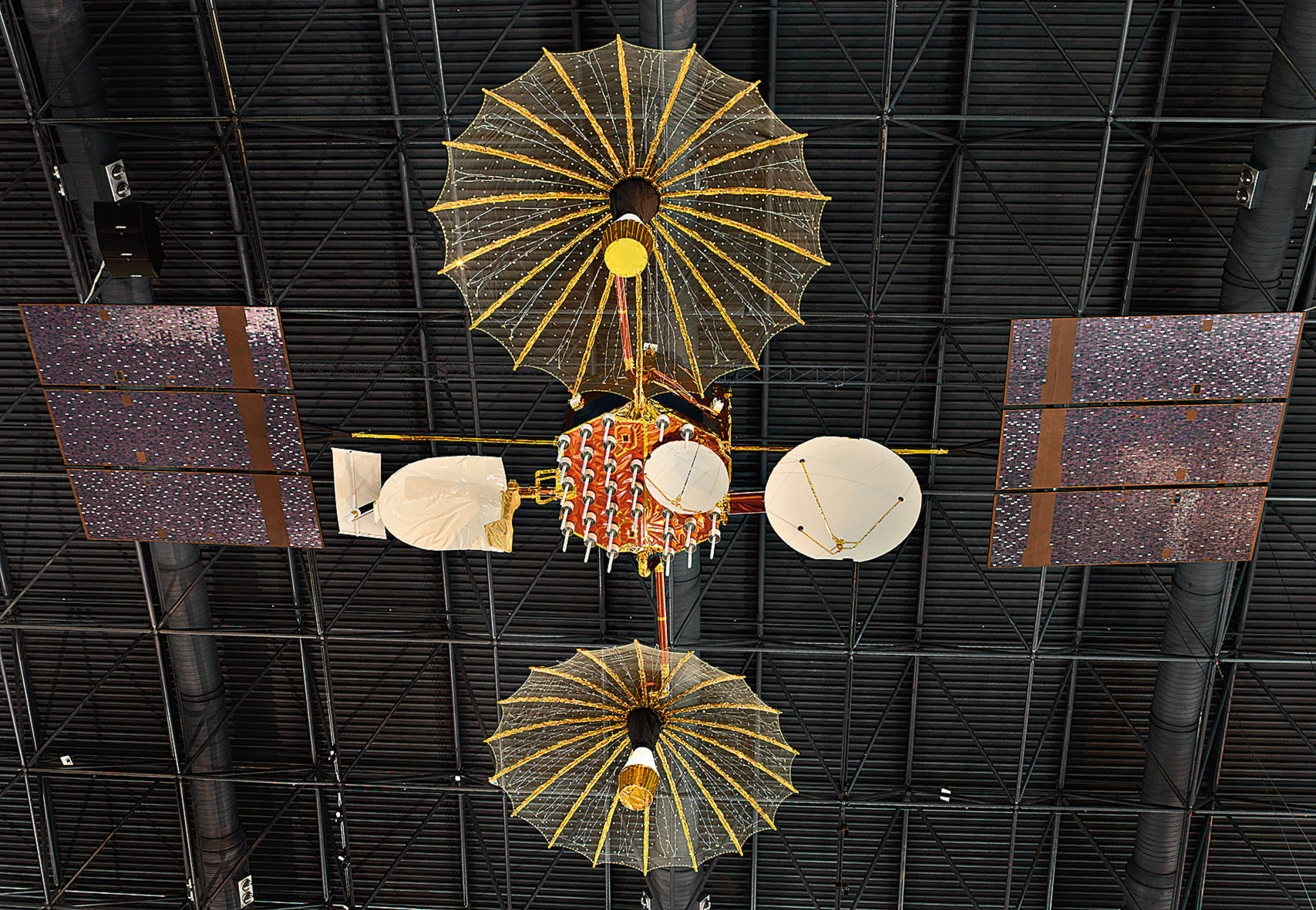
Satellites help people communicate, observe weather, navigate, and study changes on Earth. Their work often disappears into services we use without seeing the spacecraft involved. Large antennas, solar panels, and specialized instruments reveal what those services require. The TDRS model is one example: a relay in a larger network that connects spacecraft with people and equipment on the ground.

In depth
An orbit is an operating location
A satellite’s orbit affects what it can see and how it communicates. A vehicle close to Earth moves rapidly across a ground observer’s sky. A geosynchronous relay operates much farther away and can help maintain a long-duration communications link.
Choosing an orbit is therefore part of designing a service, alongside selecting instruments, antennas, power systems, and ground facilities.
The spacecraft is only one part of the network
Useful information must pass through receivers, processing systems, and organizations that can interpret or distribute it. A weather image, a navigation signal, and a relay conversation have different requirements, but all depend on coordinated work between space and Earth.
TDRS illustrates that relationship clearly. Its purpose is to move information from other spacecraft toward the ground, making their operations more continuously accessible.
Infrastructure can have an adventurous beginning
The first TDRS reached the wrong orbit after an upper-stage problem in 1983. Engineers recovered the mission through a carefully planned series of maneuvers. A system built to provide dependable service first required an exceptional rescue effort of its own.
That story is a useful counterpoint to the apparent stillness of a satellite model. The hardware represents years of planning, launch operations, troubleshooting, and routine control. Everyday services from space are sustained achievements, not automatic consequences of placing an object in orbit.