Udvar-Hazy
Rockets and Missiles
Rockets carry their own propellant and can work where an airplane’s air-breathing engine cannot. They have launched scientific instruments, satellites, and people, but have also carried weapons. This area brings those connected histories together. The hardware shows common physical principles; the missions show how differently nations and institutions have chosen to use them.

In depth
Propulsion beyond the atmosphere
A rocket produces thrust by expelling mass. It does not need an external supply of air to support combustion in the way an ordinary jet engine does. Carrying what it needs makes operation in space possible, while also creating a demanding problem of mass and energy.
Staging allows portions of a launch vehicle to be discarded after their work is complete. Structure, propulsion, guidance, and payload must cooperate throughout a sequence in which the vehicle itself changes configuration.
Exploration and weapons developed together
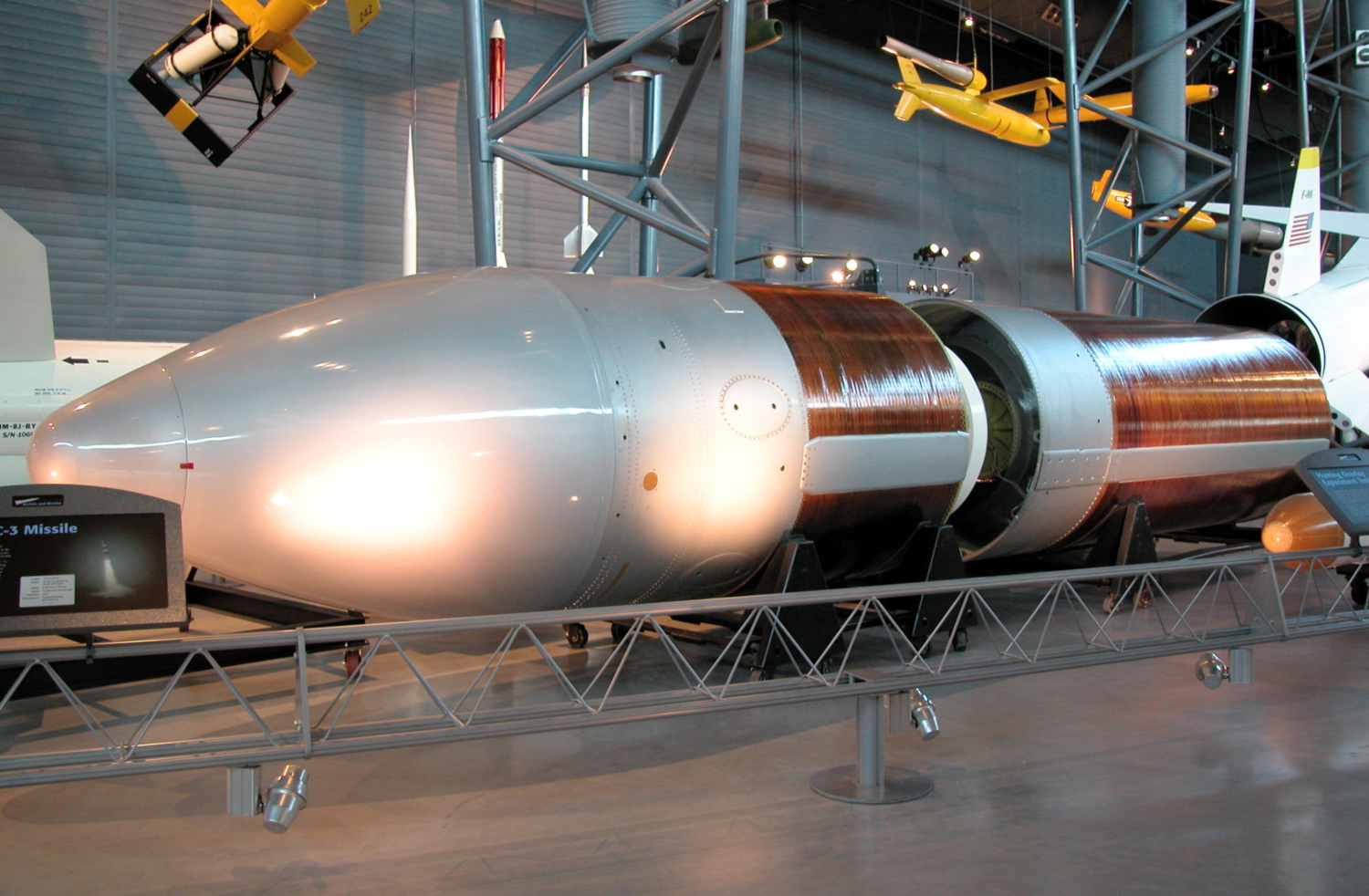
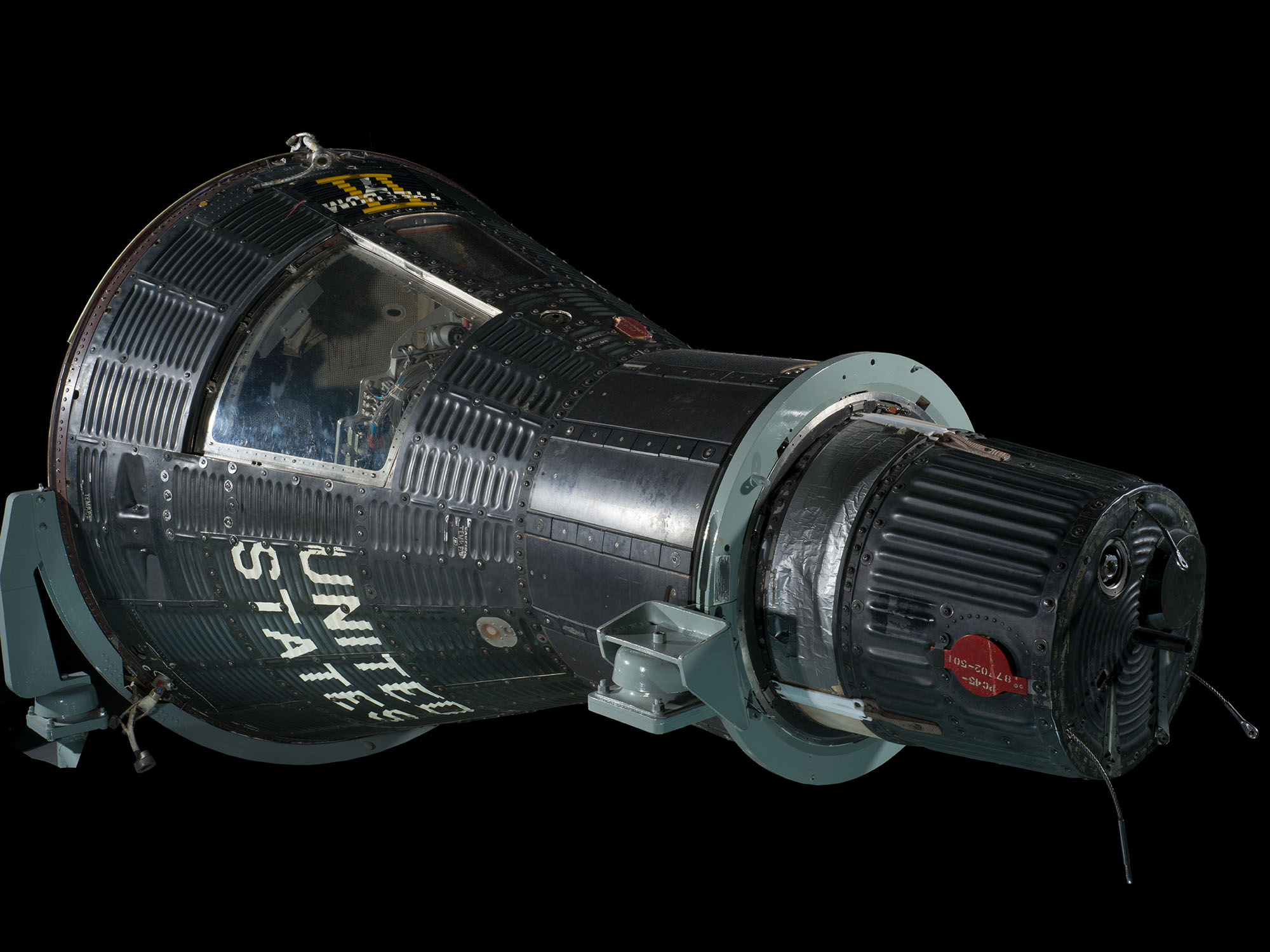
Twentieth-century rocketry drew support from military requirements as well as scientific and exploratory ambitions. Related technologies could deliver very different payloads. The Poseidon missile and the spacecraft nearby make that dual inheritance visible.
The similarities do not make the missions equivalent. Objectives, institutions, command decisions, and consequences determine the historical meaning of the hardware.
A launch is a collective operation
The moment of ignition concentrates attention on one vehicle, but successful operations depend on manufacturing, testing, weather assessment, communications, and teams following carefully coordinated procedures. Guidance must turn available propulsion into the intended trajectory.
The artifacts reward comparison at several scales: the engineering of an individual component, the behavior of a complete vehicle, and the national purposes behind a program. Rocketry’s power to inspire comes partly from how far it can carry us, and partly from the responsibility attached to choosing what it carries.