Udvar-Hazy
Mobile Quarantine Facility
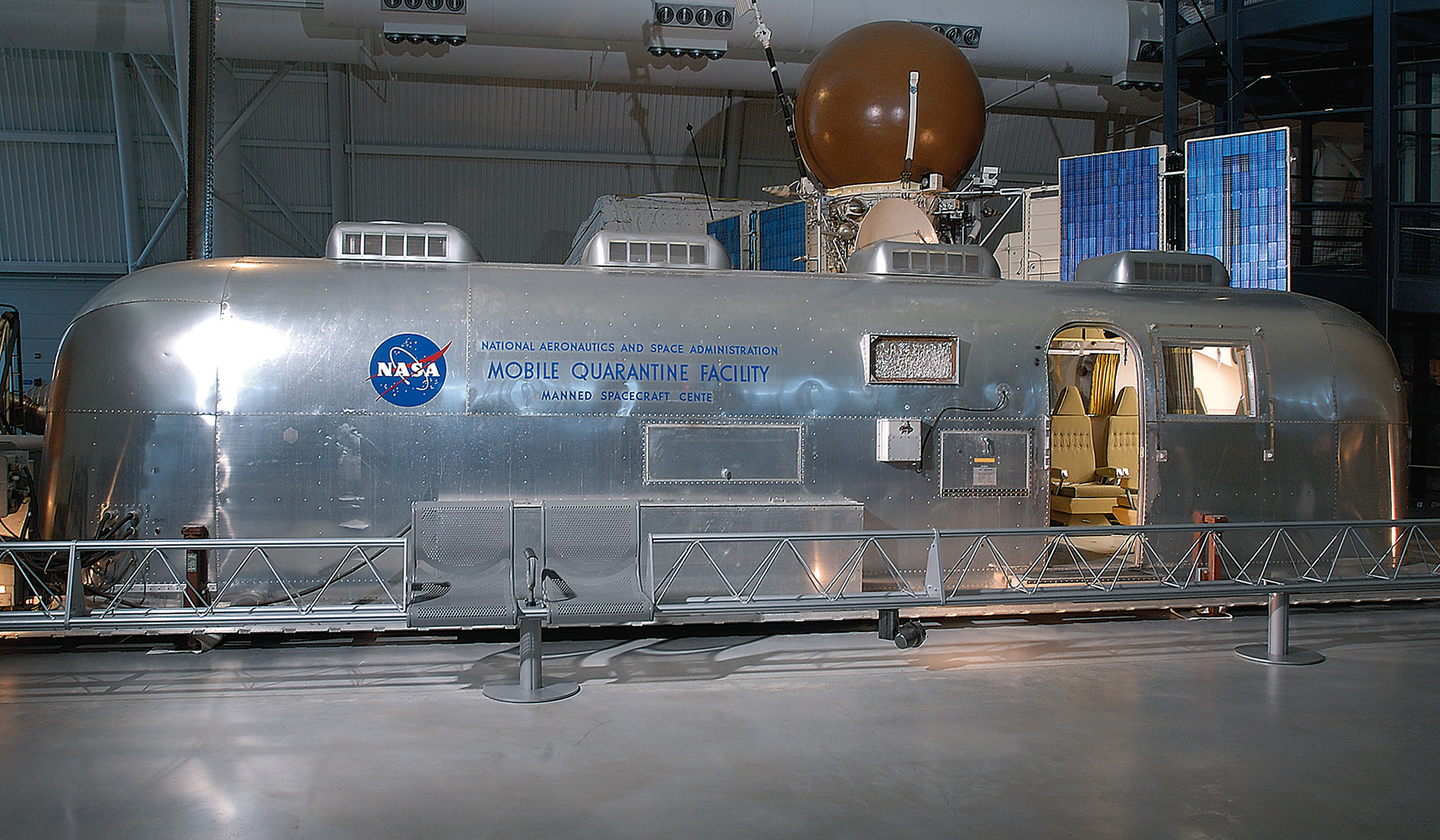
After walking on the Moon, Neil Armstrong and Buzz Aldrin joined Michael Collins in something much more ordinary-looking: a trailer. This specially equipped Airstream carried the Apollo 11 crew from their recovery ship toward a laboratory in Houston. Scientists did not expect dangerous lunar organisms, but wanted to check before ending the crew’s isolation. The trailer is a reminder that an extraordinary expedition still needed beds, meals, careful planning, and a safe journey home.
In depth
The journey did not end at splashdown
Apollo 11 returned to Earth on July 24, 1969. Recovery by the aircraft carrier USS Hornet was a triumph, but NASA still had an unfinished task: bringing the crew and lunar material into controlled facilities without exposing the outside world to a hypothetical biological hazard. The Mobile Quarantine Facility bridged the gap between an ocean recovery and the Lunar Receiving Laboratory in Houston.
Armstrong, Aldrin, and Collins spent roughly 65 hours in this trailer during that transfer. Their longer quarantine continued after they arrived in Houston. The trailer was therefore a transportable stage in a larger system, rather than the place where the entire isolation period took place.
An Airstream with a scientific job
Living quarters, a kitchen, a bathroom, and sleeping space made the facility habitable. Less visible features made it a containment device. Air pressure inside was kept lower than the surrounding air, encouraging leakage inward rather than outward. Exhaust air passed through filters. A familiar recreational vehicle had become specialized mission equipment.
This kind of adaptation helped Apollo solve a practical problem without inventing every component anew. The spacecraft needed to survive launch and reentry; the quarantine facility needed to function on a ship, aboard an aircraft, and during ground transport. Different environments called for very different engineering.
A presidential welcome through glass
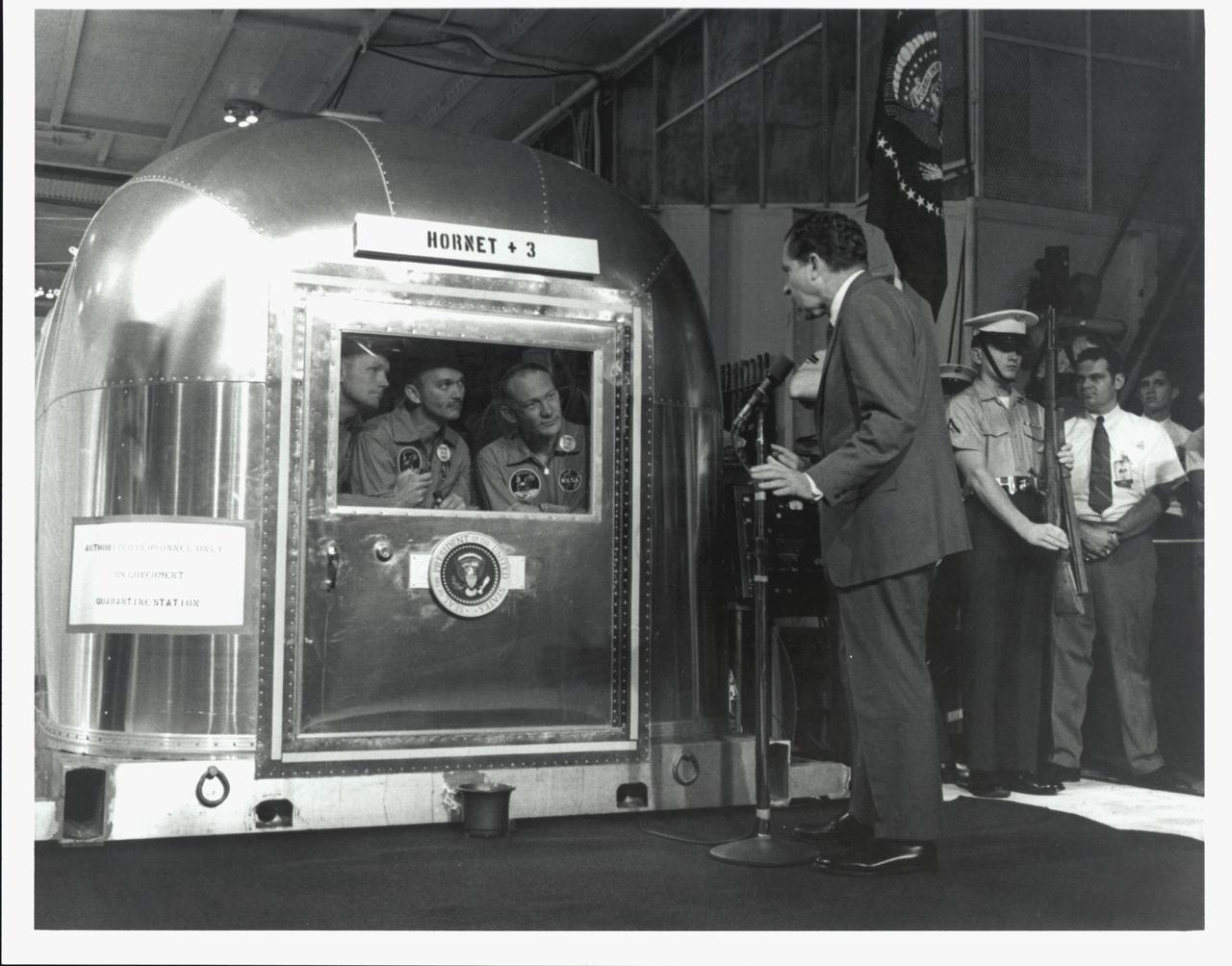
The photograph of President Richard Nixon greeting the astronauts through the facility’s window captures the moment perfectly. The crew were international heroes, yet their first public welcome occurred with a physical barrier between them and their visitors. Celebration and scientific caution occupied the same small space.
No dangerous lunar organisms were found. What remains is a compelling artifact of preparation for the unknown, and of the recovery crews, physicians, technicians, and families who made a return from the Moon more than a spacecraft’s arrival in the ocean.