Udvar-Hazy
Arado Ar 234 B Blitz
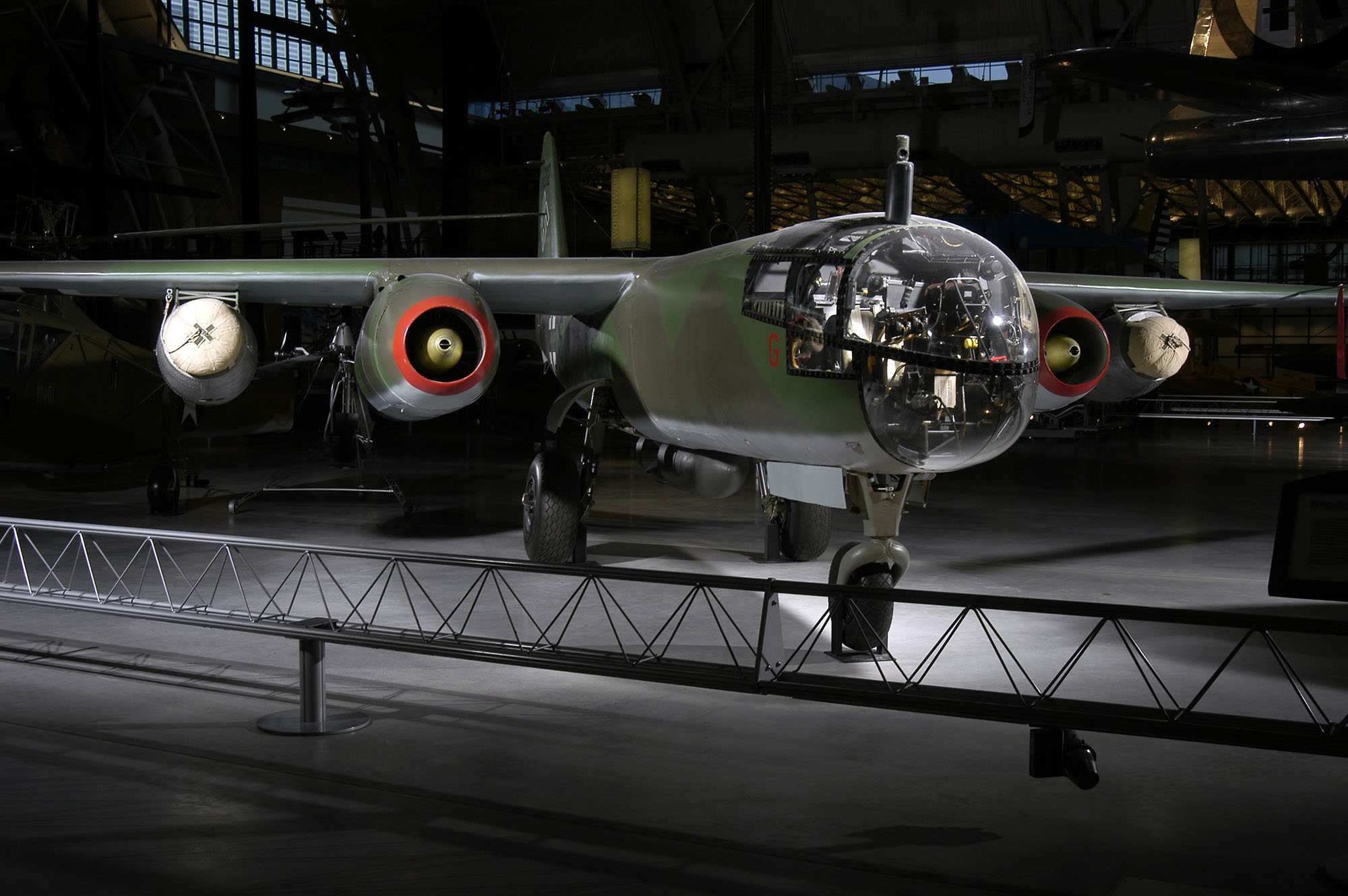
With jet engines beneath its wings and a cockpit like a glass nose, the Arado Ar 234 looked very different from most World War II aircraft. It became the first operational jet bomber, and also carried cameras on reconnaissance missions. Speed made it difficult to intercept, but there were too few aircraft, too late in the war, to reverse Germany’s defeat. This rare survivor later became a subject of Allied flight testing.
In depth
A camera could be more valuable than a bomb
On August 2, 1944, an Ar 234 flew a reconnaissance mission over the Allied landing area in Normandy. The flight demonstrated a powerful use for early jet propulsion: collecting photographs where slower aircraft faced dangerous interception. Returning with usable information could matter more than delivering a small bomb load.
The Ar 234’s speed offered an advantage over many propeller-driven fighters. That advantage was conditional, however. Takeoff, landing, maintenance, fuel supply, and the availability of trained pilots still governed whether it could complete a mission. Maximum speed alone never describes an aircraft’s entire military value.
A cockpit at the very front
The glazed nose placed the pilot ahead of the wings and engines. In the panorama, notice how little conventional fuselage seems to remain in front of the crew position. The configuration gave a distinctive view outward and made the aircraft immediately recognizable.
Jet power removed the propeller from the pilot’s forward view, but it did not remove engineering difficulty. Early turbines had to cope with high temperatures and demanding materials requirements. Turning a promising engine into reliable everyday equipment was a separate challenge from making it run on a test stand.
Captured, tested, preserved
This Ar 234 B-2 served with KG 76 before British forces captured it in Norway in May 1945. It was subsequently transferred to the United States and reached Wright Field for testing in 1946. Its later restoration preserved the sole surviving complete example of the type.
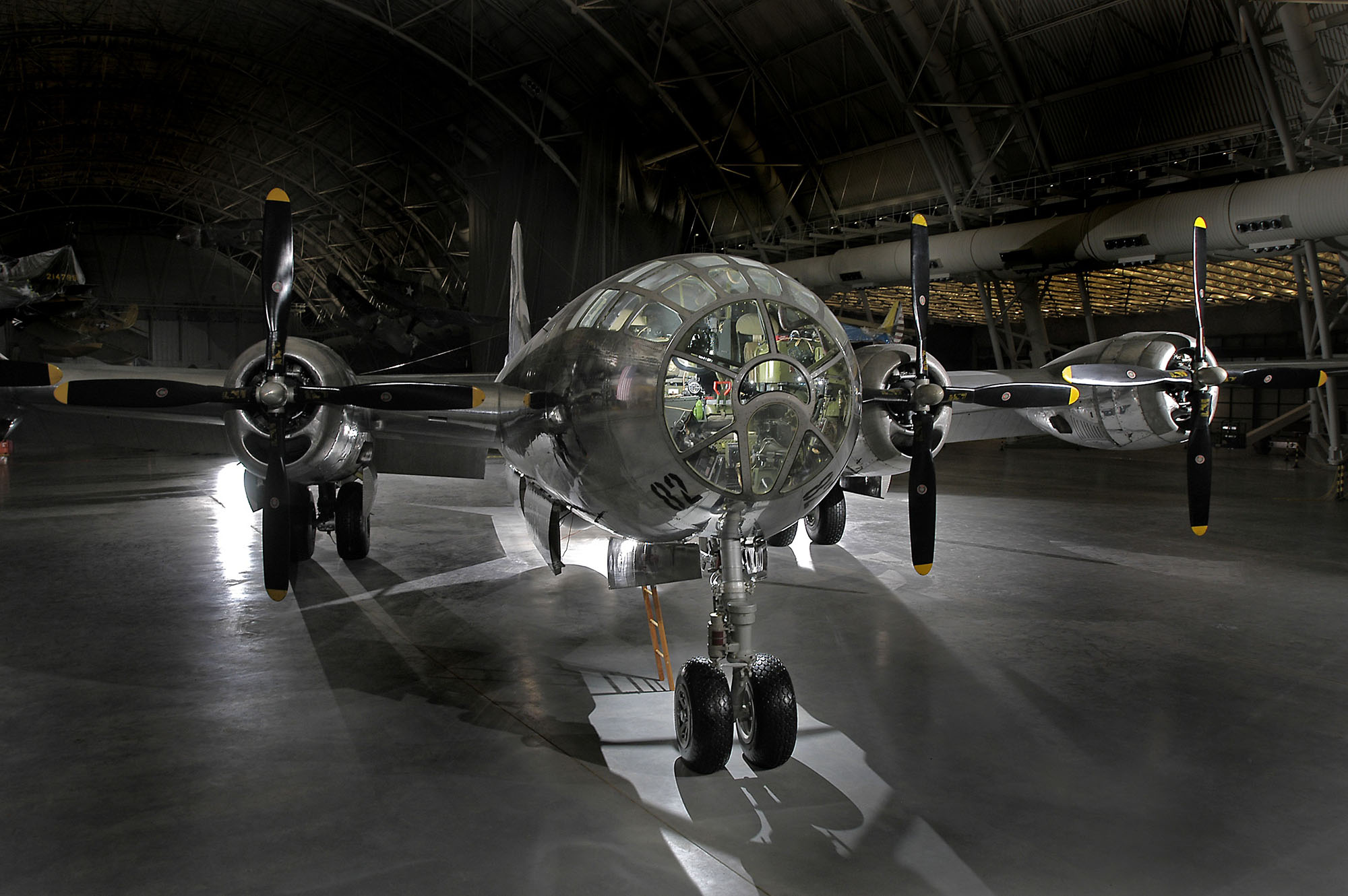
Place it alongside the B-29 story. Both represented advanced wartime engineering, but their histories show how differently industrial scale, resources, and strategic circumstances determined what a technically sophisticated aircraft could achieve.