Udvar-Hazy
Bell H-13J
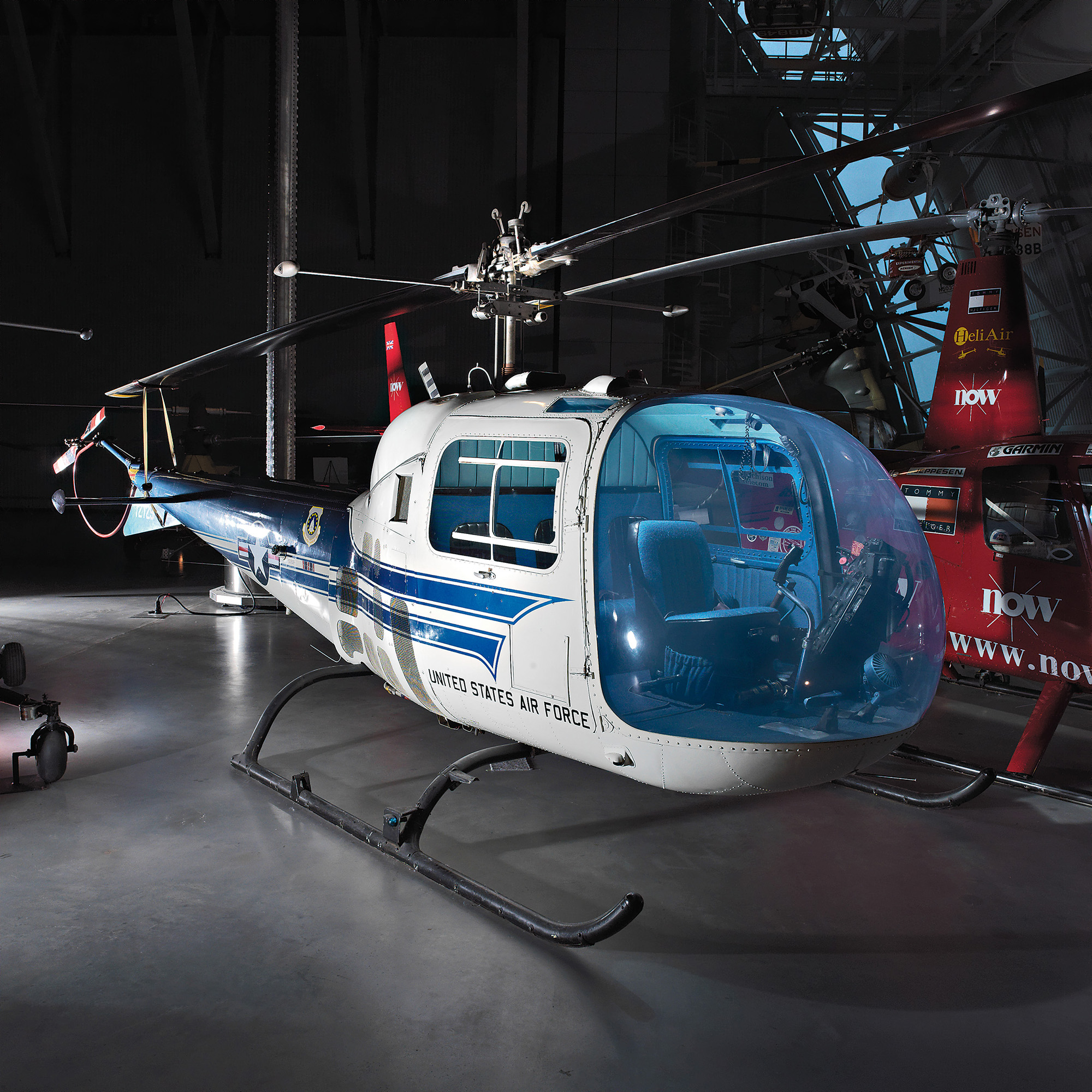
This modest helicopter helped begin a familiar presidential tradition. Dwight D. Eisenhower flew in it on July 12, 1957, becoming the first U.S. president to travel by helicopter. Its ability to take off from a small space offered a new kind of mobility around Washington. The H-13J looks tiny beside later presidential helicopters, but it made a persuasive demonstration: sometimes the most useful aircraft is the one that can land close to where you need to go.
In depth
A Cold War requirement becomes everyday transport
The Air Force acquired two modified H-13Js with an urgent contingency in mind: moving the president to a remote command location during a confrontation with the Soviet Union. A helicopter could depart without the runway and airport access needed by a conventional transport.
Eisenhower’s use soon extended beyond emergency planning. Flights to Washington National Airport and his Gettysburg retreat showed how vertical flight could shorten journeys that otherwise depended on roads. The aircraft helped turn an exceptional military capability into a recognizable part of the presidency.
Small cabin, major change
The H-13J belonged to the Bell Model 47 family. The Ranger configuration enlarged the cabin to accommodate four people and rearranged the pilot’s instrument panel. These changes were modest compared with the scale of a jet transport, yet cabin layout is central to whether a machine is useful to its passengers.
Look at the generous transparent enclosure and the compact rotorcraft surrounding it. The helicopter’s purpose becomes understandable without a performance chart: provide visibility, lift people from a confined area, and set them down near their destination. The exposed mechanical character also makes it an excellent starting point for comparing later, more enclosed helicopters.
The beginning of a larger system
Larger and more comfortable aircraft soon replaced the H-13J in presidential service. Its importance rests in what it demonstrated. Presidential helicopter travel would become a system involving aircraft, crews, maintenance, communications, and carefully organized landing sites.
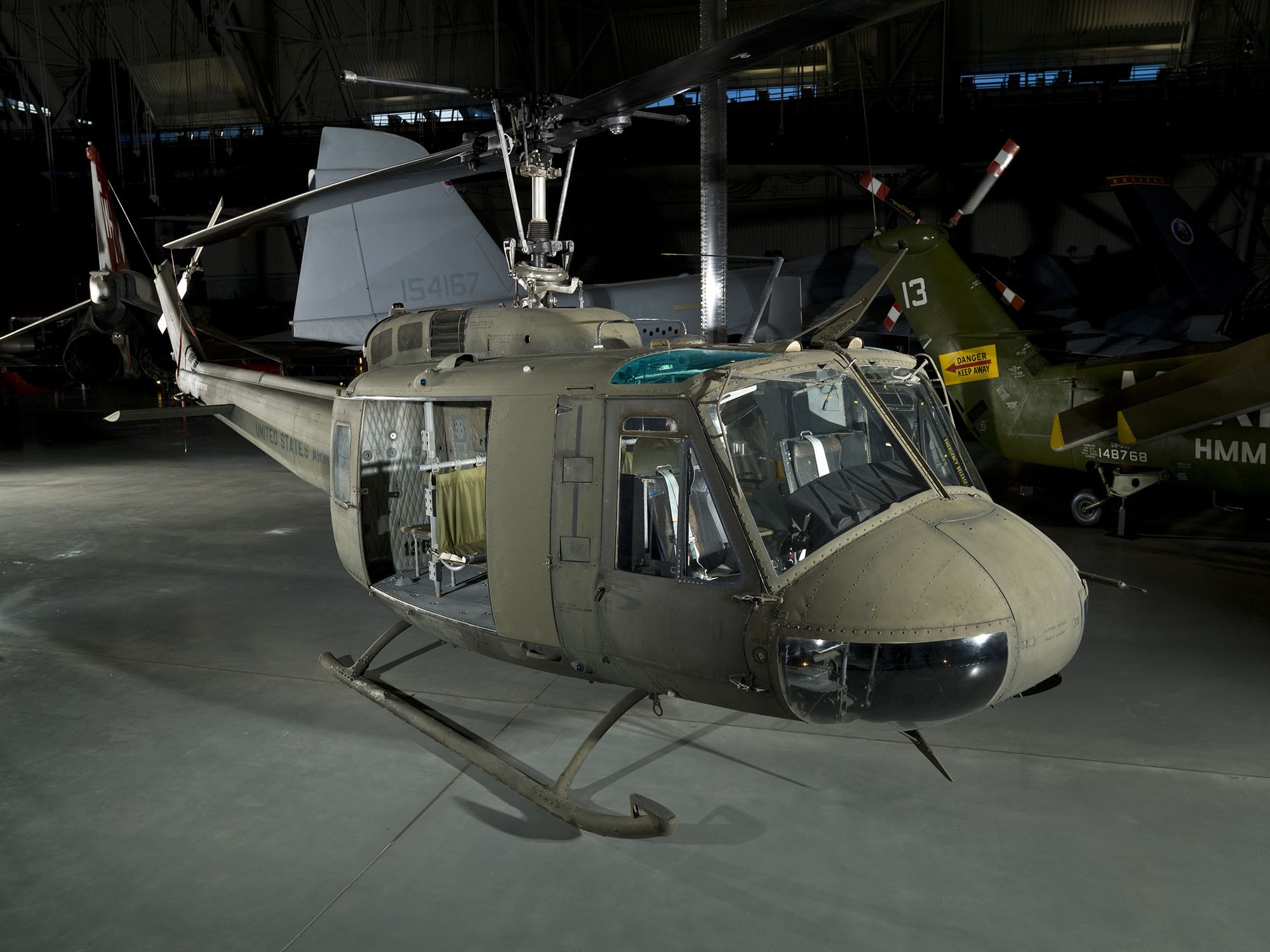
The contrast with the Huey is revealing. One story concerns a few highly protected passengers; the other concerns moving troops, supplies, and casualties. Both begin with the same practical advantage: access to places that lack a runway.