Udvar-Hazy
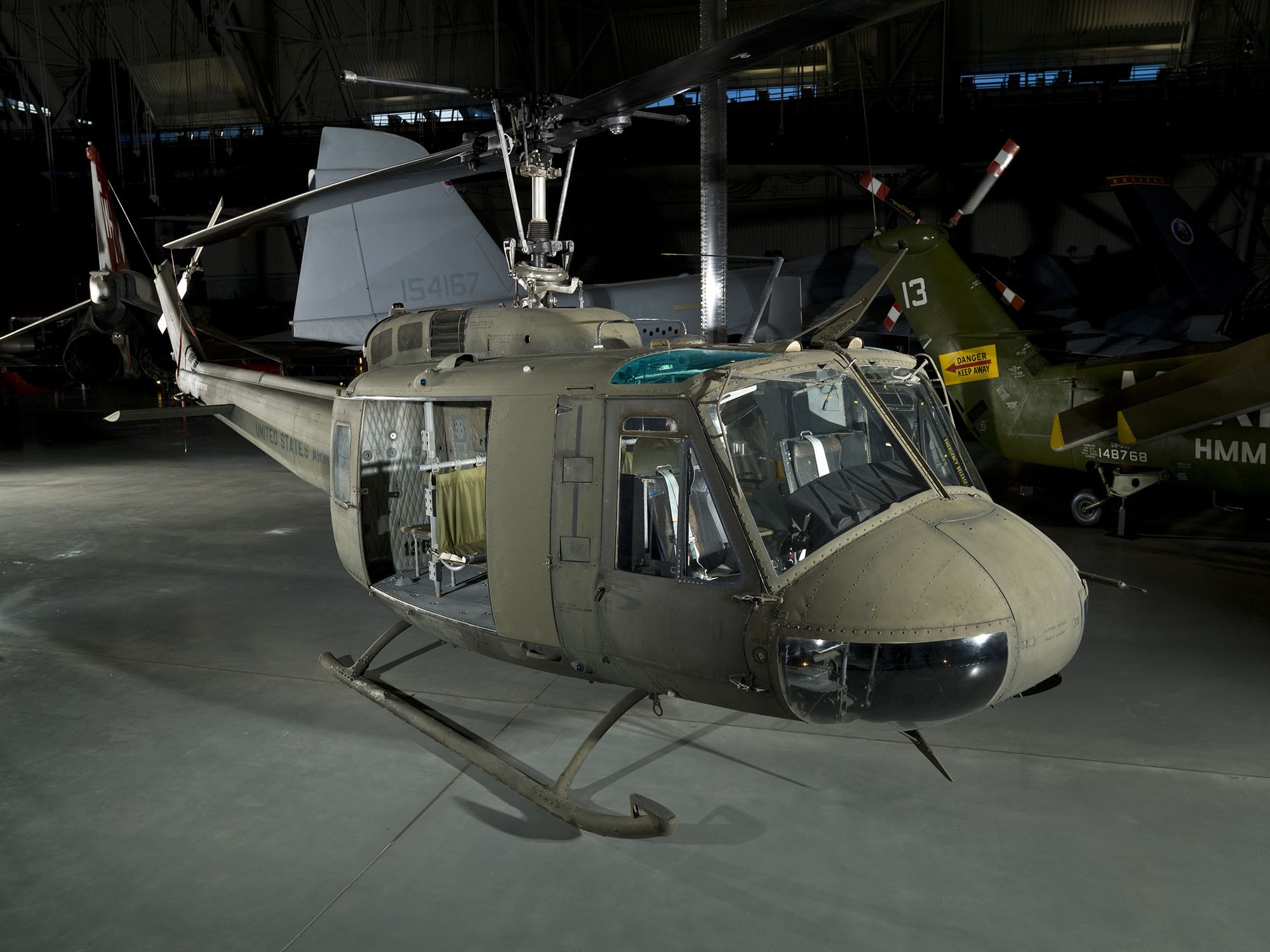
Bell UH-1H Iroquois “Huey” Smokey III
The Huey became one of the most recognizable aircraft of the Vietnam War. It carried troops and supplies, brought wounded people toward medical care, and served in armed and specialized roles. This aircraft, known as Smokey III, flew thousands of combat hours and helped lay smoke screens during air-assault operations. Patches in its skin tell a harder story than a polished silhouette: crews repeatedly flew a working machine into danger, then repaired it for the next mission.
In depth
An aircraft built around access
The Huey grew from an Army requirement to replace the small medical-evacuation helicopters associated with the Korean War. Its first flight in 1956 opened a new chapter in turbine-powered military rotorcraft. A useful cabin and the ability to operate away from established airfields made the family adaptable to very different jobs.
In Vietnam, helicopters became essential to the idea of air mobility. Troops could move over terrain that slowed vehicles on the ground. Supplies could follow them, and casualties could be carried out. That flexibility also placed crews over landing zones where enemy fire, weather, visibility, and rapidly changing conditions could converge.
Smokey III’s particular war
This airframe accumulated more than 2,500 combat hours in Vietnam between 1966 and 1970. Its service included the 229th Assault Helicopter Battalion and the 118th and 128th Assault Helicopter Companies. In its earlier UH-1D configuration, it also worked as a smoke-laying aircraft with the 11th Combat Aviation Battalion.
Smoke screens attempted to obscure air-assault operations from an opponent’s view. They were one contribution within a coordinated operation, not a guarantee of protection. The repaired skin of this helicopter records the risks attached to those missions more directly than a list of specifications can.
An icon made by many kinds of service
The Huey’s public identity often compresses many experiences into a single sound and shape. Medical crews, transport pilots, door gunners, maintenance teams, and the people they carried knew different versions of the aircraft. Its history includes rescues and extraordinary service, as well as combat losses and the suffering of the war around it.
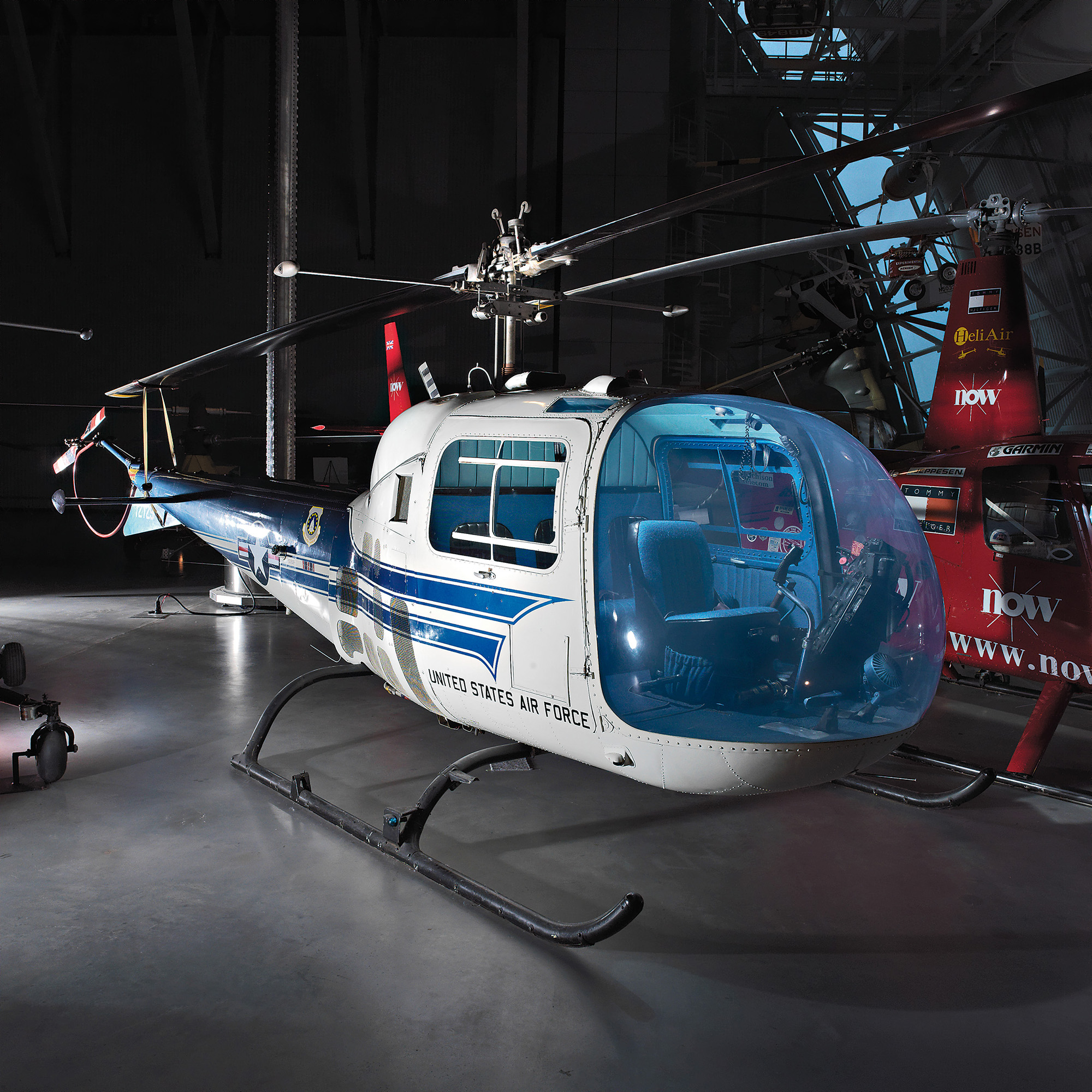
Compare the H-13J to appreciate how much cabin utility and operational demand had grown. The Huey story is ultimately about what aviation made possible near the ground, where people urgently needed movement rather than speed records.