Udvar-Hazy
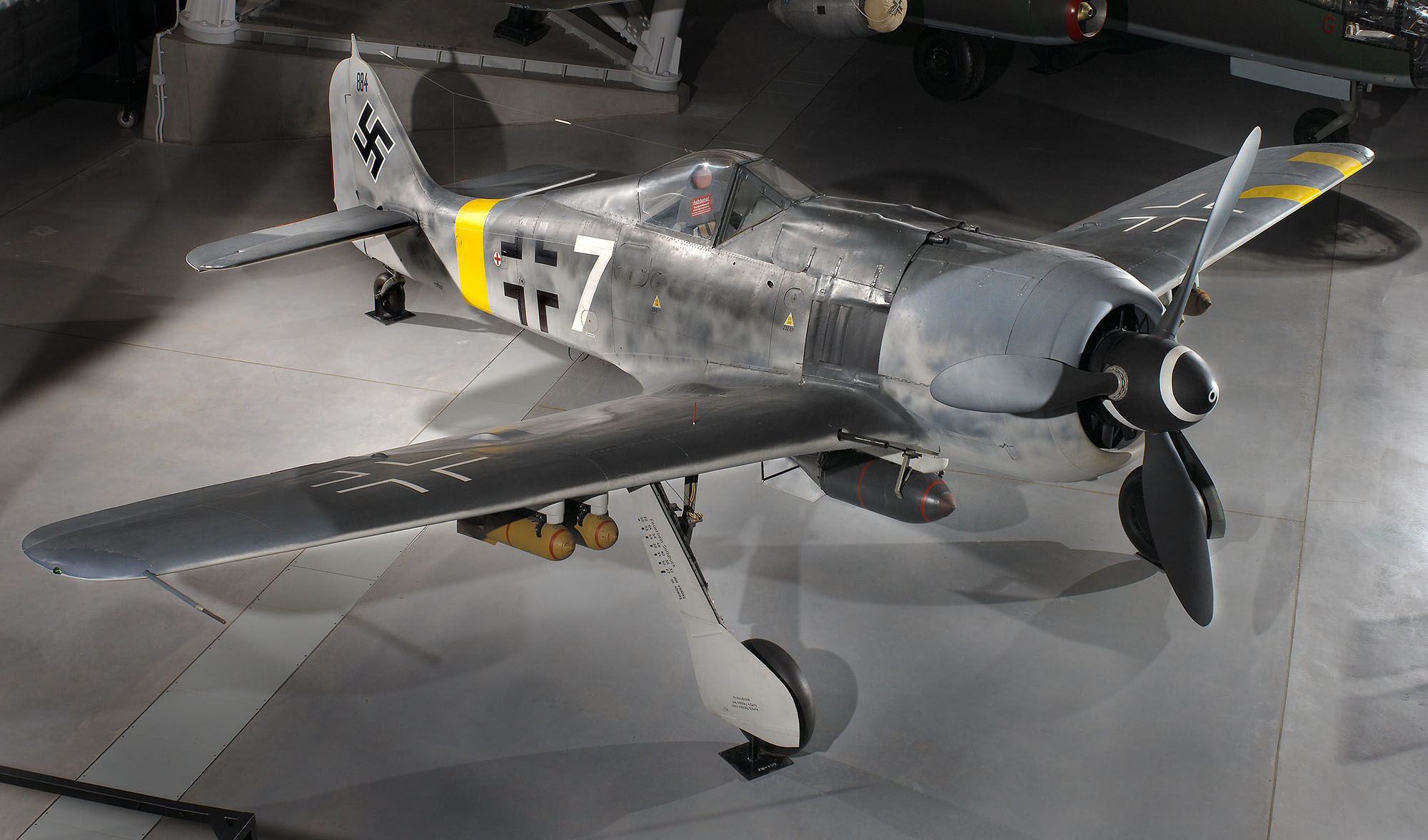
Focke-Wulf Fw 190 F
The Fw 190 became one of Germany’s major combat aircraft in World War II. This example began as a fighter and was rebuilt for ground attack, carrying a different mission within much the same basic airframe. Its restoration uncovered layers of wartime paint that helped reveal its changing identity. The aircraft is both a powerful machine and a historical object whose surfaces preserve evidence of how it was used.
In depth
One design, changing demands
The Fw 190 entered service in 1941 and developed into a family used for air combat and attacks on ground targets. Its broad radial-engine nose gives it a different profile from many contemporary fighters powered by narrow liquid-cooled engines.
This example began as an A-7 fighter before being remanufactured as an F-8 fighter-bomber in 1944. The change reflects a common wartime practice: adapting an established airframe as operational needs shifted. A designation records more than an administrative detail when equipment, load carrying, and mission priorities change with it.
Following the evidence in paint
Restoration between 1980 and 1983 revealed successive paint schemes. Those layers helped establish how the aircraft had appeared during its wartime service. The museum restored its presentation to its period with the ground-attack unit SG 2.
Paint can function as evidence. Colors, markings, repairs, and layers beneath the visible surface may document an airframe’s movements and alterations. Restoration therefore requires choices based on records and physical traces, rather than simply applying the most dramatic-looking camouflage.
Technical achievement in historical context
The Fw 190’s engineering attracted Allied attention after the war, and this aircraft reached Freeman Field in Indiana before transfer to the Smithsonian. Captured aircraft gave engineers and pilots opportunities to examine unfamiliar design decisions directly.
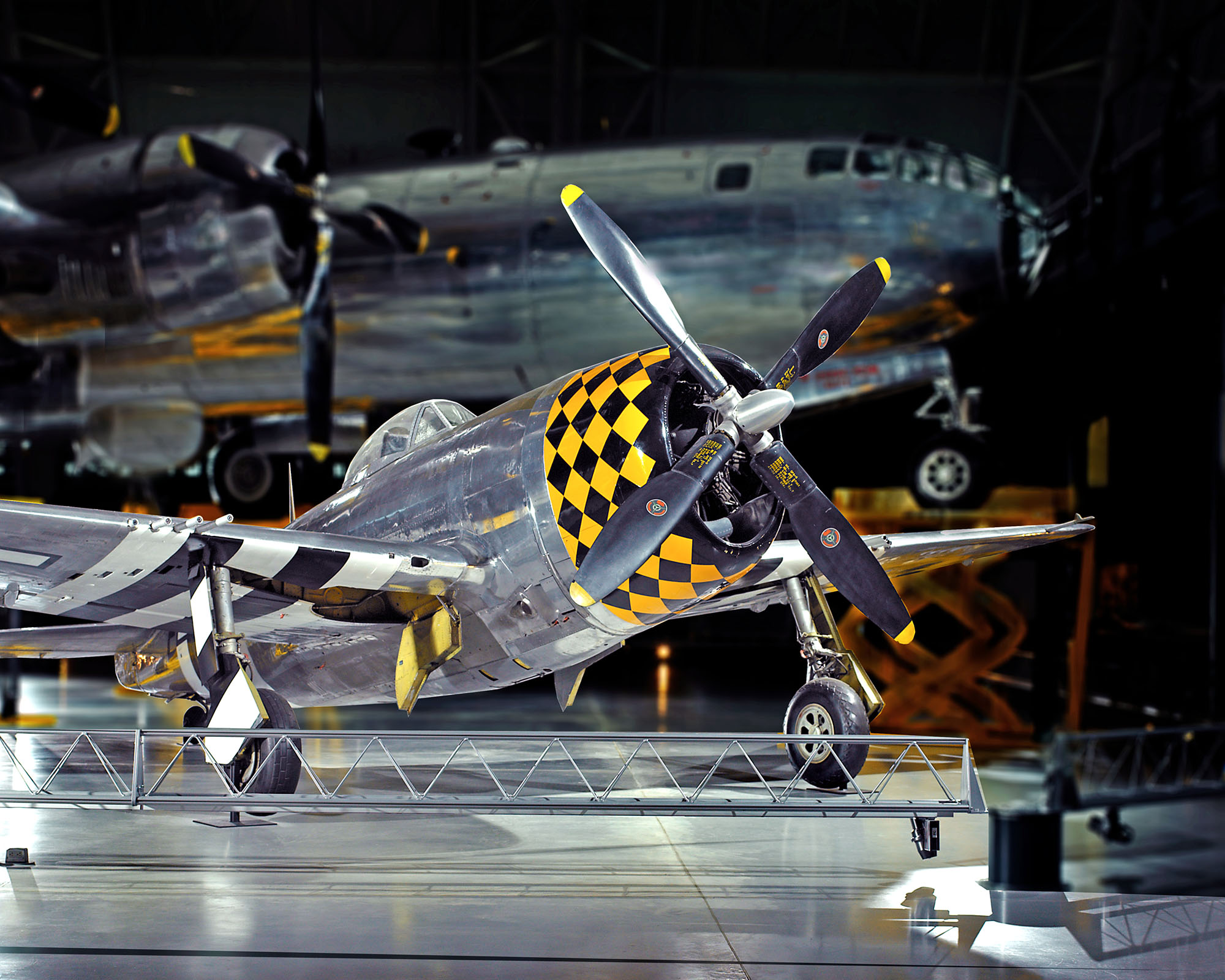
Its history also belongs to the Luftwaffe’s service of Nazi Germany and the destruction of World War II. A close technical examination is most useful when it retains that context. Compare it with the P-47: two large radial-engine fighters evolved toward ground-attack work, but served opposing forces within a much larger conflict.