Udvar-Hazy
Heinkel He 219 Uhu (Eagle Owl)
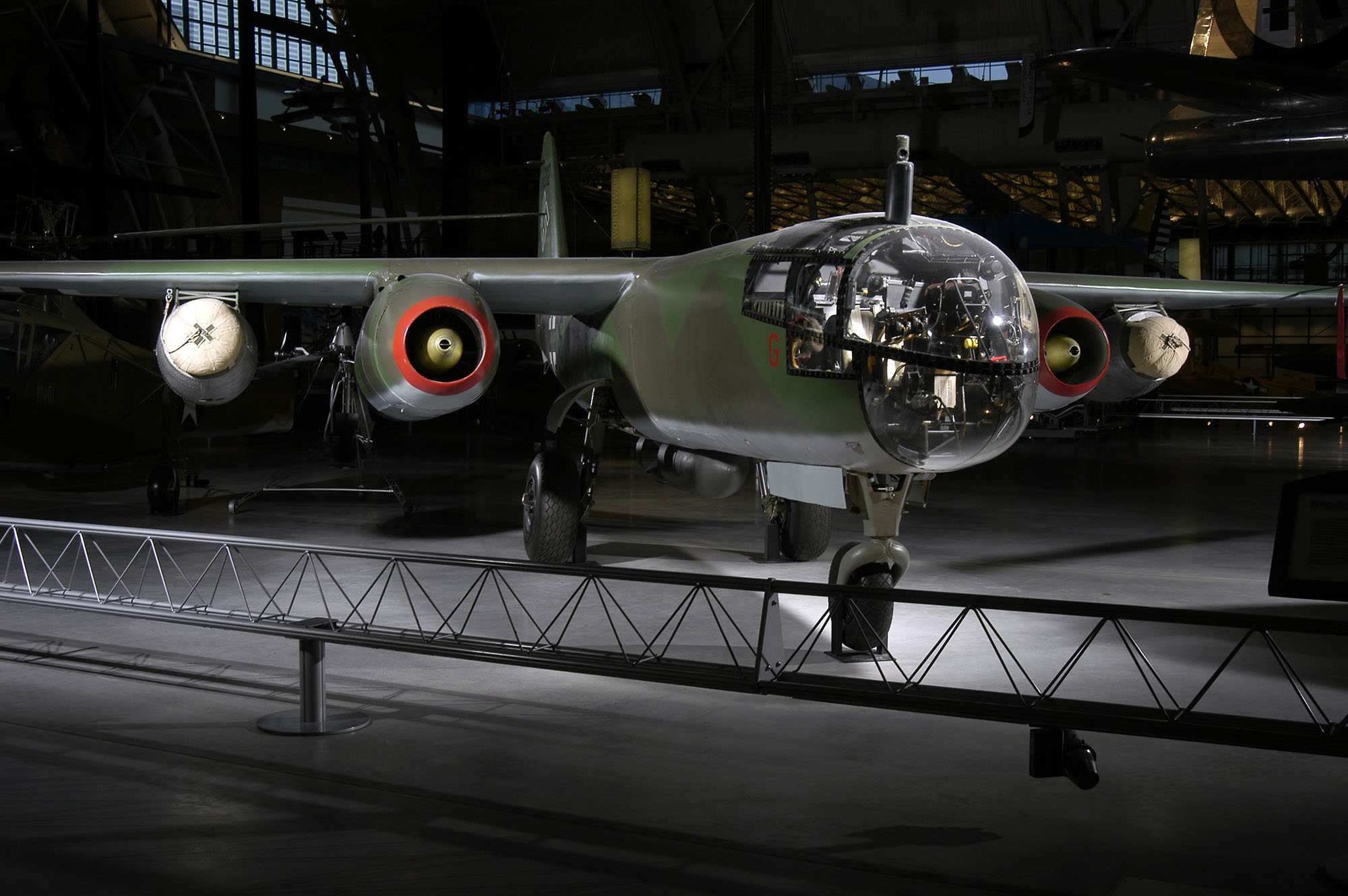
The He 219 was designed to find aircraft in darkness. Its crew used radar to close on a target that might be invisible to the eye, while its heavy armament made it a dangerous night fighter. The distinctive nose antennas reveal that another kind of sight had become essential. This late-war survivor also incorporated ejection seats, showing how increased aircraft performance was changing the problem of getting a crew out safely.

In depth
Fighting without daylight
Night operations shifted the central challenge from simply seeing an aircraft to detecting and locating it electronically. The He 219 combined airborne radar, a two-person crew, and weapons in a machine designed for that environment. The pilot and radar operator had to turn instrument information into a successful interception.
The antenna array on the nose is the most visible expression of that work. It also illustrates a compromise: equipment that helped detect another aircraft could add aerodynamic drag. A combat aircraft is not always shaped solely to fly as cleanly as possible. Sensors and weapons impose their own requirements.
Performance changes the escape problem
The He 219 was among the earliest operational aircraft equipped with ejection seats. As speed increased, leaving a cockpit and clearing the aircraft safely became more difficult. A system that actively propelled a crew member away offered a new answer to an old emergency.
The aircraft also used a tricycle landing-gear arrangement. Its nosewheel, long fuselage, engine nacelles, and radar installation give it a very different stance from a conventional single-engine fighter. Each feature reflects the effort to package crew, equipment, propulsion, and weapons into one workable platform.
Surviving a defeated air force
This He 219 A-2 was built late in 1944 and captured by British forces in Denmark in May 1945. It was transferred to the United States and later entered the Smithsonian collection. Restoration included careful study of the original camouflage pattern and colors.
Its advanced equipment did not alter Germany’s defeat. The aircraft is a reminder that a sophisticated weapon depends on production capacity, fuel, trained personnel, and a wider strategic situation. Examining the machine closely reveals achievement in particular technologies without turning that achievement into a claim about the success of the regime that employed it.