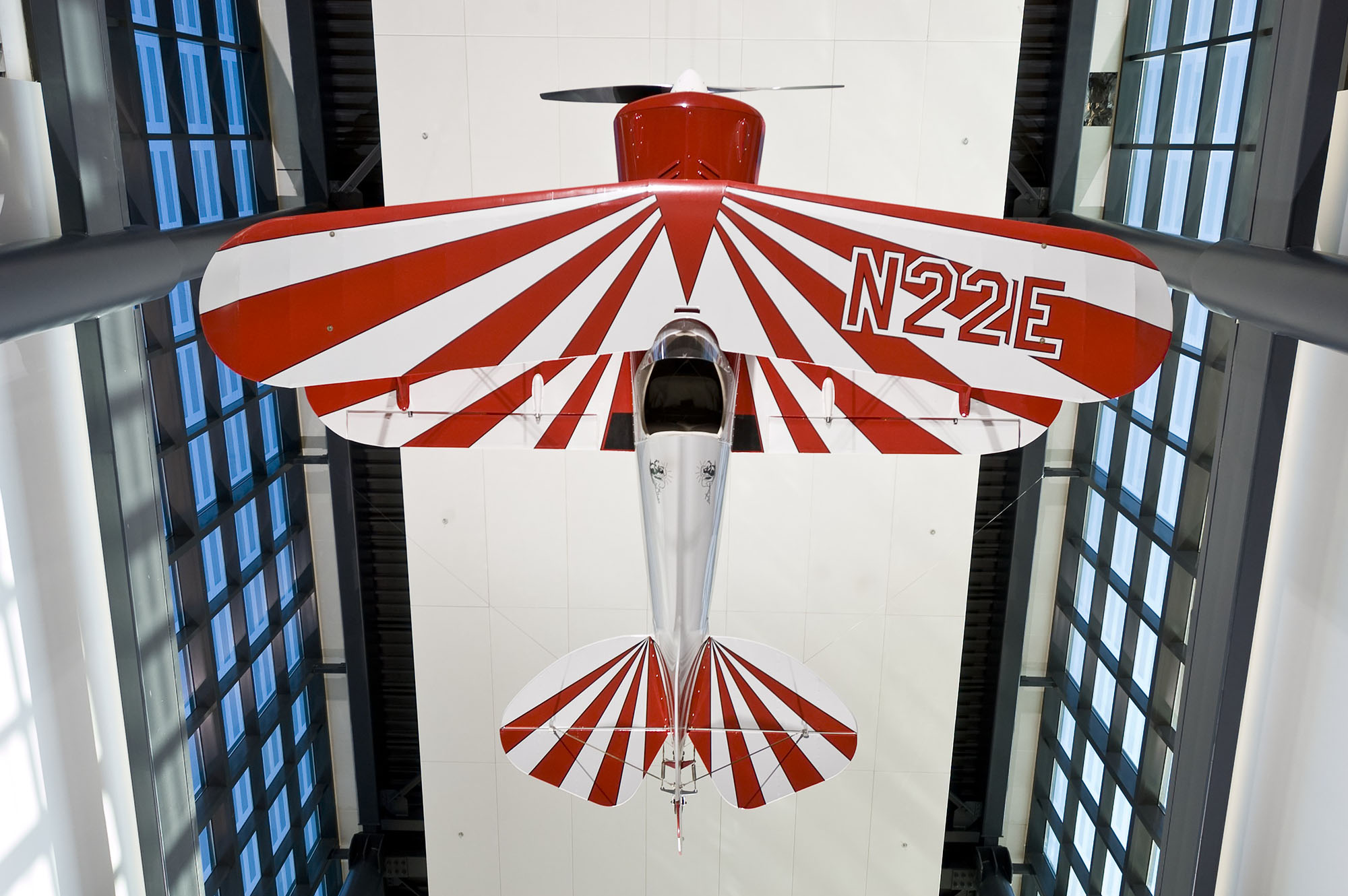
Udvar-Hazy
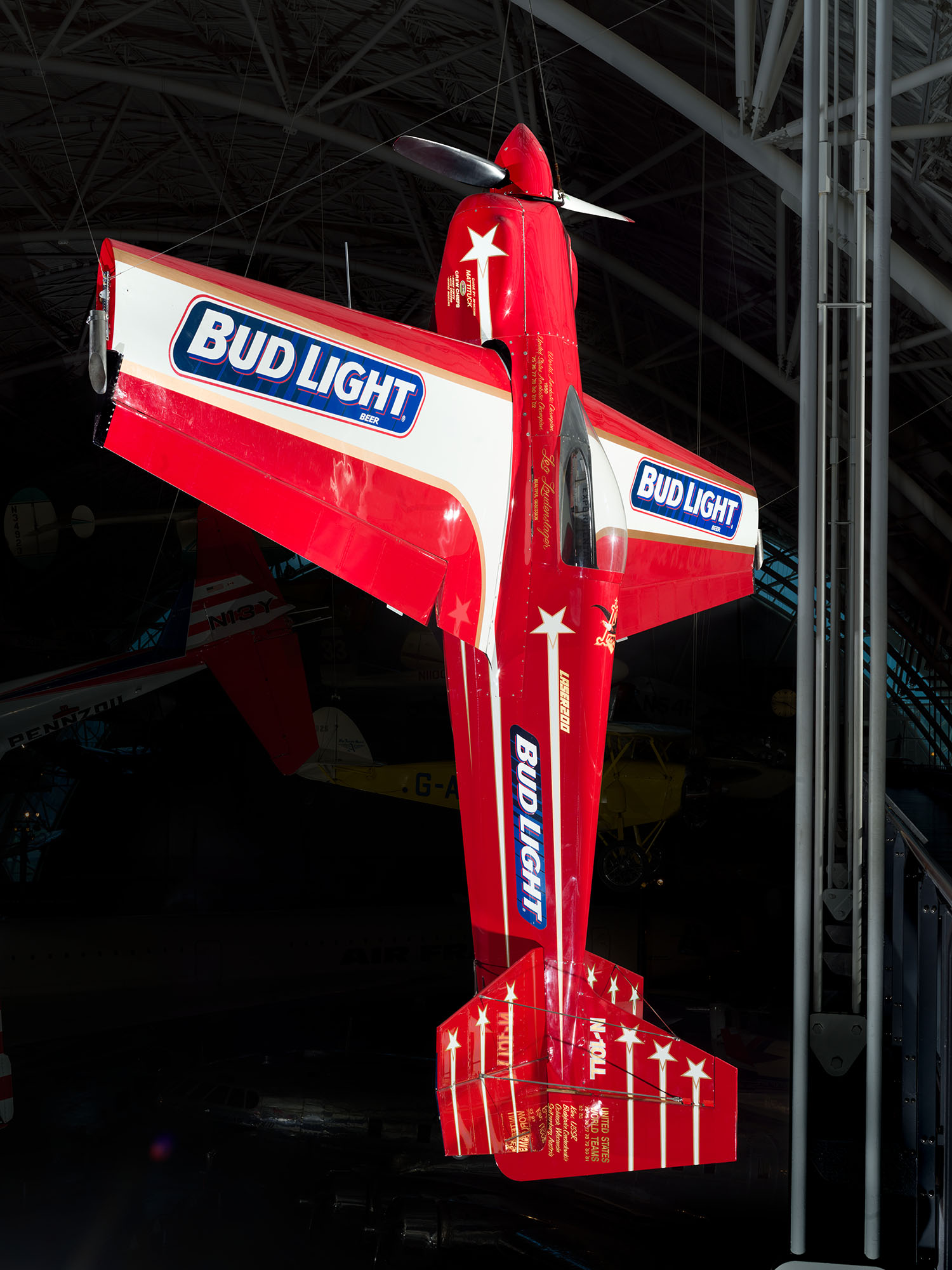
Loudenslager Laser 200
Leo Loudenslager did more than fly this airplane exceptionally well—he kept improving it. Starting with a Stephens Akro, he changed the wings, fuselage, tail, and cockpit until it became the Laser 200. Together, pilot and aircraft won seven U.S. national aerobatic titles and the 1980 world championship. The Laser’s story is about persistent refinement: making a machine lighter, stronger, and more responsive, then developing the skill to use those improvements.
In depth
A competitor becomes a designer
An aerobatic pilot experiences an aircraft’s strengths and limitations directly. Loudenslager used that knowledge to transform an existing design. By 1975, his modifications had replaced major elements of the original Stephens Akro, producing the aircraft recognized as the Laser 200.
The changes were interconnected. Reducing weight could improve the power available for climbing. Stronger structure could support demanding maneuvers. Revised wings and control surfaces could sharpen response. Making one component more capable without considering the others would not necessarily produce a better competition airplane.
Precision inside the spectacle
Loudenslager won seven U.S. national championships between 1975 and 1982 and the world title in 1980. Those achievements required repeatable precision, not simply dramatic motion. A competition routine has to place the aircraft accurately through changing attitudes and speeds while preserving the energy needed for what comes next.
The airplane and pilot developed together. A more responsive aircraft offers possibilities, but it also requires exact timing and restraint. The spectacle is the visible result of preparation, detailed knowledge of the machine, and repeated practice.
An influence beyond one champion
The Laser helped shape later aerobatic designs, including the generation represented by the Extra family. Its influence can be seen in the emphasis on light structure, power, and rapid control response that characterizes modern competition aircraft.
Compare its monoplane layout with Little Stinker and the Jungmeister. The progression is not a simple story in which one wing count replaces another. It reflects changes in materials, competition demands, available power, and the ambitions of pilots prepared to modify their own equipment. Loudenslager’s lasting contribution was both a championship record and a persuasive demonstration of what careful iteration could accomplish.