Udvar-Hazy
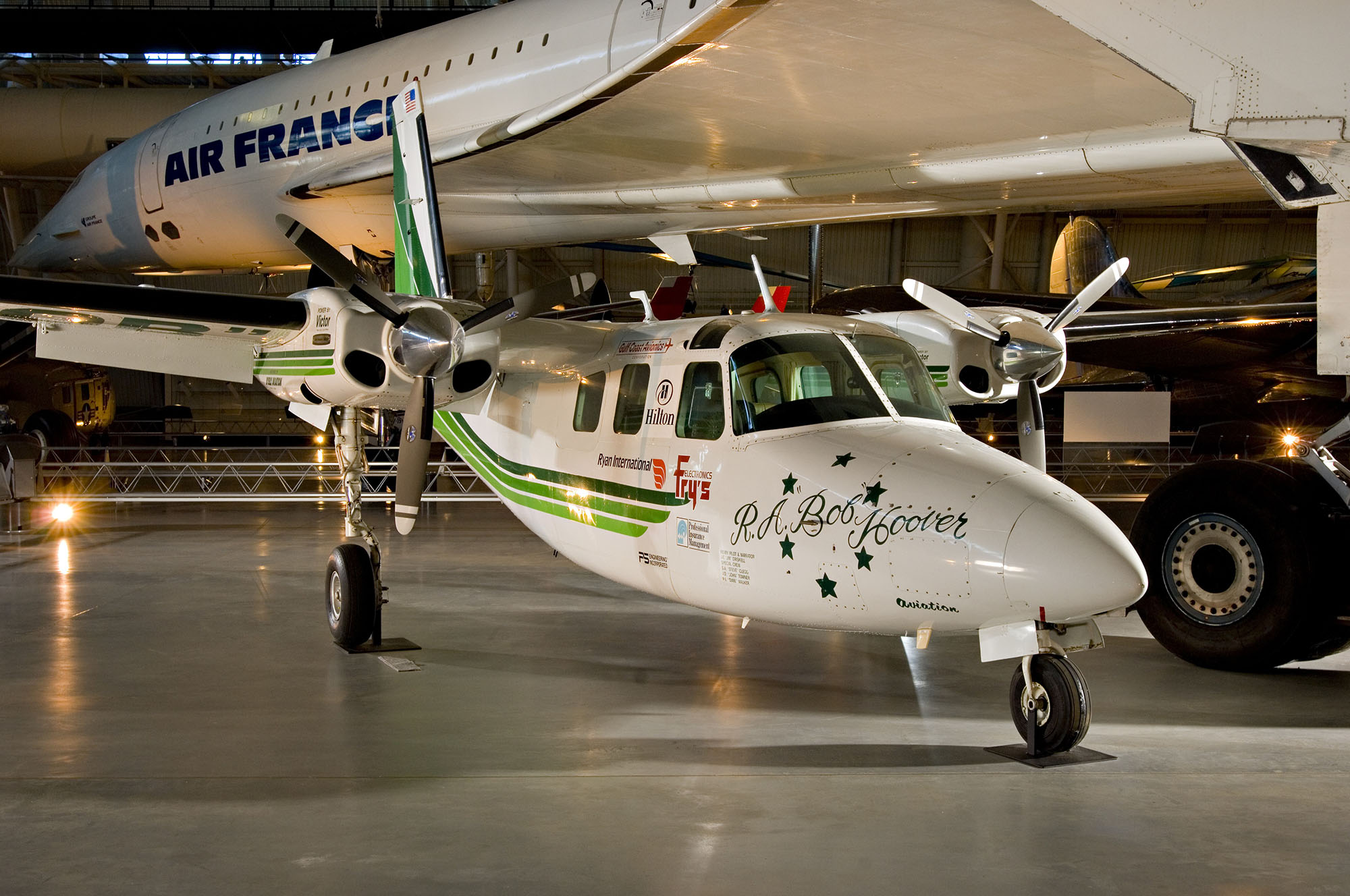
North American Rockwell Shrike Commander 500S Sweetie Face
Bob Hoover made a business airplane perform like an air-show legend. In this Shrike Commander, he demonstrated extraordinary control with two engines, one engine, and even both engines shut down. His famous routine traded speed for height and back again before ending in a smooth landing. The airplane was relatively ordinary; the pilot’s understanding of energy and motion was exceptional. Together they made precision flying visible to audiences around the world.
In depth
An extraordinary pilot chooses an ordinary-looking airplane
Hoover’s career included combat, captivity, escape, military testing, and decades of public flying. After being shot down during World War II, he spent more than a year as a prisoner before escaping and flying a captured Fw 190 to freedom. Later work as a test pilot developed the ability to understand an aircraft near the edges of its performance.
The Shrike Commander offered a very different stage from a fighter. It was a twin-engine business aircraft designed to carry people, with a high wing and a practical cabin. Hoover purchased this example in 1979 and made its green-and-white shape internationally familiar.
Energy becomes the performance
In the best-known routine, Hoover shut down both engines and continued through a sequence of maneuvers before landing. Without engine thrust, the aircraft still possessed energy in its speed and altitude. Climbing exchanged speed for height; descending exchanged height for speed; aerodynamic drag continually reduced what remained.
The routine worked because Hoover planned the sequence and managed that diminishing reserve precisely. It was not evidence that physics had been suspended. It was a public demonstration of how thoroughly a pilot could understand it.
The propellers and aircraft configuration mattered as well. A stopped or poorly configured propeller can create substantial drag. The display aircraft incorporated equipment supporting Hoover’s specialized demonstration work, including propeller-unfeathering and smoke systems.
Skill without frantic motion
Much of the performance’s appeal came from its apparent calm. A loop or roll could be dramatic without looking hurried. The final approach and landing completed the argument: control meant arriving where intended with the energy needed to finish safely.
Hoover’s wartime and test-pilot experience gave depth to the public spectacle, but it did not turn the Shrike into a purpose-built aerobatic fighter. That contrast is what makes the artifact so compelling. Familiar business-aircraft proportions frame an unusually demanding demonstration of judgment.
A memorable arrival at Udvar-Hazy
In 2003, Hoover accompanied the aircraft’s delivery to Dulles. The museum recounts that, after an authorized flyby, he taxied the Shrike directly into the center’s north entrance. It was a fittingly precise final arrival for an airplane associated with ending a performance exactly where its pilot intended.
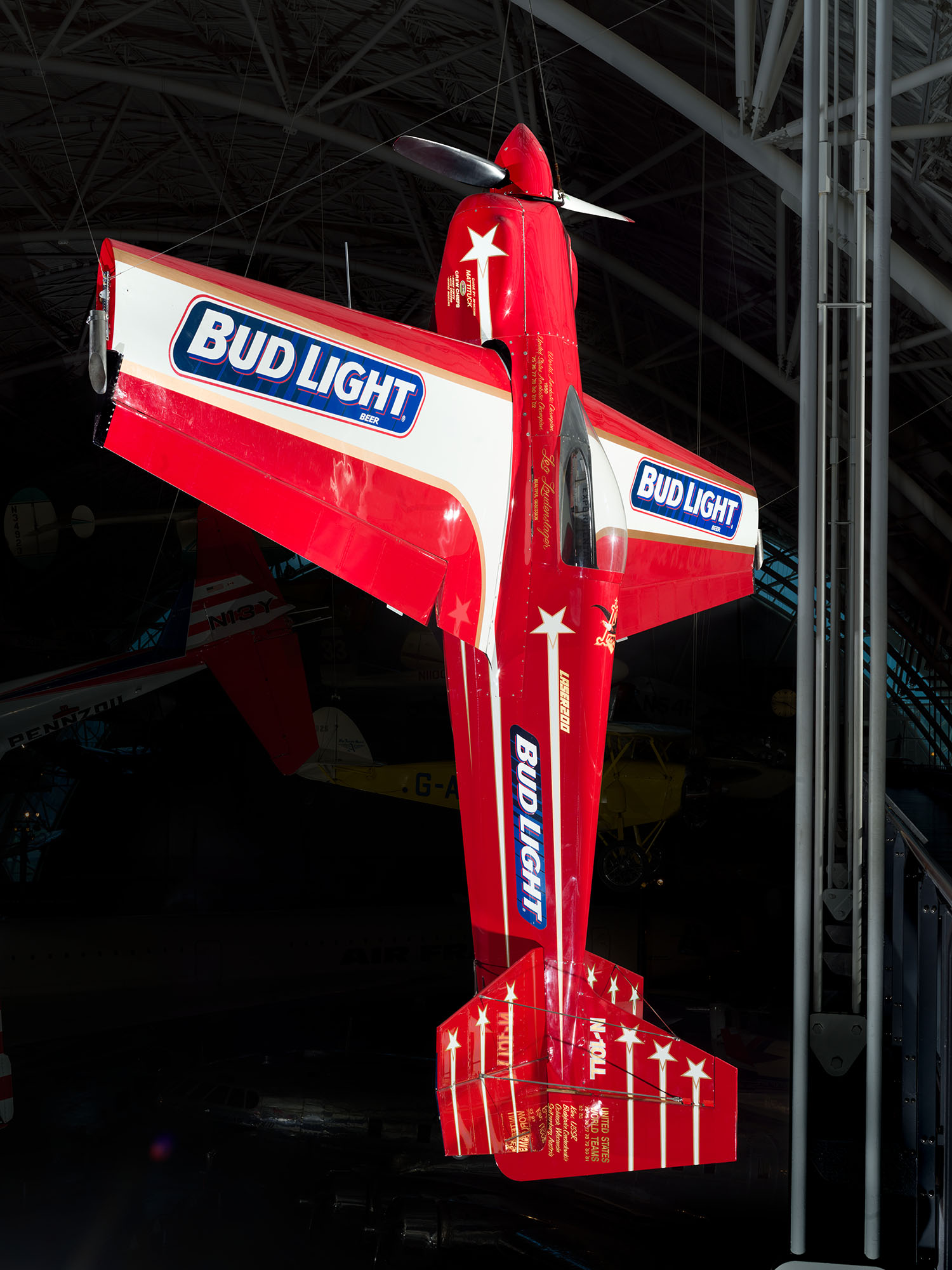
Compare the Shrike with the Laser 200. Loudenslager transformed a design to expand its aerobatic capability; Hoover made the capabilities of a comparatively conventional aircraft visible through remarkable technique. Both stories celebrate deep knowledge of a machine rather than spectacle alone.