Udvar-Hazy
Republic F-105D Thunderchief
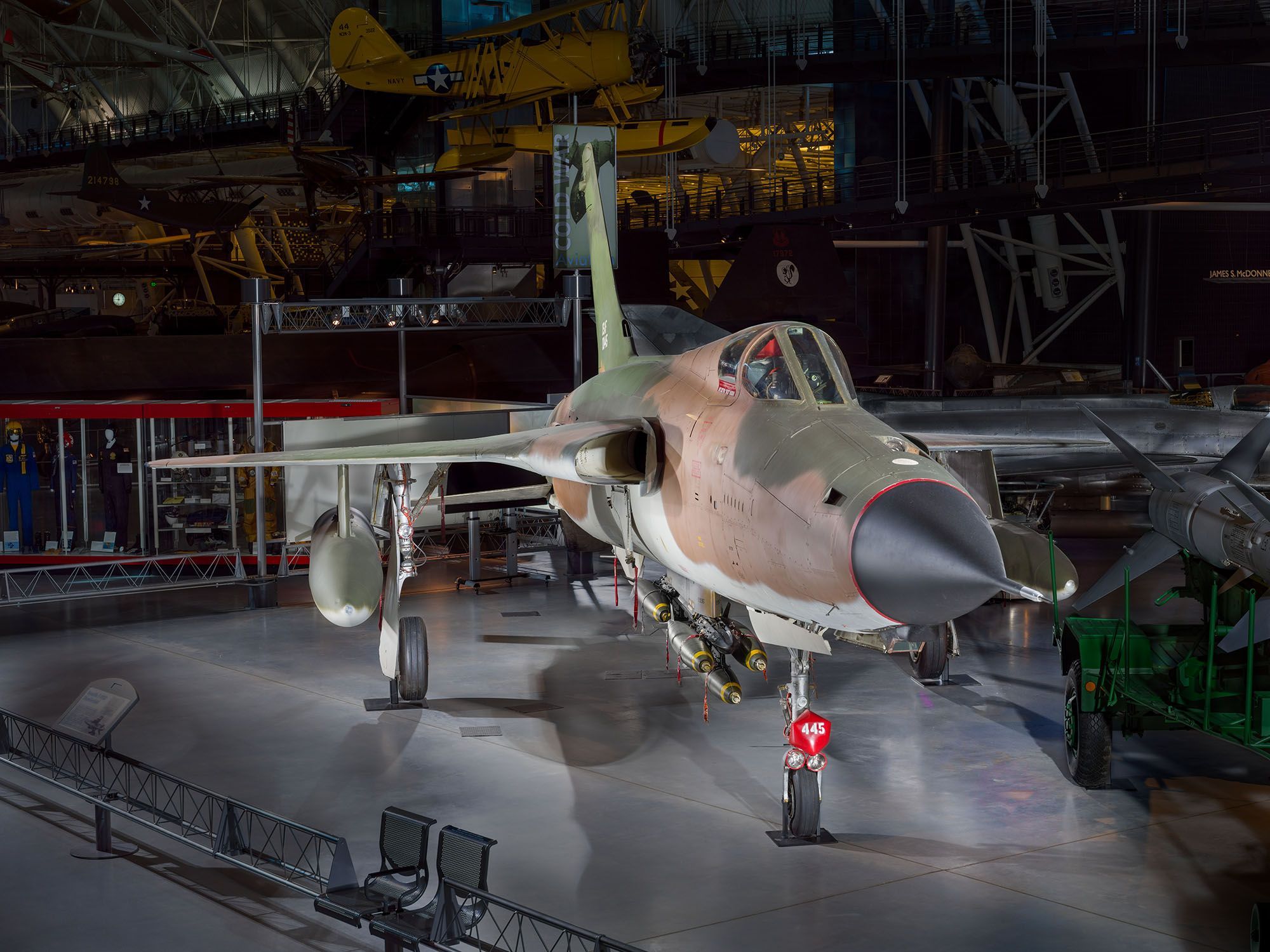
The Thunderchief was built for high-speed strike missions, but became especially associated with the difficult air war over Vietnam. This F-105D served from Thailand and later with the District of Columbia Air National Guard. Its long fuselage, powerful engine, and substantial load-carrying ability reflect its original job. Its combat history reflects something harder to put on a specification sheet: repeated missions through dangerous defenses, sustained by crews on the ground and in the air.
In depth
A Cold War design meets a different war
The F-105 was designed to deliver nuclear or conventional weapons at high speed. The D model added all-weather capability. An internal bay originally intended for a nuclear weapon was used for additional fuel, while conventional bombs could be carried on external racks.
Vietnam placed the aircraft into a demanding conventional strike campaign. Speed remained valuable, but crews also faced antiaircraft fire, surface-to-air missiles, fighters, weather, and the difficulties of finding and attacking targets under operational restrictions. The mission could not be reduced to an aircraft’s maximum performance.
This Thunderchief’s combat identity
The museum example is presented in its 1967 appearance with the 421st Tactical Fighter Squadron, 388th Tactical Fighter Wing, at Korat Royal Thai Air Force Base. Its combat tour included operations associated with Rolling Thunder, Steel Tiger, and Barrel Roll.
These names identify different parts of a complex regional air war. They should not be treated as interchangeable labels. The related historical experience provides a route into the wider campaigns, while this airframe offers a concrete connection to the people and equipment involved.
Service continued after combat
After its combat tour, the aircraft flew with the District of Columbia Air National Guard before entering the museum in 1981. Its preservation received support from the Red River Valley Fighter Pilots Association, known as the River Rats.
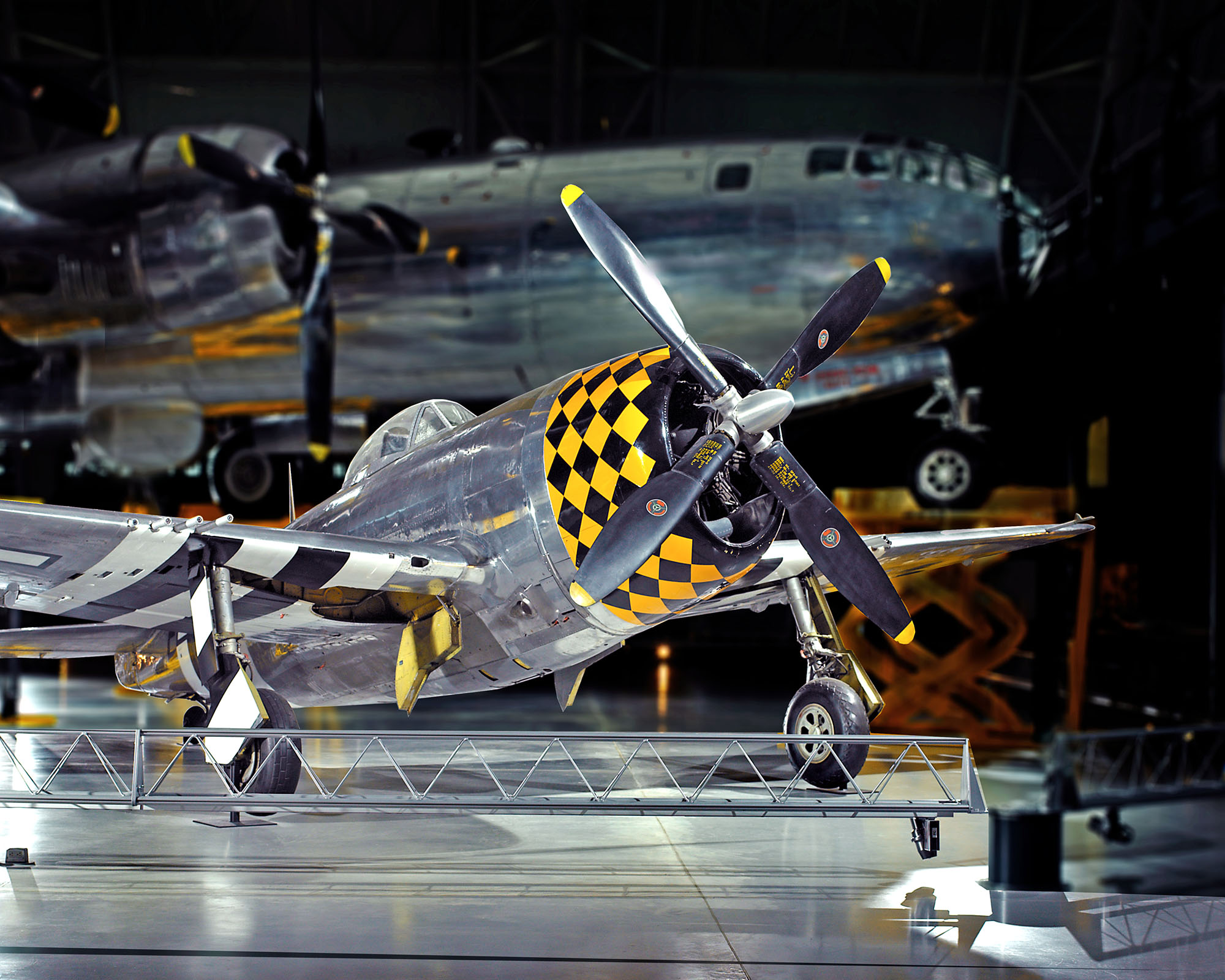
That connection gives the display a human dimension. Veterans helped preserve a machine associated with shared service, risk, loss, and survival. Compare it with the P-47 from the same manufacturer: both became closely associated with attack missions, but the jet-age Thunderchief operated within a radically different world of speed, sensors, defenses, and strategic expectations.