National Mall
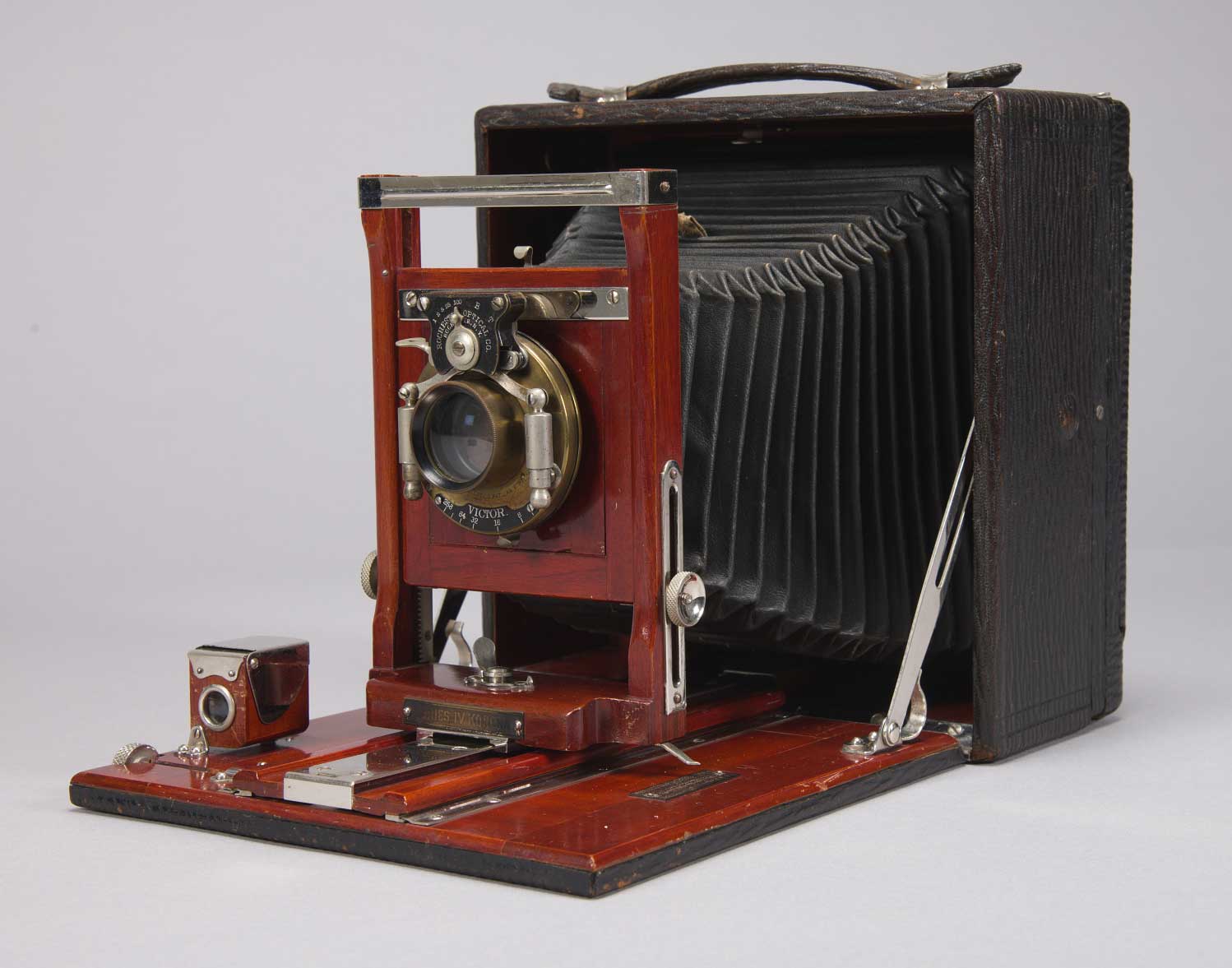
Korona Camera
The Wrights practiced photography and carefully documented their work. A similar camera captured images that still show the Flyer, its launch, and the people at Kitty Hawk. A camera had to be positioned, focused, loaded, and triggered at the right instant. John T. Daniels operated the shutter as Orville flew and Wilbur ran beside the aircraft.
In depth
The famous image was planned and timed
The Wright photographs are not incidental illustrations. They record configurations, procedures, environment, personnel, and results, while composition and selection also shape the story later viewers inherit.
What survives after the mission
A museum object begins a second life when it stops performing its original job. An aircraft that once carried a crew becomes a place for public memory. A jacket, letter, medal, or small piece of equipment can preserve a much more intimate connection. The object is valuable both for what it reveals physically and for the documented story that gives it meaning.
Famous aircraft and individuals can make a complicated history approachable, but they are only part of it. Many people left no celebrated machine behind. Memorials, personal possessions, unit records, and photographs help recover the experiences of those whose service was less visible. They also preserve loss, separation, captivity, recovery, and the consequences of war for families and communities.
Preservation involves choices. Restoring an aircraft may make its design easier to understand, while retaining wear or damage may protect evidence of its use. A reproduction can explain how a machine worked, provided its identity remains clear. Linking objects across collections helps fill the gaps created when surviving material is dispersed. A uniform in one gallery, an aircraft in another, and a memorial elsewhere can illuminate the same history from different directions. The result is more than a record of machines: it is a way to keep the people, decisions, and experiences connected to them in view.