National Mall
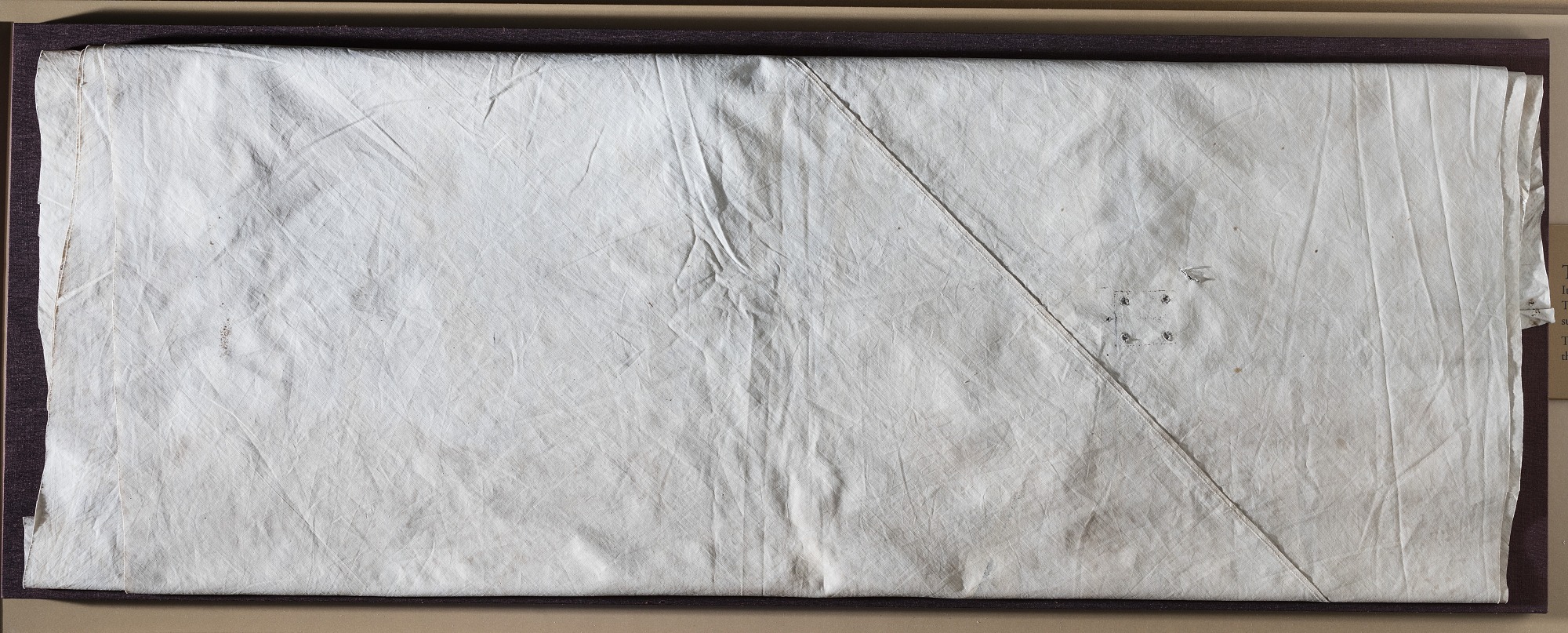
Original 1903 Wright Flyer Fabric
The Flyer used unbleached muslin stretched over its wooden frame. Leaving the fabric unsealed saved weight, and this panel flew at Kitty Hawk. The covering had to remain taut enough to hold the wing shape while adding little weight. Moisture, wind, handling, and repeated tension could change its performance.
In depth
Material choice balanced mass, strength, and airflow
The Flyer was re-covered under Orville Wright in 1927 and again by the Museum in 1985. This detached 1903 panel helps distinguish original material, restored structure, documented replacement, and the identity of the whole aircraft.
Invention at the workbench
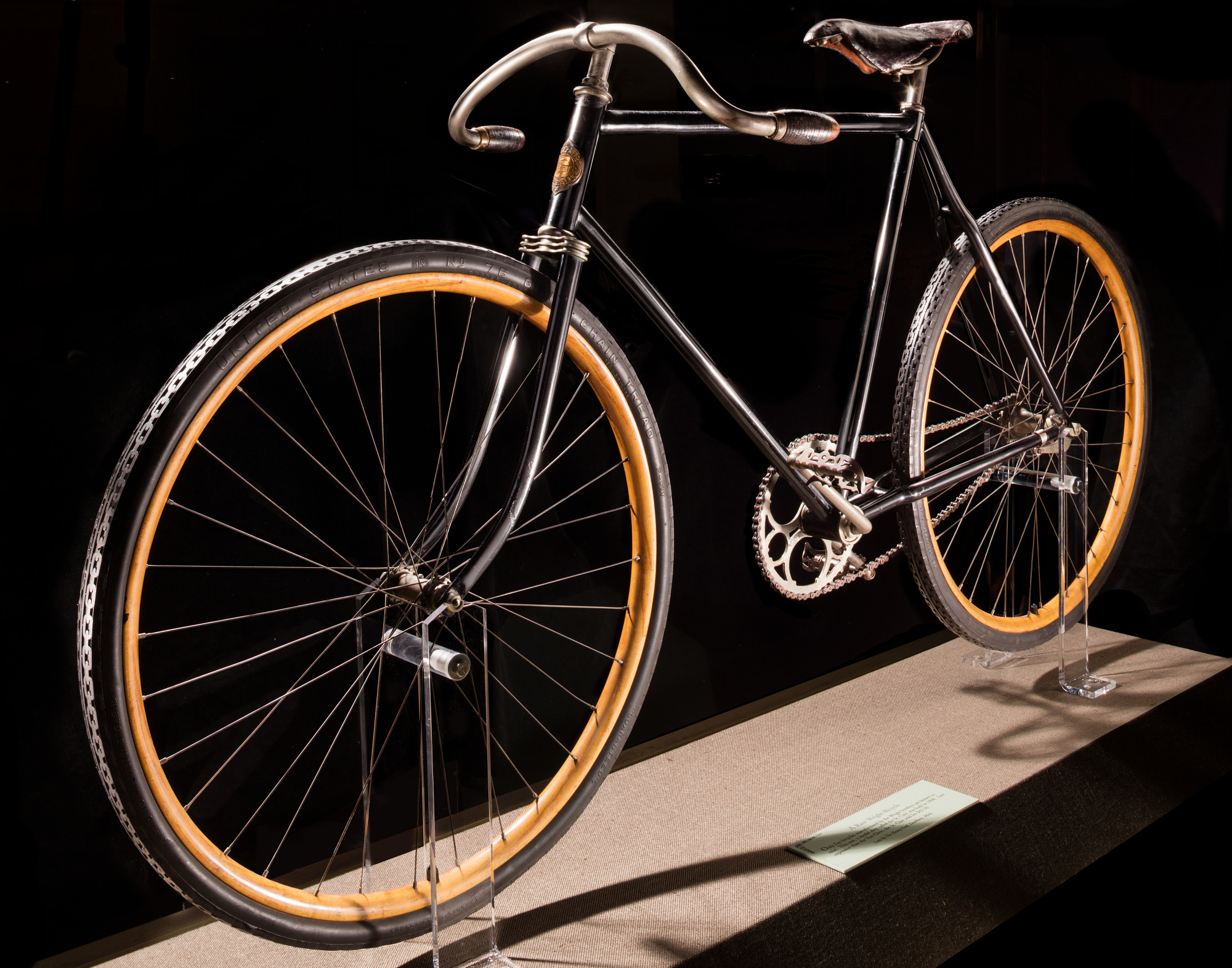
Early aviation grew out of a world of bicycle shops, engine builders, instrument makers, and skilled woodworkers. The materials were familiar; the operating conditions were new. A fitting that worked on the ground might loosen under vibration. An engine that produced enough power might still be too heavy. A wing covering had to stay taut without adding more weight than the structure could carry.
Small workshops could move quickly because the designer, builder, and test operator were often the same person. A disappointing trial could lead directly to a changed bracket, a different propeller, or a revised control linkage. But workshop ingenuity alone did not make an airplane dependable. Drawings, measurements, interchangeable parts, and repeatable inspections became increasingly important as production expanded beyond a few hand-built machines.
The surviving components make that transition visible. An exposed chain drive reveals how power was transmitted. A casting shows the limits and possibilities of the foundry. A fabric seam records how a large lifting surface was assembled from small pieces of material. Engines displayed far from their aircraft are especially revealing: what looks like an isolated mechanical object was part of a carefully balanced arrangement of fuel, cooling, structure, and pilot workload. Moving between collections brings those separated pieces back into the same story.