Miniature worlds
Study how carefully arranged scale models preserve architecture, taste, labor, and domestic imagination.
Shenandoah Valley · Art, history, and material culture
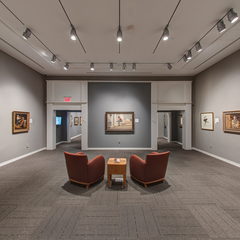
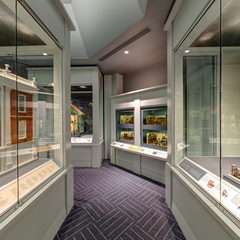
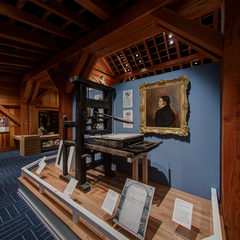
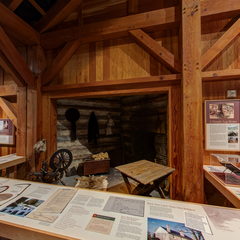
Seventeen panoramic rooms preserve an earlier arrangement of the Museum of the Shenandoah Valley. Move through miniature worlds, fine art, regional history, decorative arts, tools, furniture, and the evidence of everyday life.
01 / Read the place
The museum describes its work as preserving and enriching the cultural life and heritage of the Shenandoah Valley. These rooms offer one historical layer of that continuing work: not a complete museum and not a guide to current exhibitions, but a close, explorable record of what was present when the photographs were made.
Look first. Choose a detail. Ask what it reveals about the people who made, used, preserved, or interpreted it.
02 / Explore the record
The labels below are descriptive guides based on what is visible in the photographs. Exhibitions and interpretations change; consult the museum for current gallery information.
03 / Follow a path
There is no required route. Begin with the evidence that catches your attention, then follow a material, a craft, a person, or a question into another room.
Study how carefully arranged scale models preserve architecture, taste, labor, and domestic imagination.
Move from interpretation to close observation. Consider framing, placement, color, and the choices that shape a gallery.
Read maps, tools, printing, industry, weapons, clocks, and household objects as evidence of change in the Valley.
Compare furniture and decorative arts. Look for construction, repair, ornament, use, and changing ideas of comfort.
End with a working landscape. Ask what a reconstructed place can reveal—and what it cannot tell without other sources.
04 / Room index
Sources and present-day context
This independent panoramic record is presented as cultural documentation. It is not an official Museum of the Shenandoah Valley publication and does not represent current exhibitions.