Movement 01
Joy / Gathering
Celebration, food, song, art, and shared space gave the movement energy and helped people build relationships strong enough to sustain difficult work.
Accessible Exhibition Tour
A living history of community power
Philadelphia Chinatown · Community power · Living history
Step inside a living history of the grassroots coalition that defended Philadelphia’s Chinatown from the proposed 76 Place arena. Fourteen panoramic stops trace how people gathered, participated, built movement culture, confronted power, and carried the work forward.
Your route
Choose a path
Use Tab to enter the tab list. Use Left and Right Arrow, Home, or End to change tabs. Without JavaScript, both sections remain visible in reading order.
Open any stop for interpretive context, a wide panoramic still, a detailed visual description, and a direct link into that location in the immersive tour.
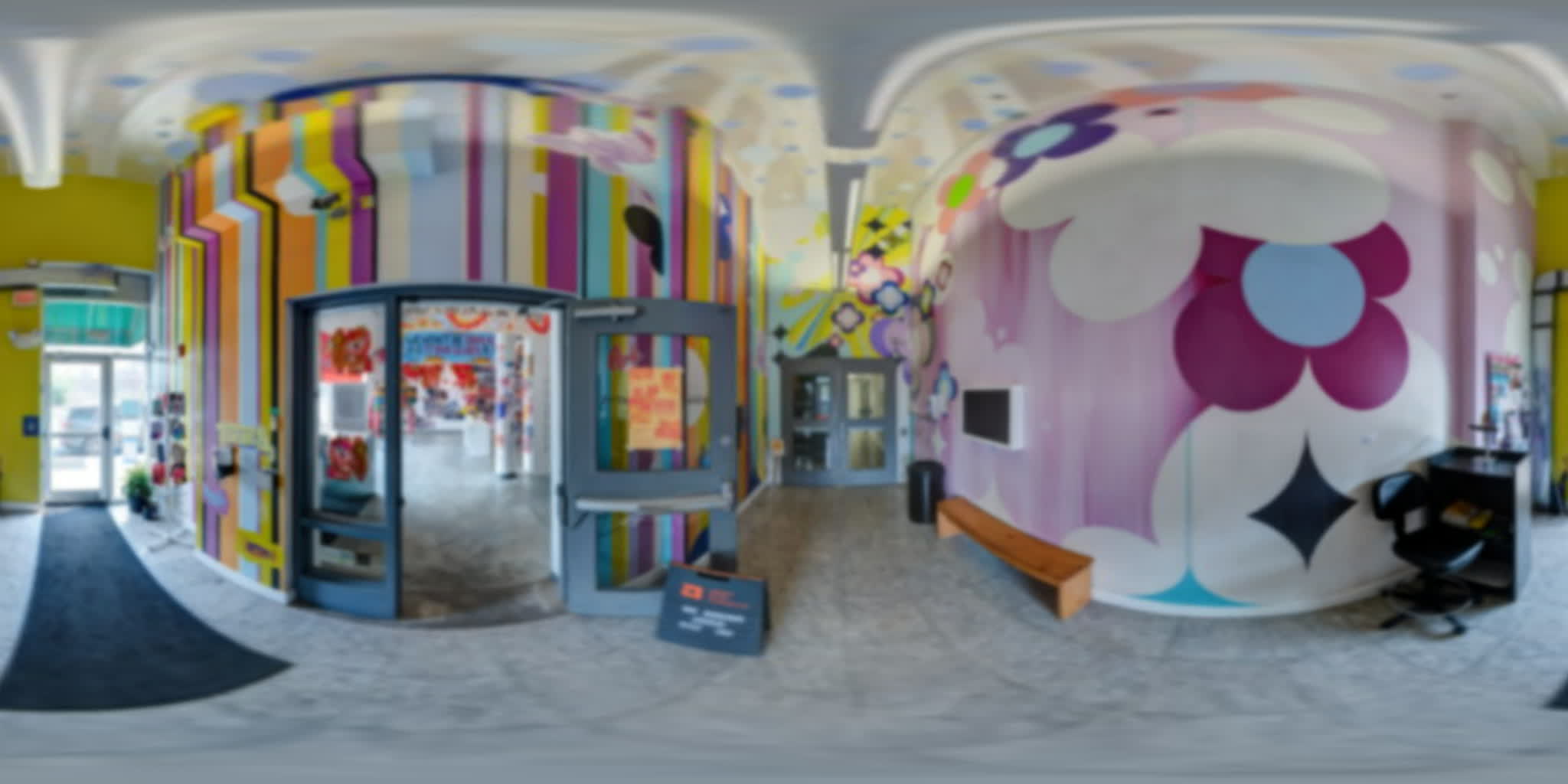
Threshold
The tour begins in the bright foyer outside Asian Arts Initiative’s gallery. The threshold places neighborhood creativity, bilingual communication, and collective action at the center of the experience.
Vertical bands of orange, yellow, blue, pink, and green wrap the entrance. Open gray doors lead toward protest banners and a dense wall of photographs. A bench, wall-mounted screen, information rack, and exhibition sign complete the foyer.
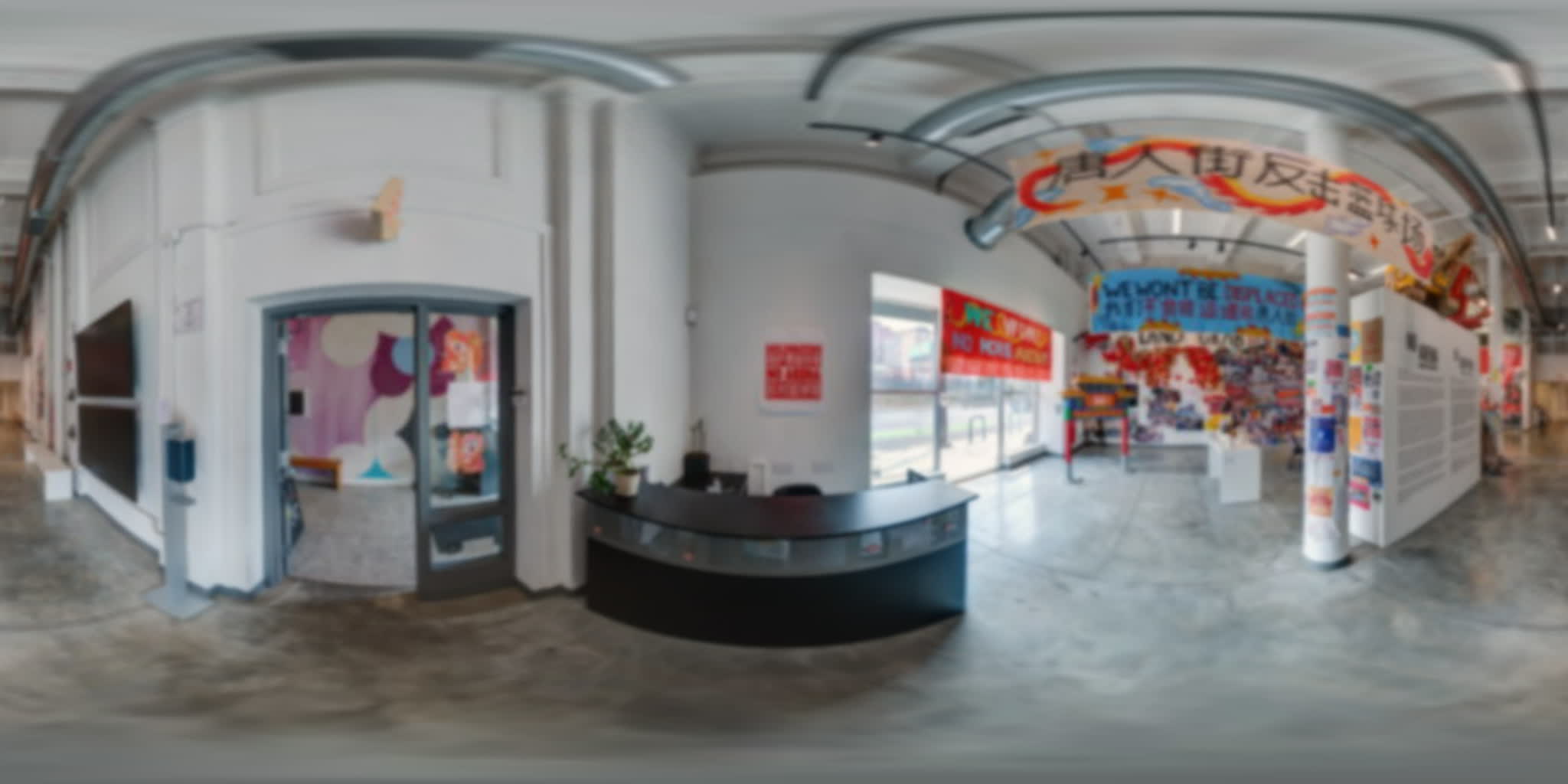
Arrival
The reception area offers the first full view into the exhibition. Handmade signs, community photographs, and the open plan of the gallery introduce a movement created through many voices rather than a single author.
A curved black desk sits beneath the gallery’s high ceiling. Bilingual banners, a colorful arch, a wrapped column, a lion-dance figure, and photo-covered walls mark several possible paths into the room.
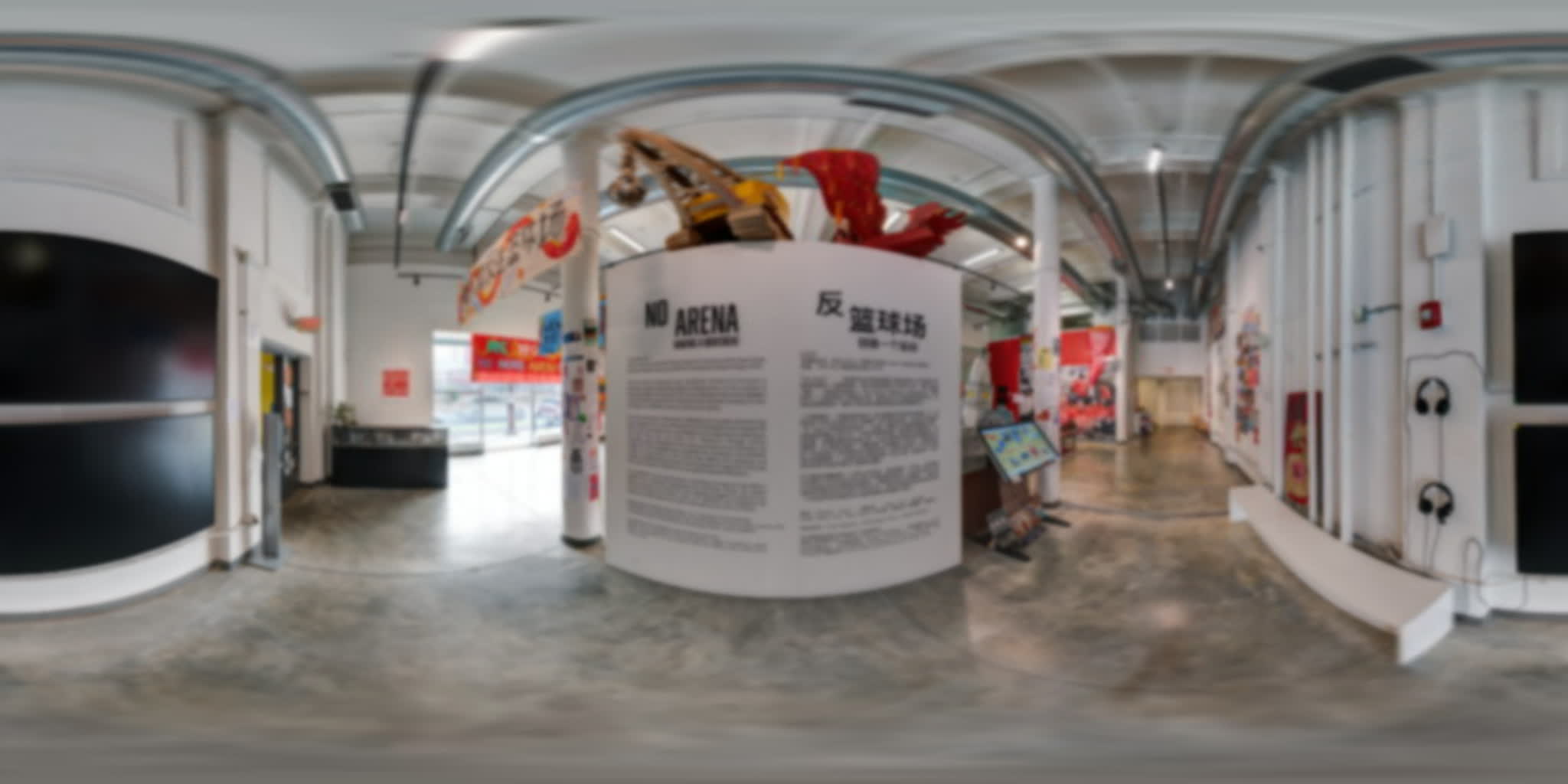
Orientation
The exhibition’s introduction frames No Arena as a decentralized grassroots movement led by people of color and as a model of participatory democracy. Archives, audio, images, and firsthand accounts honor the thousands of supporters who built power together.
A curved white wall carries the exhibition title and introductory text in English and Chinese. Sculptural elements rise above it, while screens, headphones, posters, and additional installations continue in every direction.
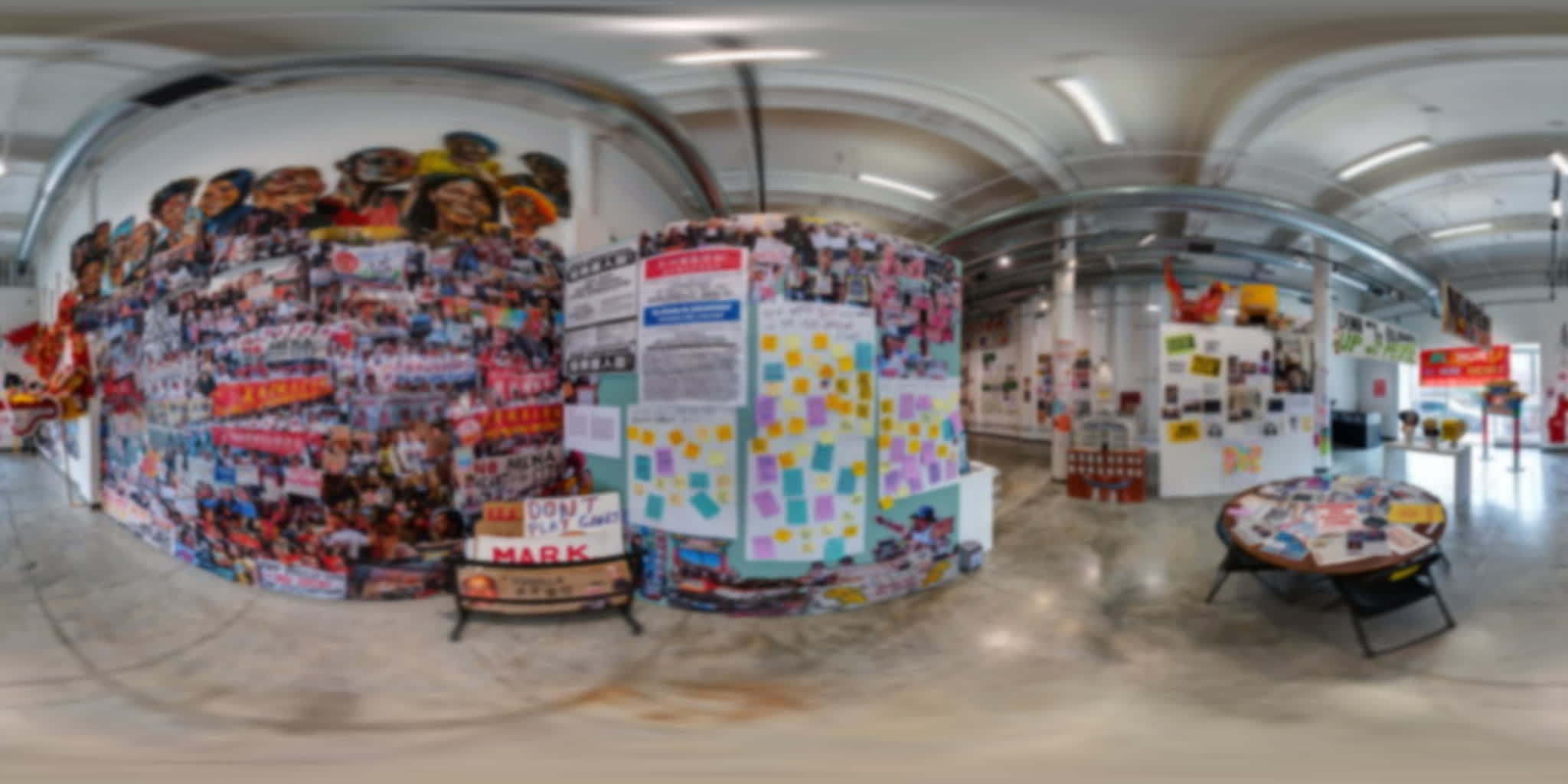
Every Voice Counts
Participation was not one action or one kind of person. Marchers, meeting hosts, postcard writers, artists, students, workers, and neighbors each found a way in. Visitor responses extend that collective record into the gallery.
A monumental collage fills the curved wall with portraits, march photographs, handmade signs, bilingual flyers, and raised-fist imagery. Yellow, purple, blue, and pink notes gather beside it around questions about joining the campaign.
Movement Culture
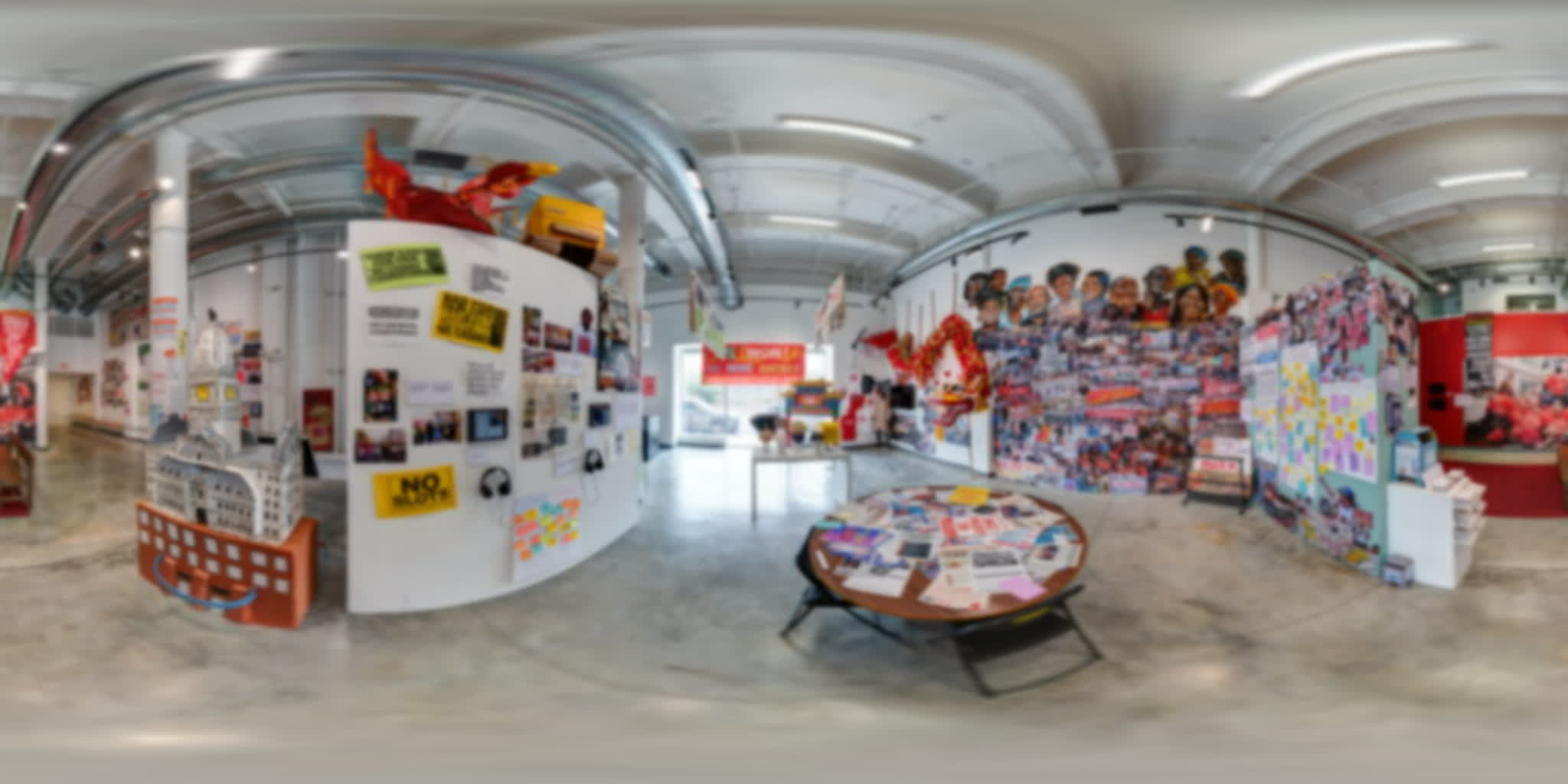
A movement is sustained by more than meetings and votes. Art-making, gathering, shared meals, performance, and public celebration helped people know one another and keep going. Joy becomes movement infrastructure.
Handmade objects and printed archives fill the room. A red dragon and lion-dance imagery animate the gallery, while tables, benches, wall displays, and protest material create places to gather and remember.
Tools for Collective Action
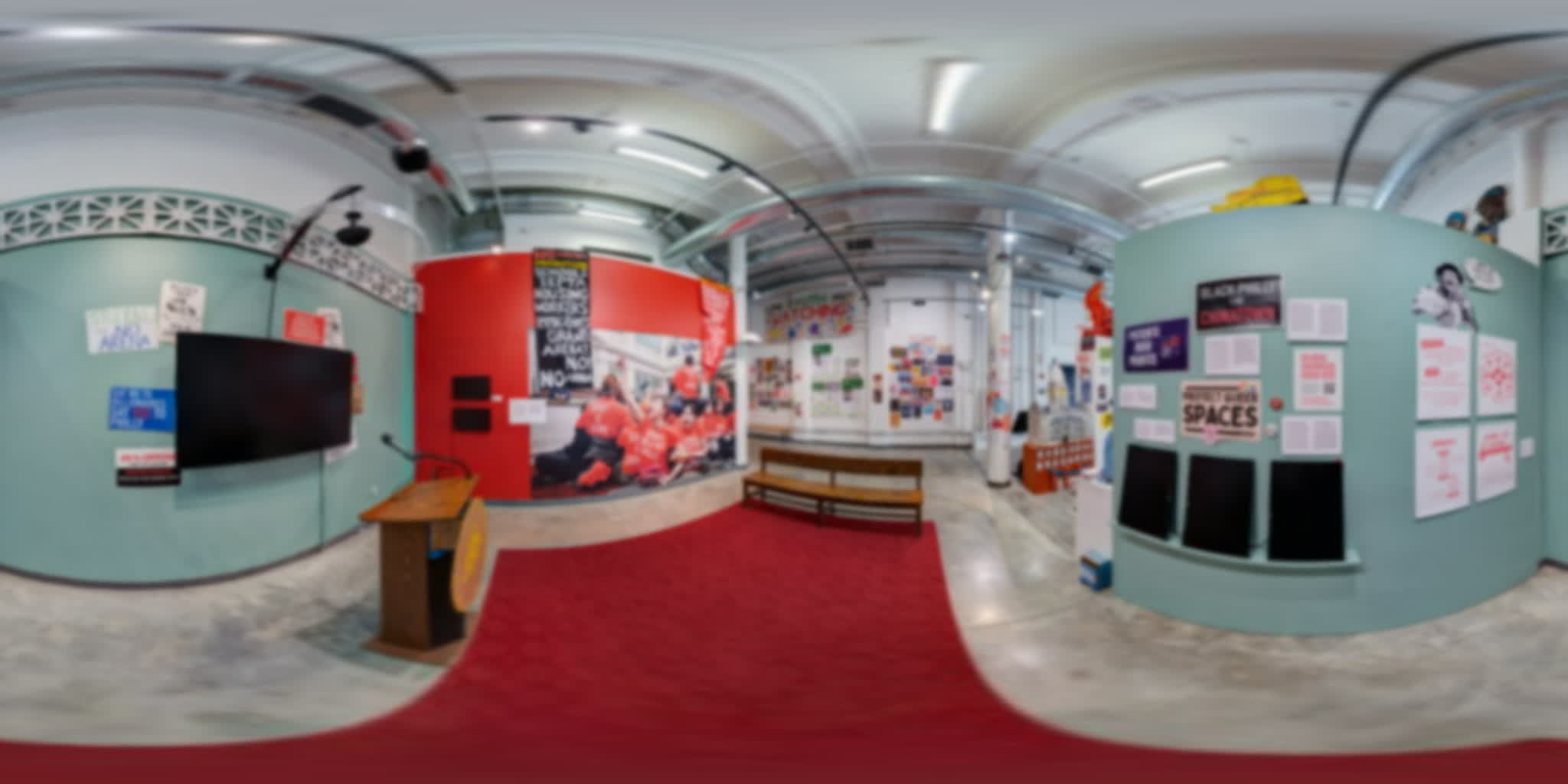
Digital tools carried testimony, strategy, and calls to action beyond the gallery and meeting room. The six screens gather public statements and campaign media that helped connect neighborhood concerns to a citywide audience.
A wooden podium faces a red carpet. One broad monitor and two smaller screens occupy the corner behind it. Three vertical screens sit across the curved teal wall beneath signs about schools, housing, workers, immigrants, and queer spaces.
Fighting for Our Futures
The campaign’s victory opened further questions about safe housing, funded schools, public transit, immigrant justice, and protected cultural space. Transformation asks what the coalition’s relationships and methods can make possible next.
Two screens are mounted one above the other along a white wall, each paired with headphones. An angled digital kiosk stands nearby, surrounded by flyers, photographs, bilingual handouts, and campaign graphics.
Community-Led Futures
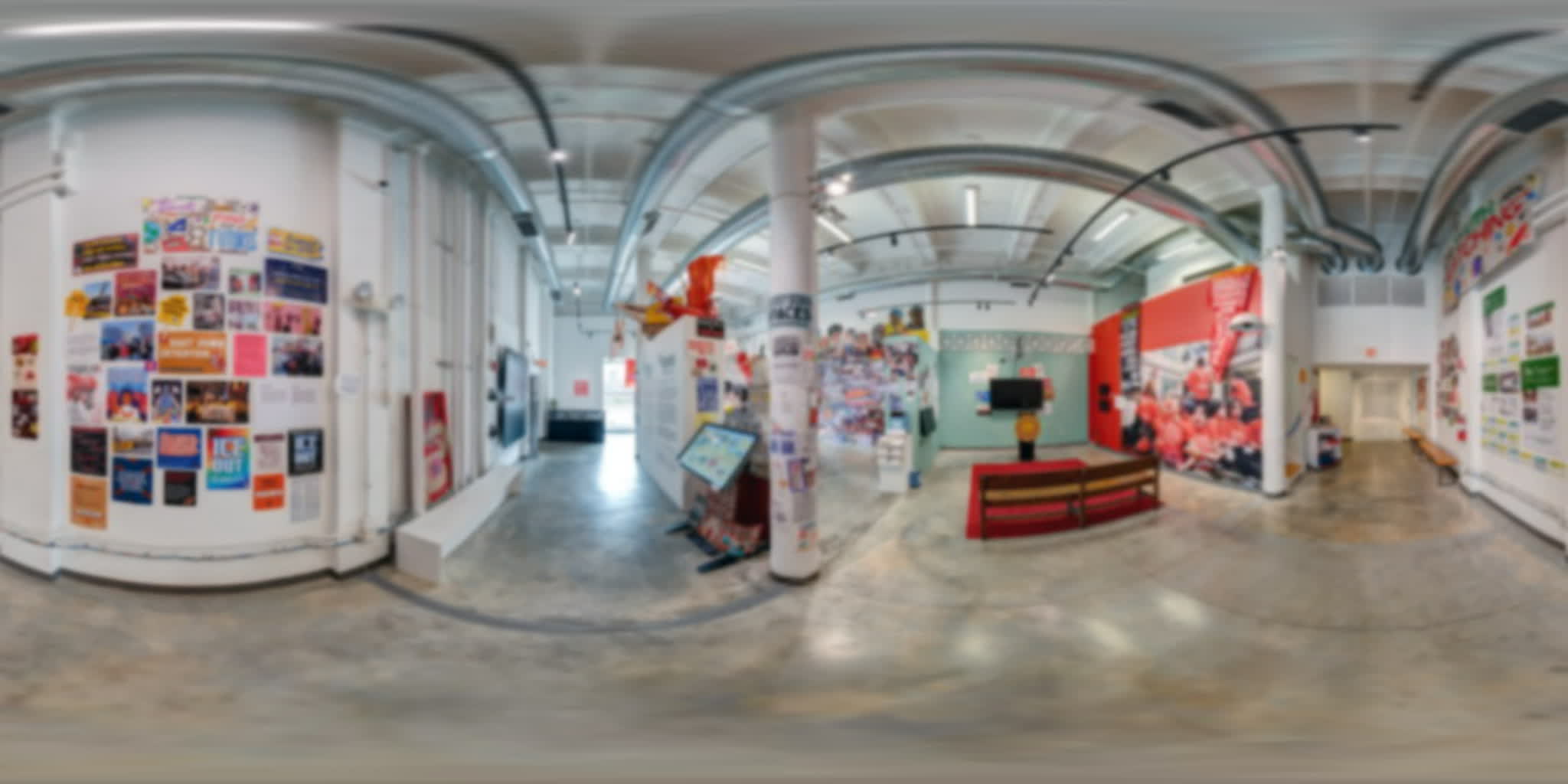
Opposition to the arena was also a demand to decide what comes next. This stop connects the campaign’s refusal to a broader vision of housing, culture, public space, and development shaped by the people who live there.
Campaign archives, large-scale graphics, photographs, benches, and passages between installations fill the view. The room remains intentionally open, allowing several stories and possible directions to coexist.
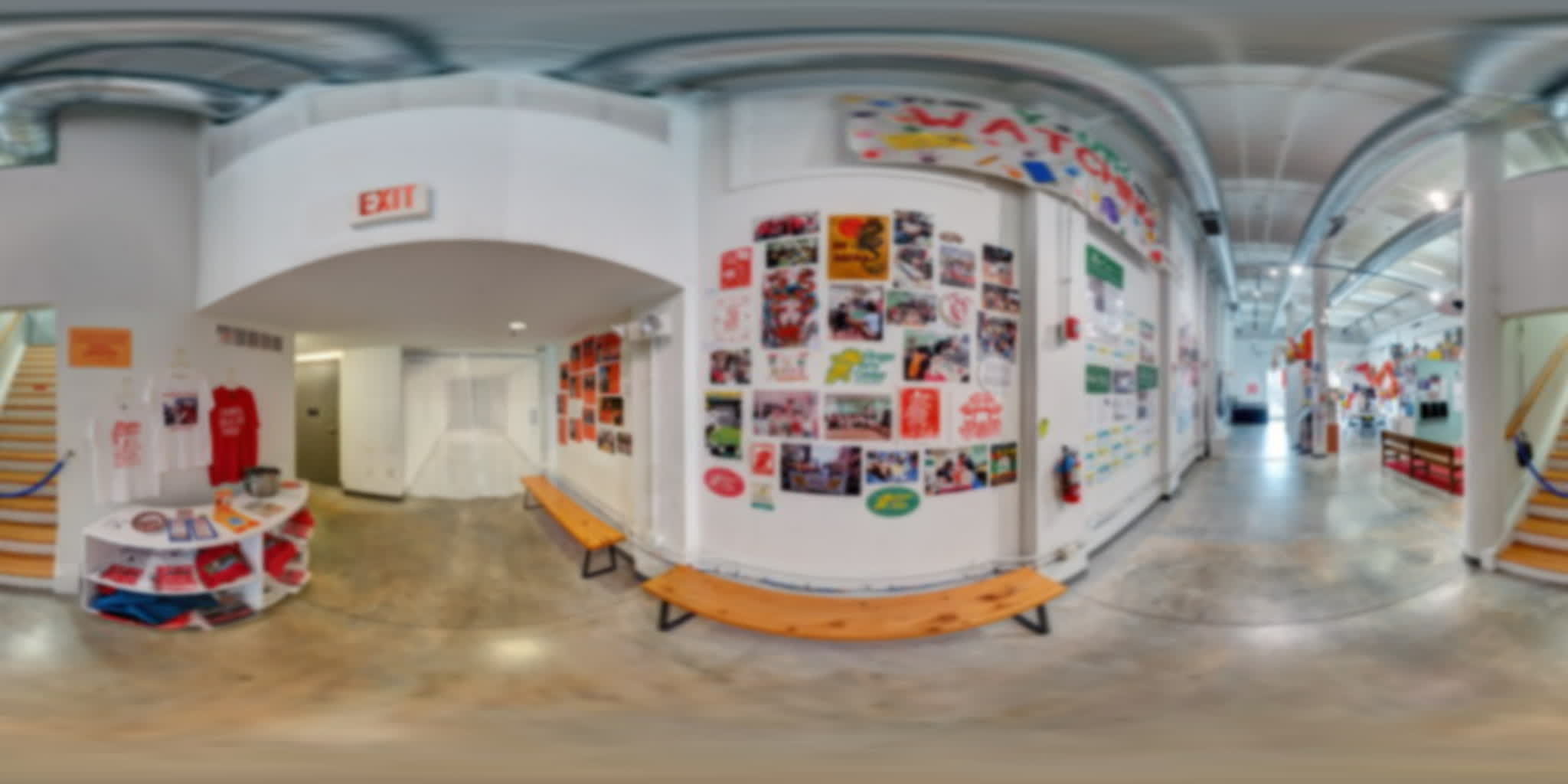
Youth Build What Comes Next
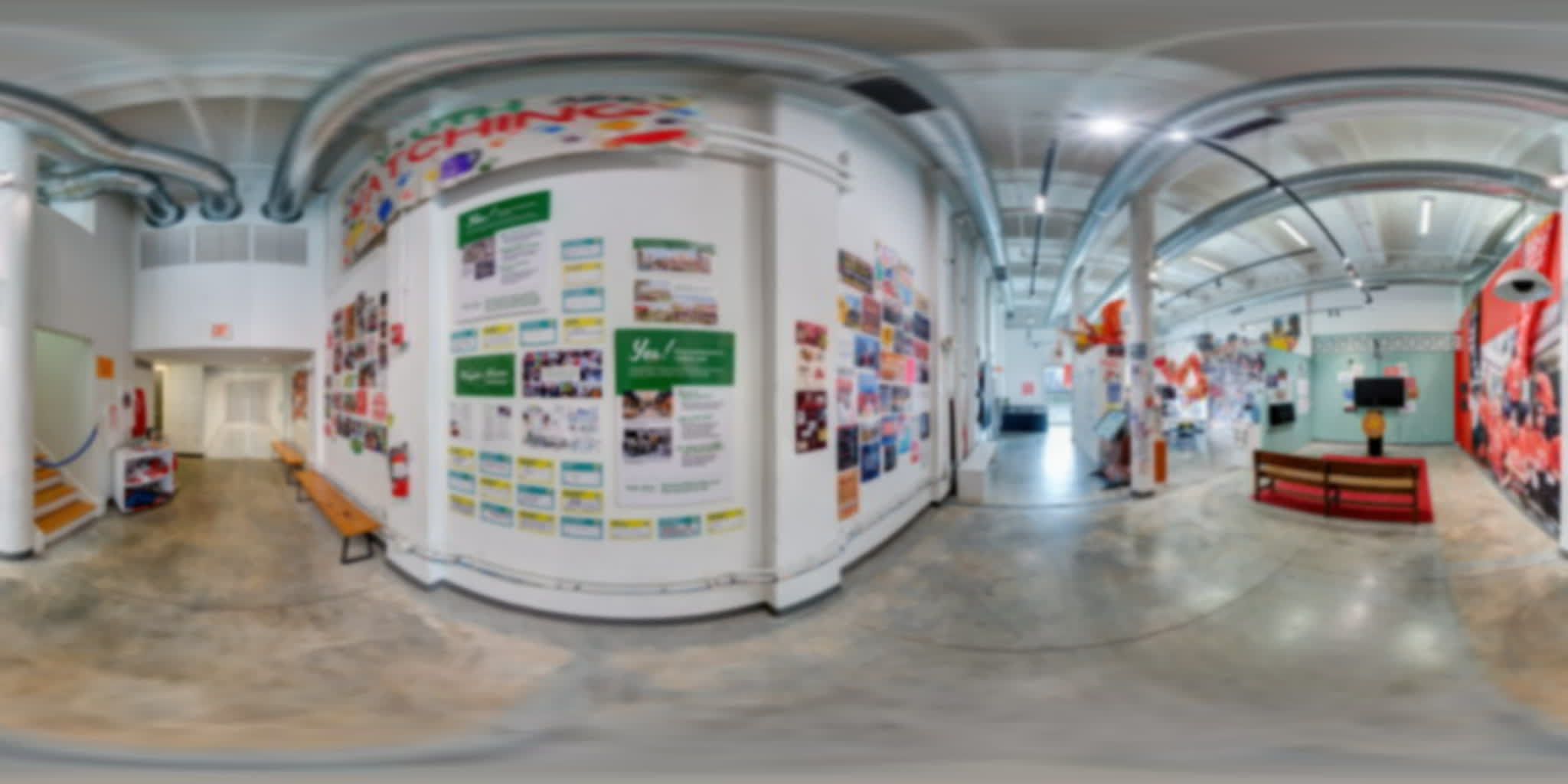
Youth organizers transformed campaign relationships into the Ginger Arts Center, a creative community space shaped by and for young people. Organizing becomes something durable: a place for leadership, expression, friendship, and belonging.
A curved white wall holds photographs, red-and-yellow artwork, event flyers, stickers, and Ginger Arts Center graphics. A long wooden bench follows the curve below, with shirts and printed material nearby.
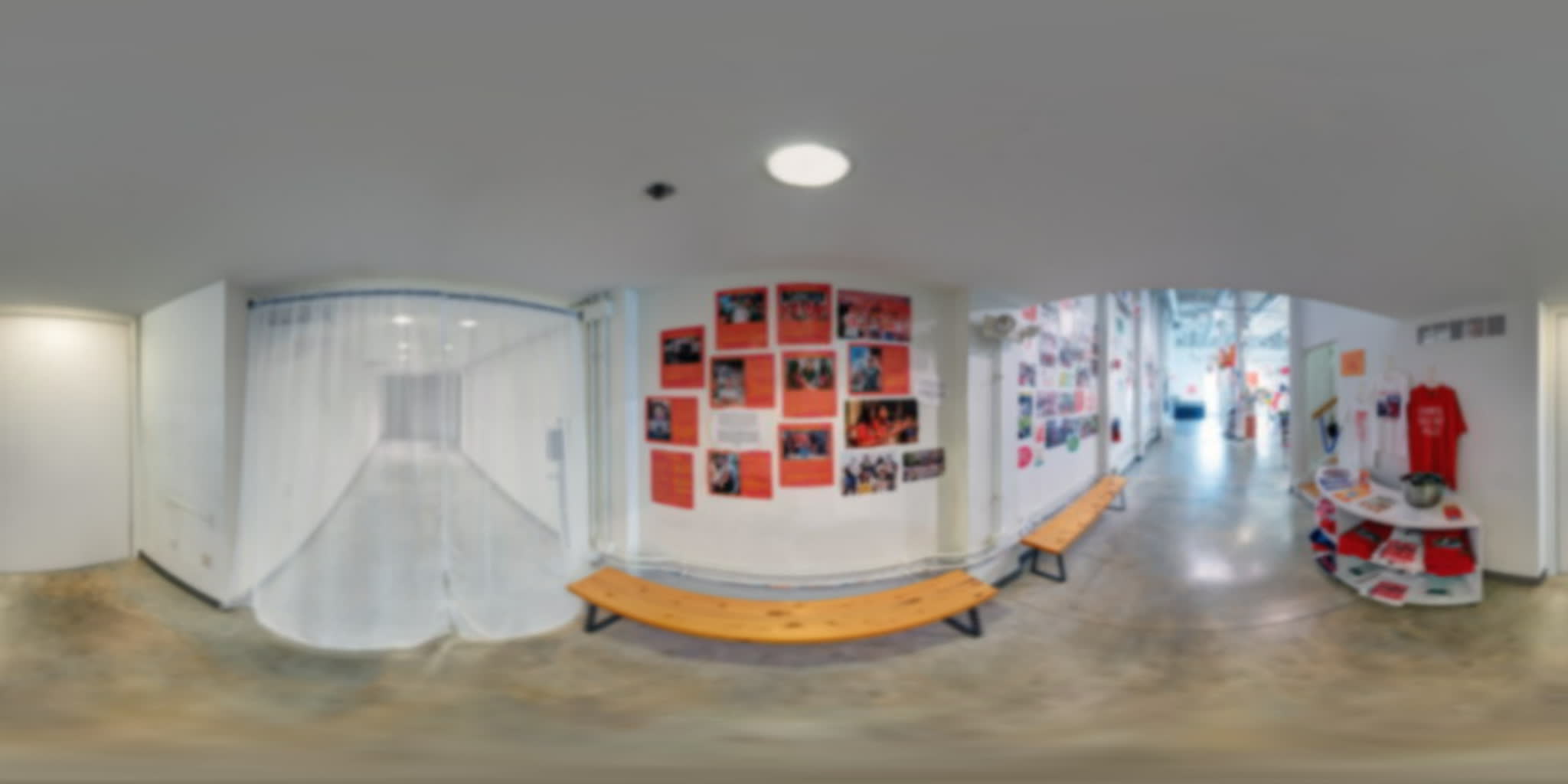
Organizing Lineage
No Arena belongs to a longer Chinatown tradition of resisting displacement and building community power. Profiles and photographs connect the campaign to decades of organizing and to knowledge carried from one generation to the next.
Red-framed profiles, oral-history text, and community photographs form a compact archive on a white wall. Curved wooden benches invite visitors to sit with the stories while the larger exhibition remains visible nearby.
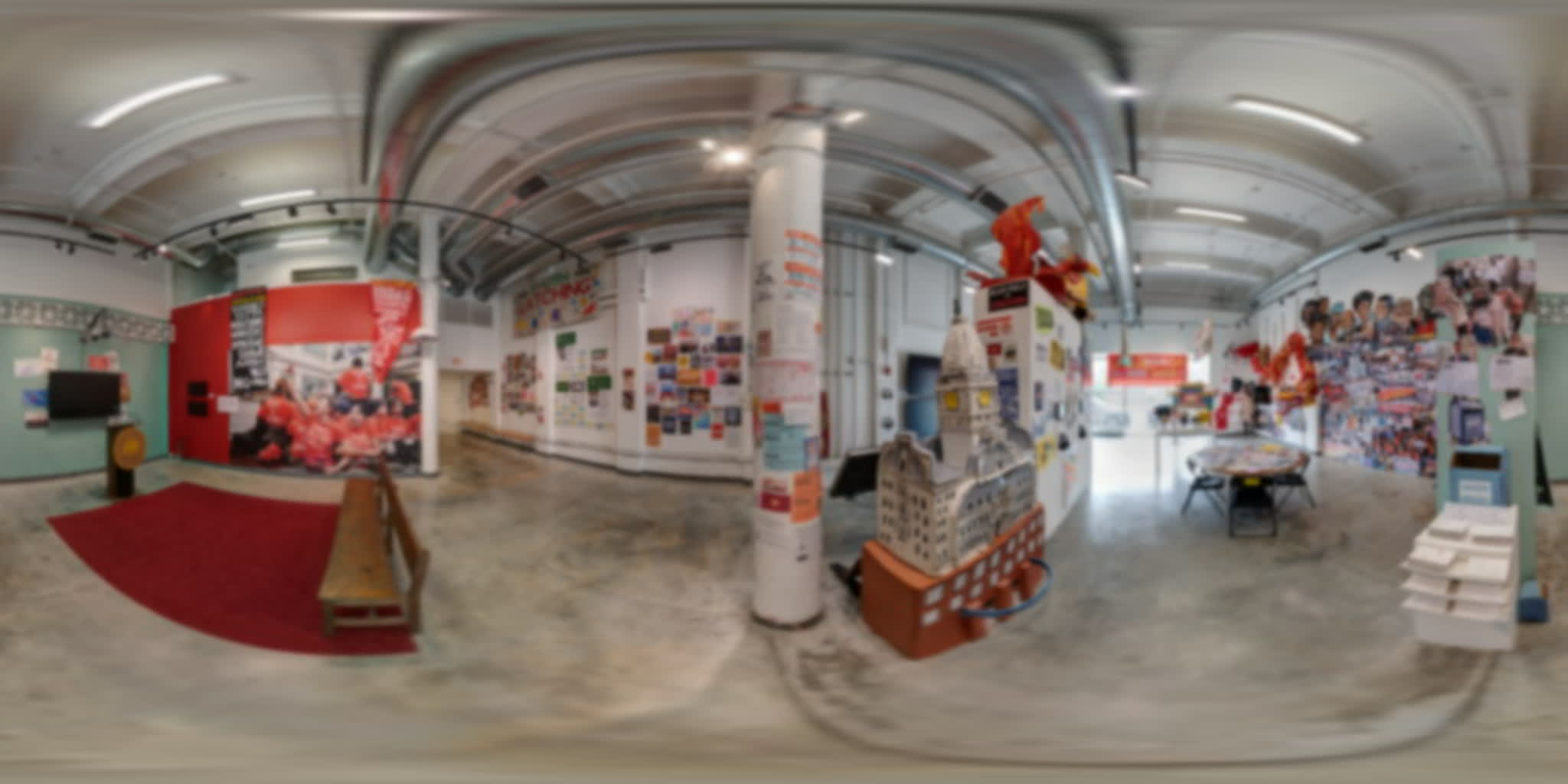
Public Voice
Movements grow when people translate shared values into public messages. Flyers, postcards, testimony, images, and everyday conversations made the stakes visible and invited more people into the work.
An interactive display stands among wrapped columns, wall text, photographs, and campaign print material. Open paths lead back toward the central collage and across the gallery.
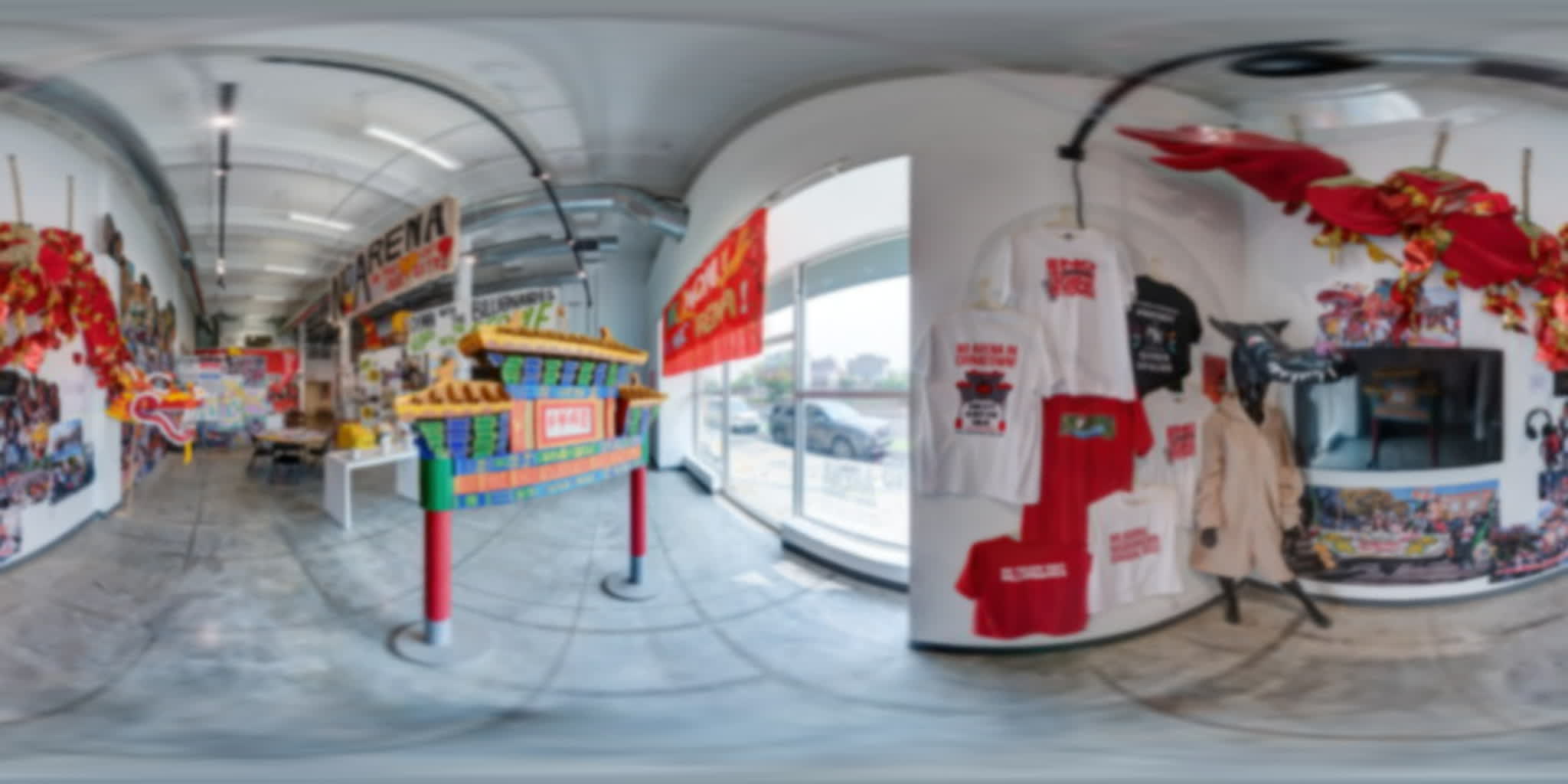
Sustaining Community
Joy, performance, food, and gathering are not separate from organizing. They build trust, restore energy, and make room for relationships strong enough to sustain difficult collective work.
A broad screen and a headphone station sit within a curved display of shirts, photographs, and dragon imagery. Benches, tables, and open floor space reinforce the gallery as a place to gather.
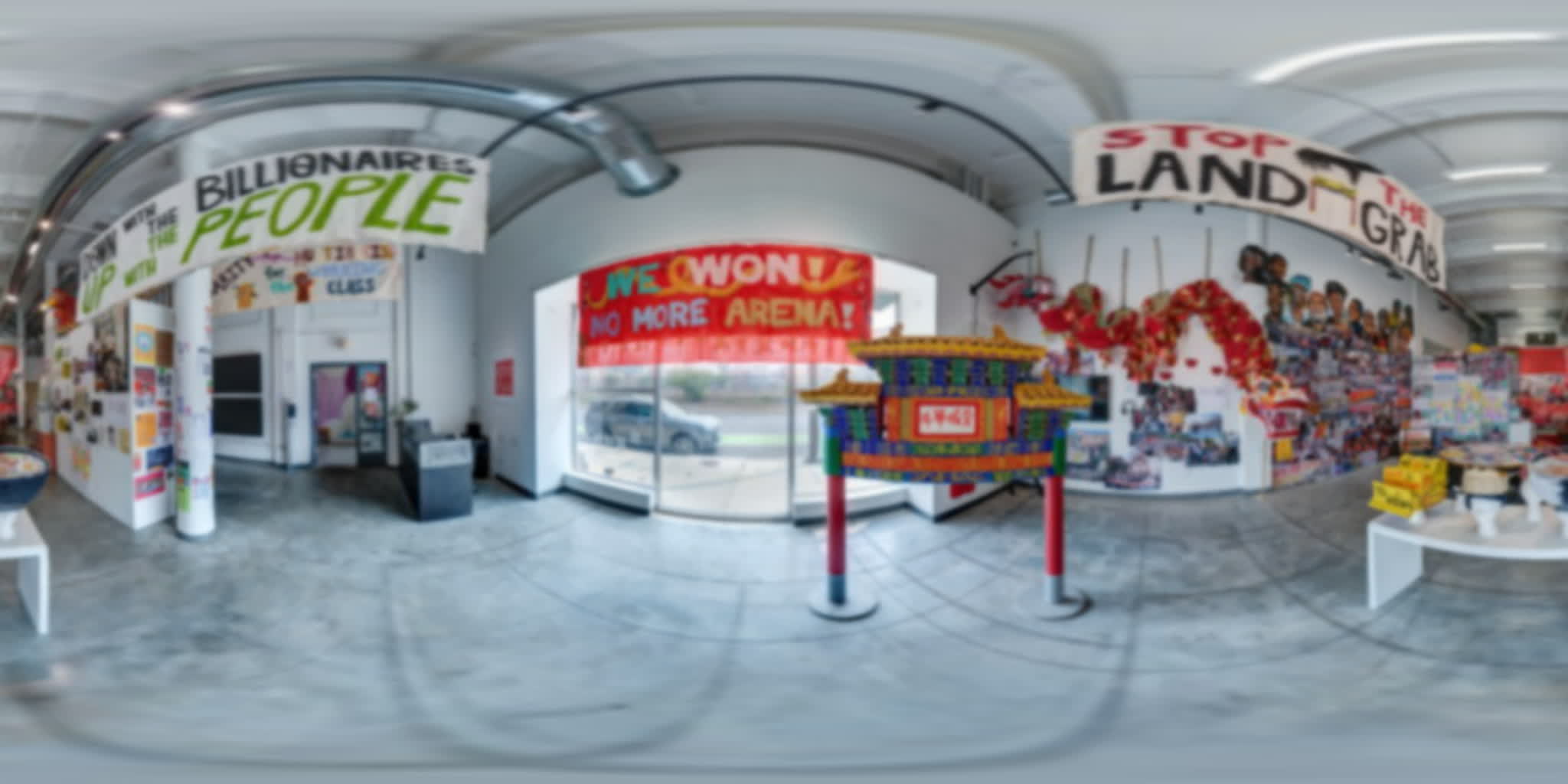
Collective Refusal
Hand-painted banners carry the campaign’s central refusal: Chinatown is a living community, not a development site. The coalition grew from opposition to the proposed arena into a broad demand for community-led futures.
Large signs in English and Chinese rise above photographs, posters, sculptural elements, and gathering spaces. Their handmade scale and visible brushwork make the movement’s message physically present in the room.
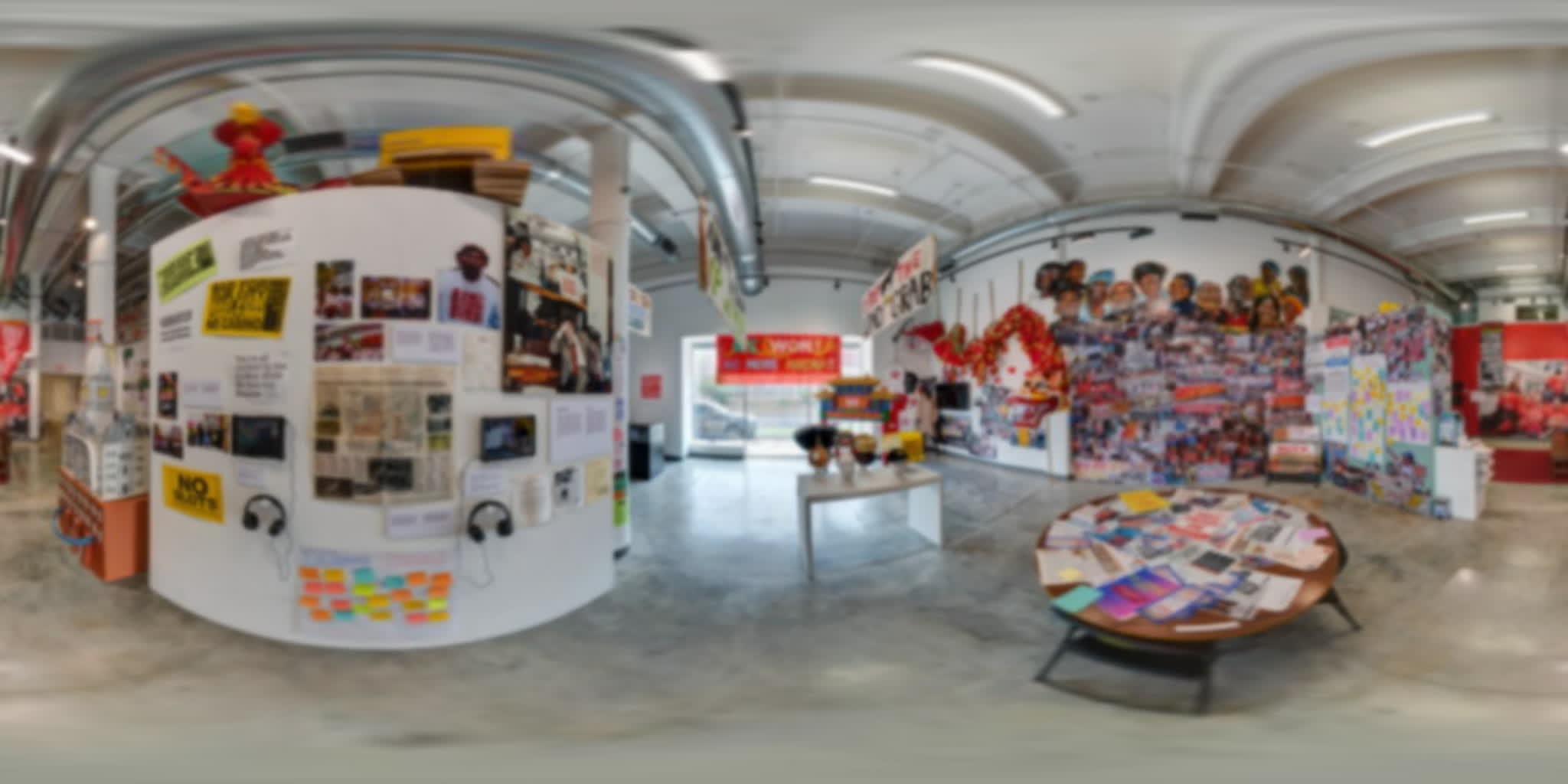
Memory in Motion
Movement culture carries memory through art, stories, photographs, printed matter, and relationships. The final stop listens for what remains active after a campaign victory and what communities choose to carry forward.
Two tablet screens and headphones are embedded in a curved white archive wall. Photographs, posters, news clippings, handwritten notes, and protest graphics surround the listening stations; the larger exhibition opens behind them.
The exhibition’s five movements
The exhibition follows a movement’s lived rhythm rather than a simple timeline. These five ideas overlap across the fourteen panoramic stops.
Movement 01
Celebration, food, song, art, and shared space gave the movement energy and helped people build relationships strong enough to sustain difficult work.
Movement 02
The campaign grew because people entered through many doors: meetings, marches, petitions, art builds, testimony, translation, hosting, fundraising, and everyday conversations.
Movement 03
Posters, photographs, oral histories, neighborhood memory, and organizing traditions carried knowledge across groups and generations.
Movement 04
Organizers brought their demands directly to decision-makers through sustained public pressure, testimony, marches, and coalition action.
Movement 05
Victory opened new questions: how to protect cultural heritage, strengthen solidarity, and turn movement relationships into long-term community power.
Use Tab and Shift+Tab to move between controls. Use Enter or Space to activate buttons and links. Use arrow keys within the tab list.
Use the controls at the top of this page to enlarge text or switch to high contrast. Preferences are stored only in this browser when storage is available.
Every stop includes concise alternative text and an expanded visual description. The wide stills preserve the full sweep of each panoramic room.