The Pentagon exhibit · Preserved in 360°
The Vietnam War
Service, Valor & Sacrifice
A quiet, immersive passage through the permanent Pentagon exhibit created to thank and honor Vietnam veterans and their families—and to remember the human cost of war.
The experience contains archival images and accounts of war. Visitor discretion is advised.
The permanent exhibit
Inside the Pentagon
A national story told through objects, images, and memory.
The exhibit occupies the Pentagon’s third floor, A Ring, between corridors 2 and 3. It follows American involvement in Vietnam from 1945 through 1975, then turns toward remembrance and the lives carried forward after the war.
Congress authorized the national commemoration in 2008. President Barack Obama inaugurated the 13-year commemorative period on Memorial Day 2012. The Pentagon exhibit opened in December 2016; its virtual tour was released in November 2022.
The learning experience organizes 360° spaces, 49 timeline panels, documentary videos, artifacts, and recipient records so each form of evidence can be reached directly and compared with the others.
- 14
- immersive exhibit spaces
- 49
- high-resolution timeline panels
- 260
- Medal of Honor recipient records
- 12
- documentary video groups
Opening film
Before entering
Forty-five seconds of context.
The original opening film introduces the tone of the exhibit. It begins only when you choose to play it; sound is never automatic.
The immersive journey
Fourteen spaces · 1945–1975 and remembrance
Walk the exhibit in order—or begin where memory leads.
Historical timeline
Thirty-one pivotal events · Forty-nine original panels
The road to war, the years of conflict, and the long return home.
Each selection opens the original high-resolution exhibit panel. The chronology includes U.S., South Vietnamese, allied, diplomatic, political, and home-front history.
Stories and media
Documentary archive
Witness history through the exhibit’s surviving media.
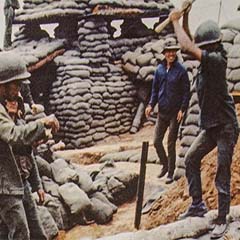
The original archive brings together operational footage, period broadcasts, oral interpretation, maps, art, and equipment. These are presented as historical records—not spectacle.
Two aircraft · Many lives
The Huey at the center of the exhibit
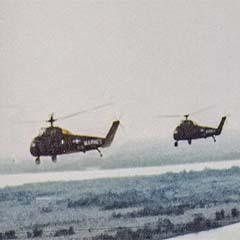
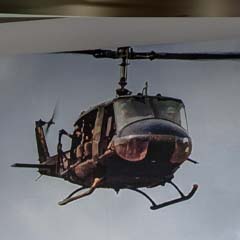
Two UH-1 Iroquois crew-cab installations interpret the aircraft’s roles in troop transport and medical evacuation. They provide a human-scale center to a story otherwise measured in years, operations, and distance.
Explore the collection
Objects, operations, art, and geography
Medal of Honor
Extraordinary valor
Search 260 Vietnam War recipient records.
The Medal of Honor is the United States’ highest military decoration. The archive records individual citations and service information for Soldiers, Marines, Sailors, and Airmen recognized for actions during the Vietnam War.
Recipient citations in this archive are credited to the Congressional Medal of Honor Society.
Loading recipient index…
Remember
Honor carried forward
The story does not end in 1975.
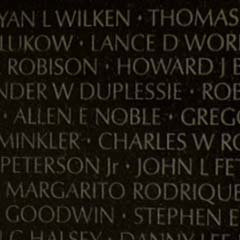
The final part of the exhibit turns from chronology to remembrance: those who were killed, those who returned, former prisoners of war, those still unaccounted for, families, allies, and communities shaped by the conflict.
“It is never too late to pay tribute.”
Presidential proclamation, May 25, 2012
Learning guide
Move from chronology to evidence, interpretation, and remembrance.
Build a defensible chronology using objects, panels, films, maps, and personal records. Compare how each source shapes understanding, distinguish commemoration from historical interpretation, and develop a sourced reflection on service, sacrifice, consequence, and memory.
Curriculum connections include the C3 Inquiry Arc, Common Core ELA-Literacy standards for citing evidence and integrating diverse media, and NCSS themes of Time, Continuity, and Change and Civic Ideals and Practices.
Connected collections
Continue through Air & Space
Follow the connections between aviation, service, and remembrance.