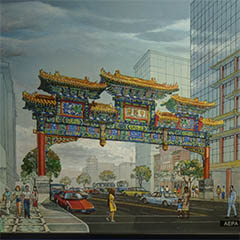
 01
01
Making Place 营造地方
See how residents, designers, businesses, and community leaders debated what Chinatown should become—and what should remain visible. 了解居民、设计者、商户与社区领袖如何讨论华埠未来的面貌,以及哪些记忆必须继续被看见。
Open this path 打开这条路径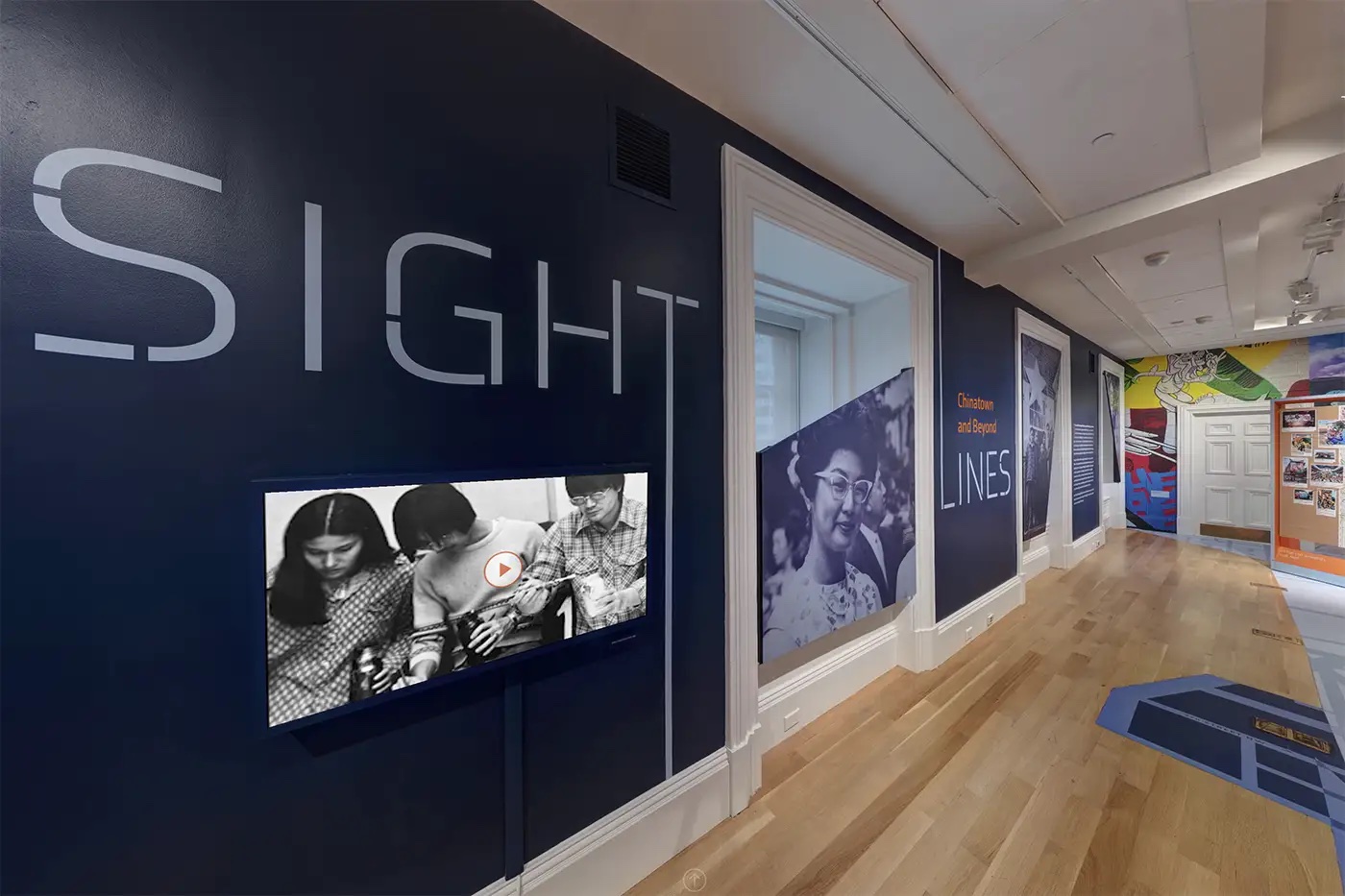
Washington, D.C. · Place, memory, and cultural life 华盛顿特区 · 地方、记忆与文化生活
A neighborhood is more than its boundaries. Follow family photographs, public art, martial-arts traditions, and first-person voices through Washington, D.C.'s Chinatown and the communities whose lives extend far beyond it. 一个社区的意义远不止于地图上的边界。沿着家庭照片、公共艺术、武术传统与亲历者的声音,走进华盛顿特区华埠,以及那些与它相连、远远超越街区范围的社群生活。
Begin with the map 从地图开始
The exhibition begins at a floor map and moves outward. Its stories connect local streets with migration, urban change, religious communities, family memory, creative practice, and relationships across race and generation. 体验从展厅地面的地图出发,逐步向外延伸。这里的故事把街道与迁徙、城市变迁、宗教社群、家庭记忆、艺术实践,以及跨越族裔与世代的关系连接起来。
The panoramic record preserves the installation as a place to explore. Twenty-four audio encounters bring forward the people whose memories and creative work give the rooms their meaning. 全景影像把这座展览保存为一个可以继续探索的空间。二十四段声音记录,让亲历者的记忆与创作重新走到画面前景。
Three connected journeys 三条相互关联的路径
01
See how residents, designers, businesses, and community leaders debated what Chinatown should become—and what should remain visible. 了解居民、设计者、商户与社区领袖如何讨论华埠未来的面貌,以及哪些记忆必须继续被看见。
Open this path 打开这条路径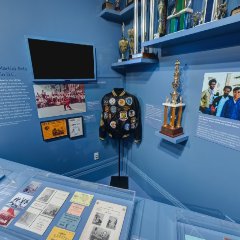 02
02
Follow martial-arts schools, teachers, tournaments, lion dance, and friendships that built multiracial and intergenerational communities across the city. 循着武馆、师徒、比赛、舞狮与友谊的足迹,认识这座城市里跨族裔、跨世代形成的社群。
Open this path 打开这条路径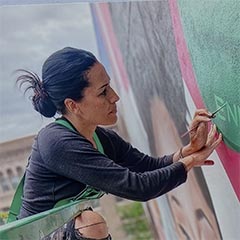 03
03
Explore how muralist Cita Sadeli brings Javanese heritage, local music, graffiti, family, and public space into a language of her own. 探索壁画家 Cita Sadeli 如何把爪哇文化、地方音乐、涂鸦、家庭与公共空间融合成独特的视觉语言。
Open this path 打开这条路径First-person record 第一人称记录
The voices are the center of this record. Each account is presented in the speaker's original language; transcripts and related resources accompany the audio inside the 360° experience. 亲历者的声音是这份记录的核心。每段讲述保留原始语言;在 360° 体验中可同时查看文字记录与延伸资料。
 The Kims
 The Sarmientos
 The Imamotos
 Artist Intro
 Jack Lee
The panoramic record 全景记录
Seventeen connected rooms contain twenty-four oral-history and media stops. Use the story ribbon to move horizontally, the gear for viewing and accessibility controls, and the language switch at any time. 十七个相连的展厅包含二十四个声音与媒体节点。使用底部故事栏依次浏览,使用齿轮调整观看与无障碍设置,并可随时切换语言。
Beyond the gallery 走出展厅
The Friendship Archway, family associations, churches, businesses, murals, restaurants, and changing streets continue the story outside the preserved exhibition. This digital record is an invitation to look more carefully—not a substitute for the place. 友谊牌楼、同乡会、教会、商户、壁画、餐馆与不断变化的街道,都在展厅之外继续讲述华埠的故事。这份数字记录邀请人们更细致地观察,而不是取代真实的地方。
Names, dates, and first-person accounts follow the preserved exhibition record. Source links appear with the individual stories. 人物、年代与口述内容依据保存下来的展览记录整理;每个故事中均附有相关资料链接。