Air Force Museum
Mosquito Radios
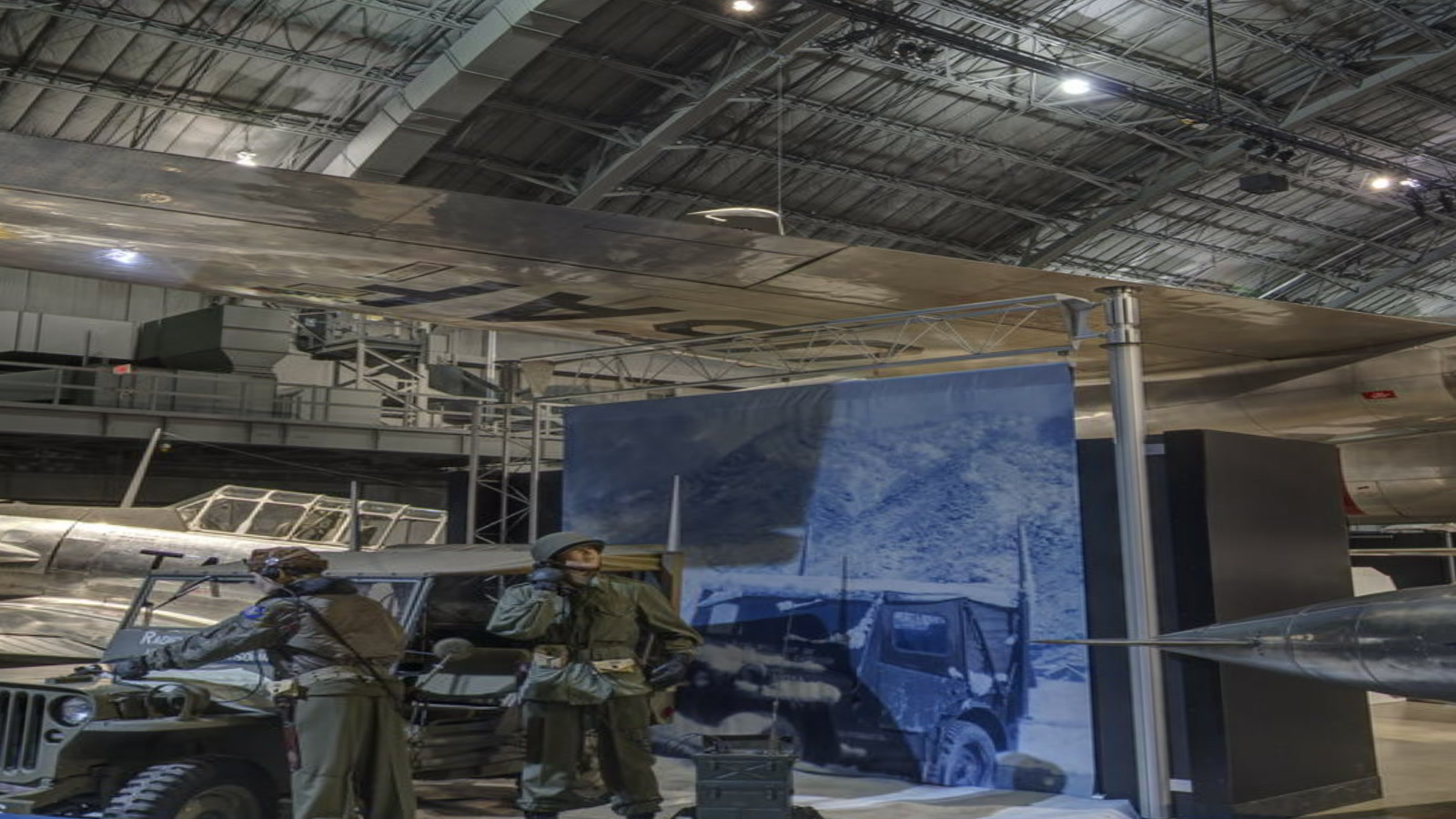
The Mosquito mission depended on radios that let a slow observation aircraft coordinate ground forces and fast fighter-bombers. T-6 crews had to speak with tactical air control parties, command agencies, and strike pilots. Multiple radios allowed them to monitor different networks, pass target information, and remain aware of friendly positions while orbiting near the front.
In depth
The story behind the display
A controller could see a target but still fail if the description was ambiguous or the strike formation could not hear it. Effective control combined equipment, disciplined language, map reading, smoke marking, and confirmation from every participant.
History & service
Compared to modern communications gear, radio equipment in the early 1950s was complicated, bulky, and temperamental. In most cases, a "radio" was a set of several boxes, each performing a different function. Moreover, they relied on fragile glass vacuum tubes that could easily break. These radios required extensively trained personnel to operate and maintain them.
Details that tell the story
Supported communication on multiple radio networks · Connected airborne and ground controllers · Enabled target description and strike coordination · Radio discipline was as important as equipment
Finding the way, then trusting it
The view from the cockpit can be wonderfully clear, or it can disappear into cloud, darkness, smoke, or unfamiliar terrain. Aviation navigation developed to bridge those conditions. Maps and visual landmarks worked alongside compasses, clocks, radio signals, instruments, and increasingly sophisticated calculations. Each new method changed what routes and weather conditions could be attempted, but it also required training and a clear understanding of its limitations.
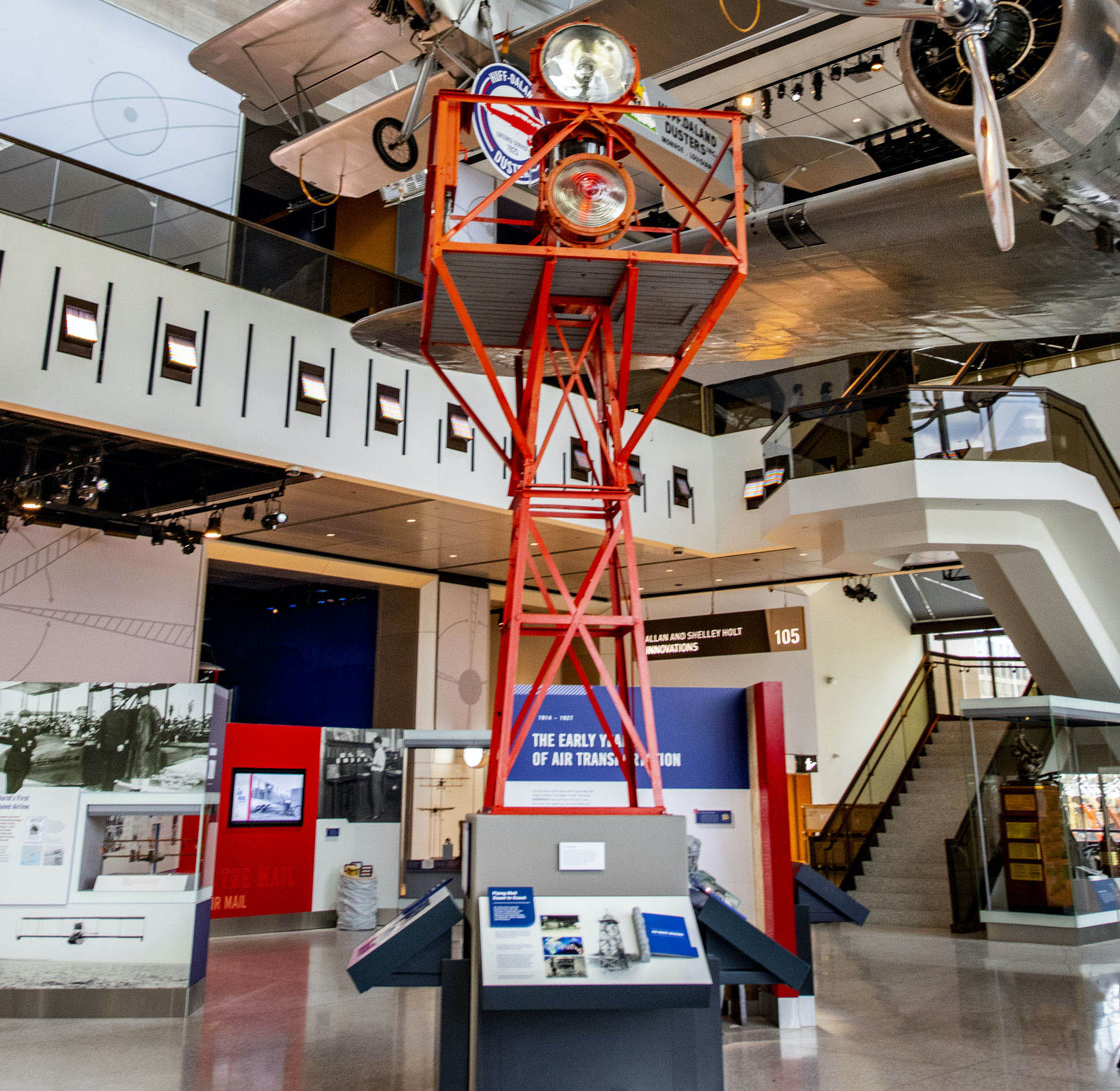
The challenge was larger than keeping one airplane on course. Busy air routes needed shared procedures, reliable communications, and ways to separate aircraft that could not see one another. A beacon on the ground, a radio in the cockpit, and an instrument trainer belonged to the same expanding system. The result was an ability to operate more regularly instead of waiting for ideal visibility.
Navigation also connects aircraft with spacecraft. Both depend on measurements, reference frames, timing, and the interpretation of signals. Their environments differ greatly, yet both require people to decide whether the instruments are describing reality correctly. Comparing a route beacon with a satellite or a cockpit instrument makes that continuity visible. The extraordinary flight is often supported by something deceptively modest: an accurate clock, a dependable signal, or a practiced procedure followed at the right moment.