Air Force Museum
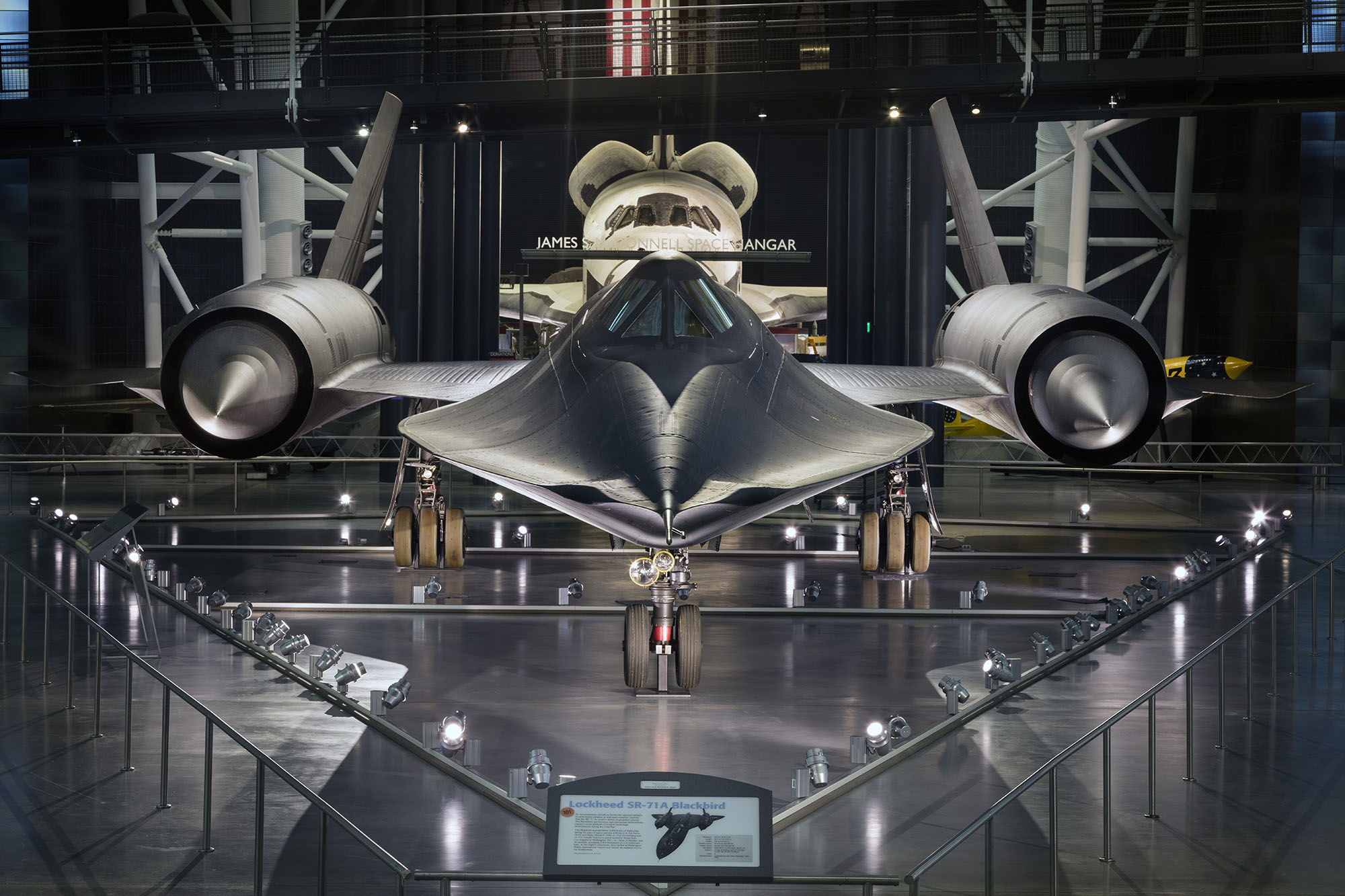
SR-71A
The SR-71 gathered strategic intelligence by flying higher and faster than operational interceptors could reliably reach. Cameras and sensors surveyed vast areas while crews managed a demanding aircraft whose skin expanded with heat. Its intelligence informed decisions during crises and conflicts without requiring the aircraft to carry weapons.
In depth
History & service
The SR-71, unofficially known as the "Blackbird," is a long-range, advanced, strategic reconnaissance aircraft developed from the Lockheed A-12 and YF-12A aircraft. The first flight of an SR-71 took place on Dec. 22, 1964, and the first SR-71 to enter service was delivered to the 4200th (later 9th) Strategic Reconnaissance Wing at Beale Air Force Base, Calif., in January 1966. The U.S. Air Force retired its fleet of SR-71s on Jan.
26, 1990, because of a decreasing defense budget and high costs of operation.
Throughout its nearly 24-year career, the SR-71 remained the world's fastest and highest-flying operational aircraft. From 80,000 feet, it could survey 100,000 square miles of Earth's surface per hour. On July 28, 1976, an SR-71 set two world records for its class -- an absolute speed record of 2,193.167 mph and an absolute altitude record of 85,068.997 feet.
On March 21, 1968, in the aircraft on display, Maj. (later Gen.) Jerome F. O'Malley and Maj. Edward D. Payne made the first operational SR-71 sortie. During its career, this aircraft accumulated 2,981 flying hours and flew 942 total sorties (more than any other SR-71), including 257 operational missions, from Beale Air Force Base, Calif., Palmdale, Calif., Kadena Air Base, Okinawa, and RAF (Base), Mildenhall, England. The aircraft was flown to the museum in March 1990.
Details that tell the story
Entered operational service in 1966 · Set world speed and altitude records in 1976 · Could survey about 100,000 square miles per hour
The aircraft in figures
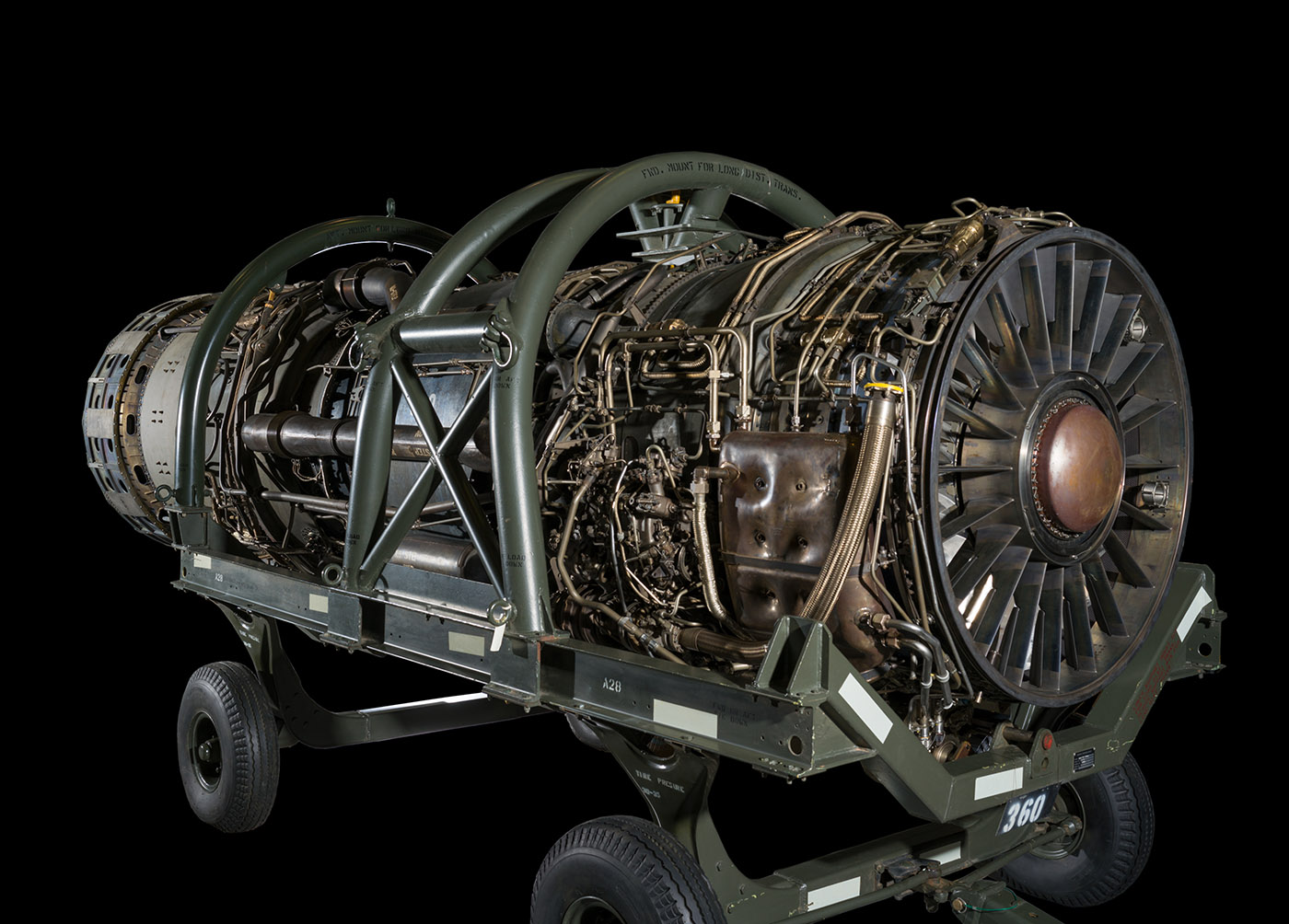
Armament: None · Engines: Two Pratt & Whitney J58s of 32,500 lbs. thrust each with afterburner · Crew: Two · Maximum speed: Mach 3+ (three times the speed of sound) or over 2,000 mph · Range: More than 2,900 statute miles · Ceiling: Over 85,000 ft. · Span: 55 ft. 7 in. · Length: 107 ft. 5 in. · Height: 18 ft. 6 in. · Weight: 140,000 lbs. loaded
Seeing what could not be reached
Reconnaissance turns access into information. The earliest aerial observers used their elevated position to see beyond ground obstacles. Cameras added a record that could be studied after the flight. As aircraft became faster and reached higher altitudes, the equipment had to deal with vibration, motion, changing light, and the difficulty of locating an image precisely on a map.
The mission was not complete when the photograph was taken. Film or electronic data had to be recovered, processed, interpreted, and delivered to someone who could use it. A remarkable image could still be misleading without context. Different collection methods therefore complemented one another: direct observation, photography, radar, intercepted signals, and later satellite sensing supplied different kinds of evidence.
Aircraft such as the U-2 and SR-71 are famous for their performance, but their reason for flying was the information they could bring back. The same distinction helps connect military reconnaissance with planetary exploration and Earth observation. A spacecraft travelling far from Earth also needs to turn a fleeting encounter into useful measurements and transmit them home. Across these galleries, the camera, sensor, computer, and communications link belong beside the aircraft in the story. The real achievement is not simply reaching a distant place, but making that place more understandable.