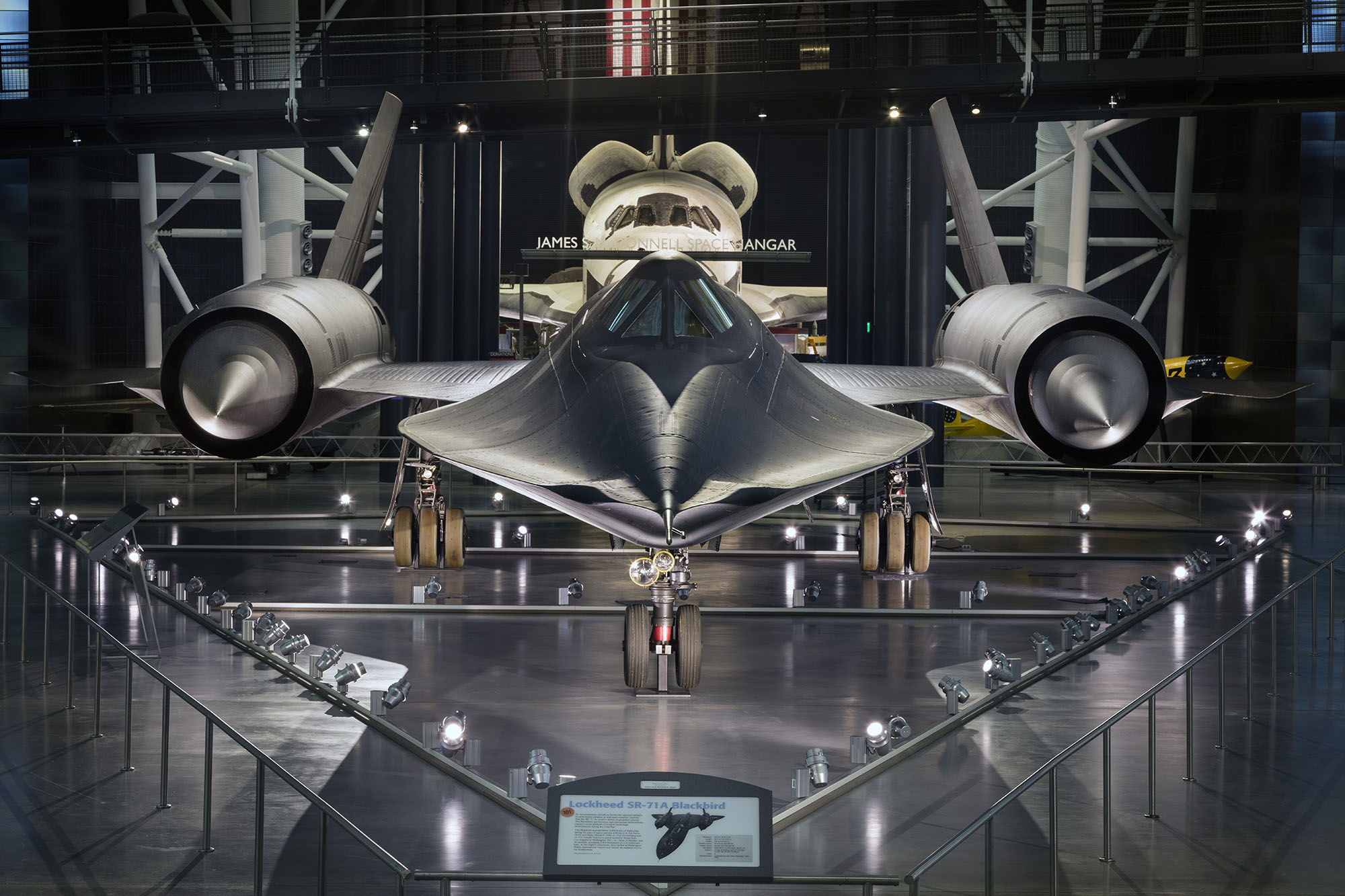
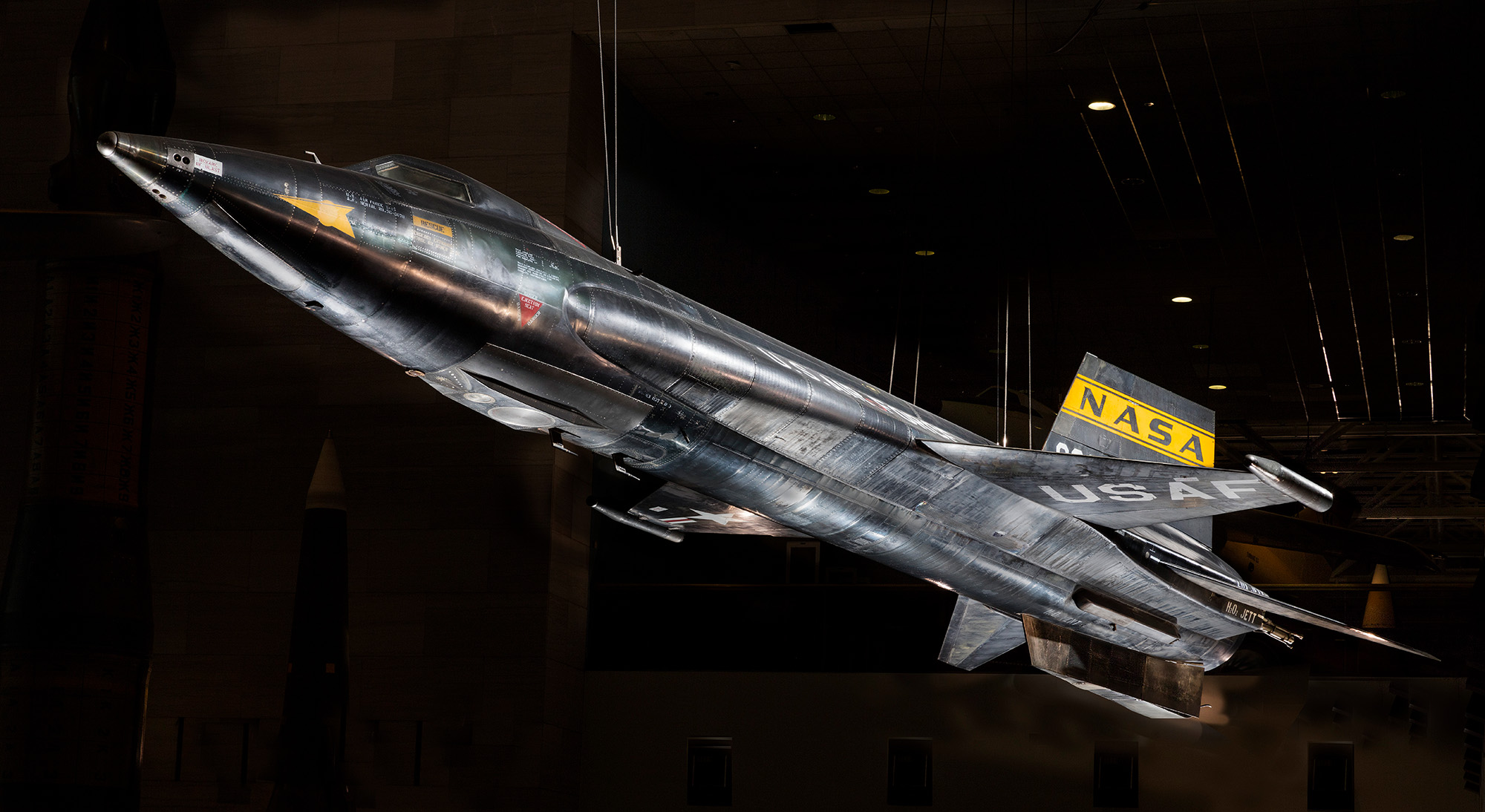
National Mall
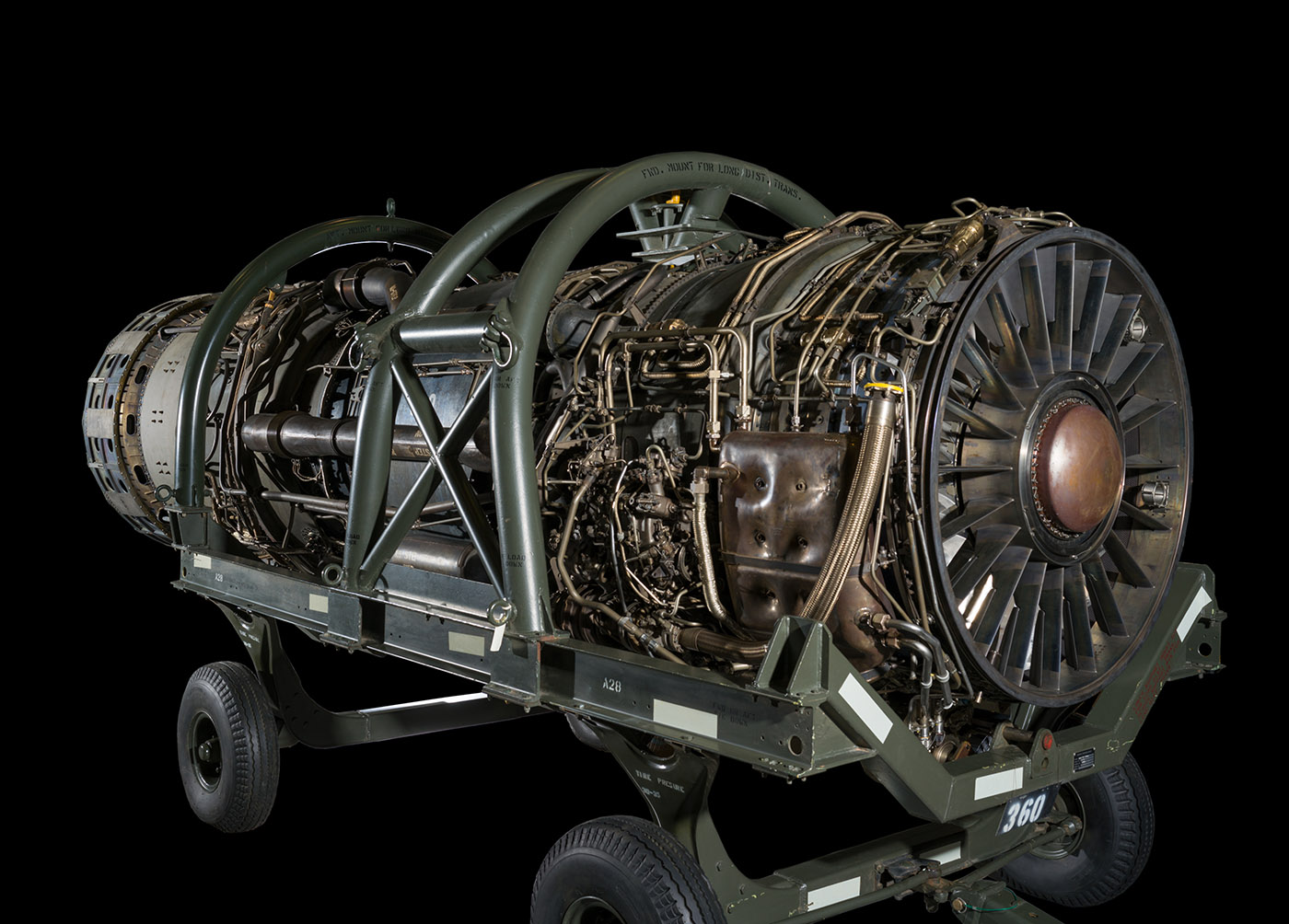
Pratt & Whitney J58 Turbojet Engine
The J58 powered the SR-71 family at high Mach speed. Its long cylindrical body contains stages that compress air, burn fuel, and extract energy before producing thrust. At extreme speed, airflow had to be slowed and compressed before reaching the engine. Compressor stages, burners, turbine, afterburner, fuel, controls, and the external inlet therefore behaved as one propulsion system.
In depth
The engine depended on the aircraft’s inlet system
The J58 entered production after six years of development and supported a reconnaissance aircraft that traded cost and complexity for speed, altitude, and strategic information. The engine embodies materials, thermodynamics, secrecy, maintenance, and mission purpose together.
A life-support system with wings
As altitude increases, the environment that supports ordinary life becomes less forgiving. Lower pressure reduces the oxygen available to the body. Cold, decompression, and the consequences of an emergency demand specialized equipment. A pilot or balloonist therefore depends on a system that includes the cabin, clothing, oxygen supply, communications, and a means of returning safely.
High-altitude exploration developed through balloons as well as airplanes. Balloons could carry instruments above much of the atmosphere, while aircraft offered different combinations of speed, control, and range. Pressure garments and enclosed gondolas turned the occupant's immediate surroundings into a small protected environment. The same broad problems later followed people into space.
These objects also reveal the limits of celebrating altitude as a number alone. A record flight had to preserve its observations and bring its crew home. A reconnaissance mission had to support useful photography and dependable navigation over a long route. The suit, instrument, or engine in a display case may look secondary to the famous aircraft, but it made the mission possible. Comparing balloon equipment, high-altitude aircraft, and spacecraft connects a century of efforts to keep people functioning where an unprotected body could not survive.