Air Force Museum
Five Stars in Space
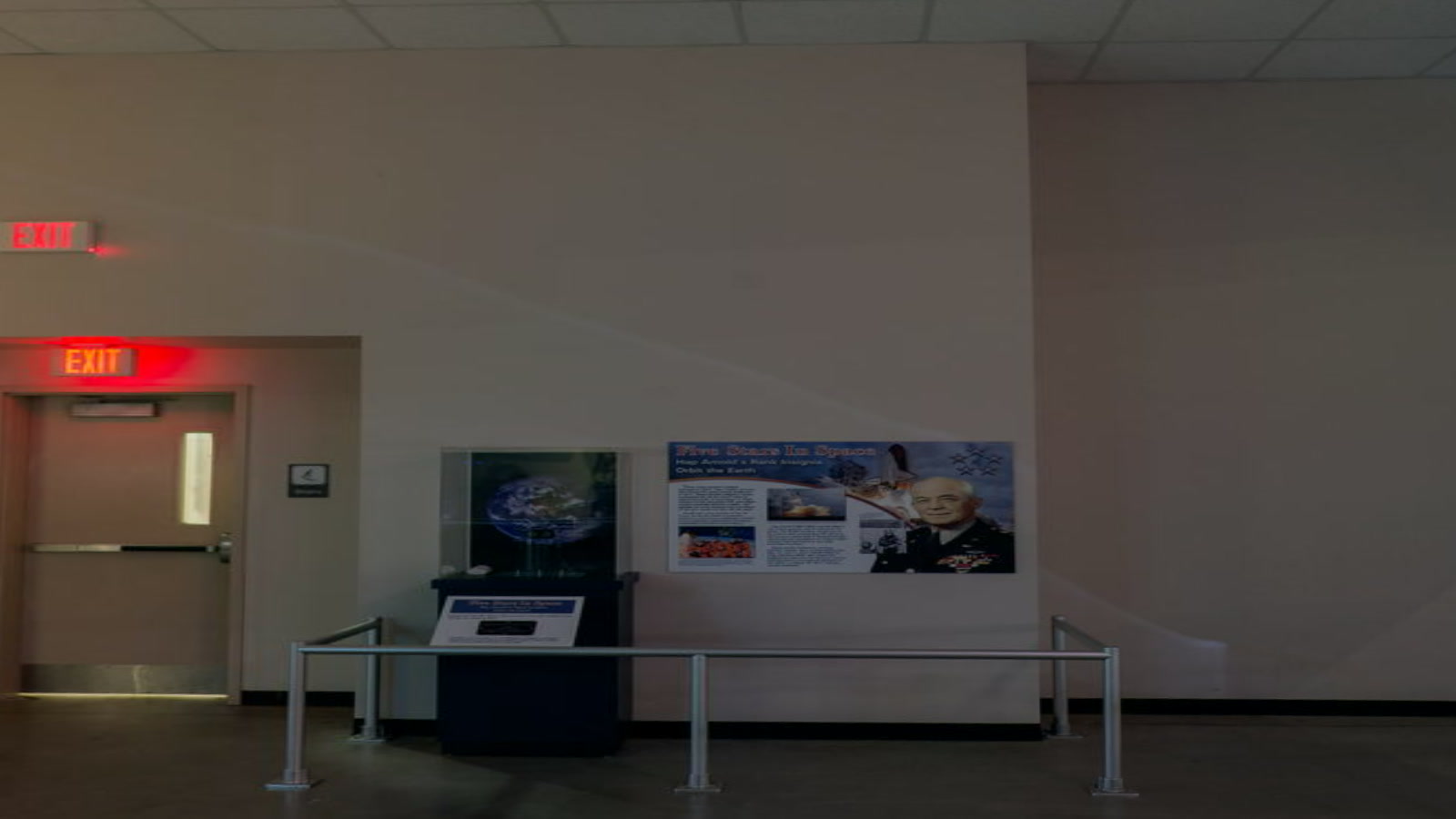
General Henry H. Arnold's five-star insignia flew aboard Space Shuttle Endeavour as a symbolic link between early air-power research and the space age. General Henry H. 'Hap' Arnold led the Army Air Forces during World War II and argued that long-term scientific research was essential to future air power. In 2011, his five-star rank insignia traveled aboard Space Shuttle Endeavour during STS-134, a mission to the International Space Station.
In depth
The story behind the display
The insignia did not operate the spacecraft; its meaning came from association. Flying it in space connected Arnold's support for research and development with later aerospace institutions and missions. The object demonstrates how museums use provenance and symbolism, as well as machinery, to tell a technological story.
History & service
These 5-star general's insignia belonged to Henry "Hap" Arnold, and they flew aboard the Space Shuttle Endeavour in 2011. Flying Arnold's insignia in space symbolized the U.S. Air Force's drive to expand the limits of technology. In 1945 Gen. Arnold anticipated that spaceflight would eventually become a reality -- but perhaps he never dreamed that something of his own would one day orbit the earth.
Arnold was a key founder of the Air Force. He led the USAF to embrace science to meet future challenges, and Air Force worldwide leadership in aerospace technology is Arnold's proud legacy.
Hap Arnold (1886-1950) was the USAF's only 5-star general, and he served for 42 years. The Wright brothers taught him to fly, and he later commanded the U.S. Army Air Forces in World War II. Gen. Arnold's efforts laid the foundation for modern USAF research and development and other important functions.
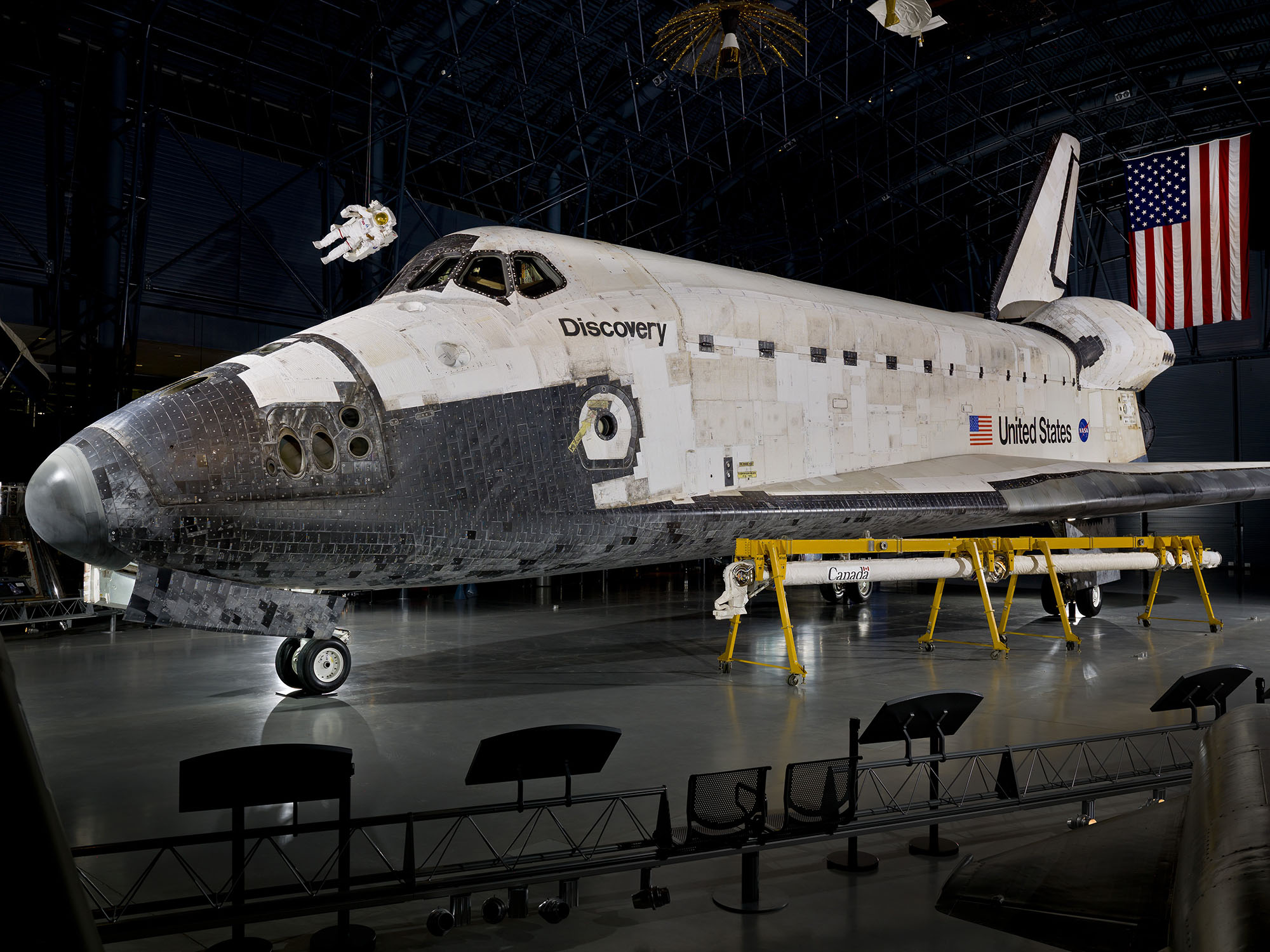
Space Shuttle Endeavour, carrying Arnold's insignia, flew its final mission from May 16-June 1, 2011. Shuttle Pilot Col. Greg Johnson (USAF, Ret.) carried the insignia into space for the Air Force, and returned them to the National Museum of the U.S. Air Force on Aug. 20, 2011, during a special ceremony.
Details that tell the story
Insignia belonged to General Henry H. 'Hap' Arnold · Flown aboard Space Shuttle Endeavour on STS-134 · Mission ran from May 16 to June 1, 2011 · Returned to the museum in August 2011
Keeping people alive beyond the atmosphere
A crewed spacecraft carries a small, controlled environment into a place that cannot support unprotected human life. Pressure, temperature, oxygen, carbon dioxide removal, water, electrical power, and waste management all become engineering responsibilities. The flight suit or capsule displayed in a museum is therefore part of a larger life-support system, not simply clothing or a vehicle body.
Early missions established capabilities in stages. Launch and recovery, orbital flight, longer duration, maneuvering, rendezvous, and work outside a spacecraft each introduced different demands. Ground controllers, tracking stations, medical teams, recovery forces, and manufacturers supported the crew. A successful mission depended on that network as much as on the people visible in the cabin.
Artifacts preserve evidence of those demands at a human scale. A small hatch suggests the difficulty of entering or leaving in bulky equipment. A glove makes clear that pressure protection can restrict dexterity. The shape of a returning capsule reveals the importance of managing atmospheric heating and deceleration. Connections to high-altitude aviation are especially strong: pressure suits, research aircraft, and instrumented test flights helped build knowledge that spacecraft designers could use. The history is a sequence of carefully developed capabilities, with extraordinary journeys resting on many ordinary systems that had to keep working together.