Udvar-Hazy
Space Shuttle Discovery
Discovery flew 39 missions, more than any other space shuttle. It launched the Hubble Space Telescope, helped assemble the International Space Station, and carried crews back into space after the Challenger and Columbia disasters. The spacecraft in this hangar is the one that did that work. Its worn surfaces record repeated trips through launch, orbit, and reentry—a working vehicle whose achievements depended on astronauts and thousands of people on the ground.
In depth
A spacecraft with a working life
Discovery first flew in August 1984 and completed its final mission in 2011. Across 39 flights it accumulated about a year in space and nearly 150 million miles of travel. Those totals describe repeated journeys by one reusable orbiter, not a succession of newly built spacecraft.
Its missions included satellite deployment and retrieval, scientific work, military assignments, international cooperation, and station construction. That variety makes Discovery a particularly rich introduction to the shuttle program. The same basic vehicle returned with different crews and equipment to perform different kinds of work.
A telescope that changed our view
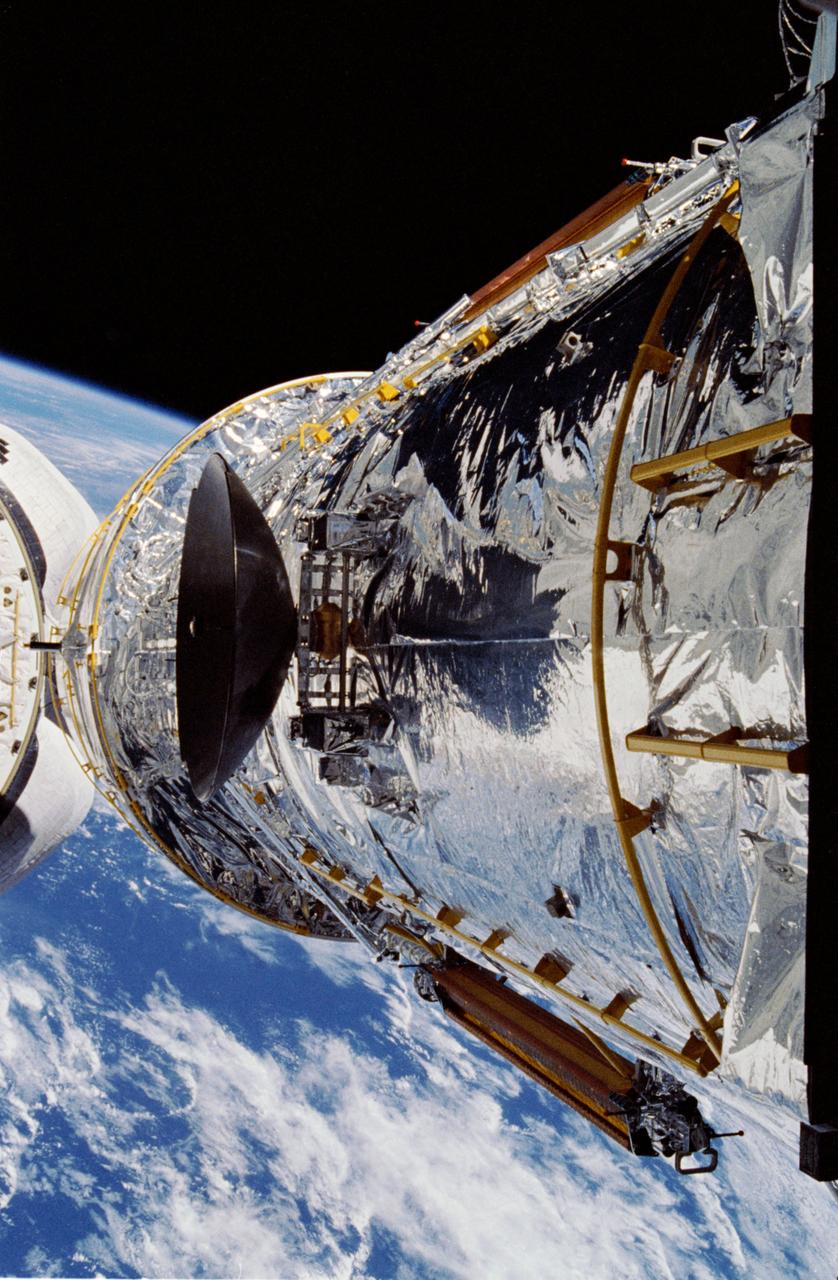
In April 1990, Discovery carried the Hubble Space Telescope into orbit on STS-31. The robotic arm lifted the observatory from the payload bay for deployment. Hubble would later require corrective work and repeated servicing; Discovery itself flew two subsequent servicing missions.
The telescope’s scientific achievements depended on much more than a launch. Instruments, communications, ground teams, astronauts, and the ability to work on hardware in orbit all contributed. The deployment photograph captures one moment in that larger relationship between a reusable spacecraft and a long-lived observatory.
Returning after loss
Discovery flew STS-26 in 1988, the shuttle program’s return to flight after Challenger, and STS-114 in 2005, the return after Columbia. These missions carried unusual public attention and emotional weight. Their crews flew after investigations, engineering changes, and extensive preparations shaped by the loss of colleagues.
Calling those flights courageous is appropriate, but courage alone did not make them possible. They required institutions to confront failures and teams to work through difficult technical and operational changes. The orbiter preserves a connection to that effort as well as to the launches themselves.
From a spacecraft to a workplace
Discovery helped build and supply the International Space Station. The payload bay could carry large equipment, the robotic arm could manipulate it, and spacewalkers could perform assembly tasks outside. The shuttle therefore functioned as transport, workshop, and temporary home.
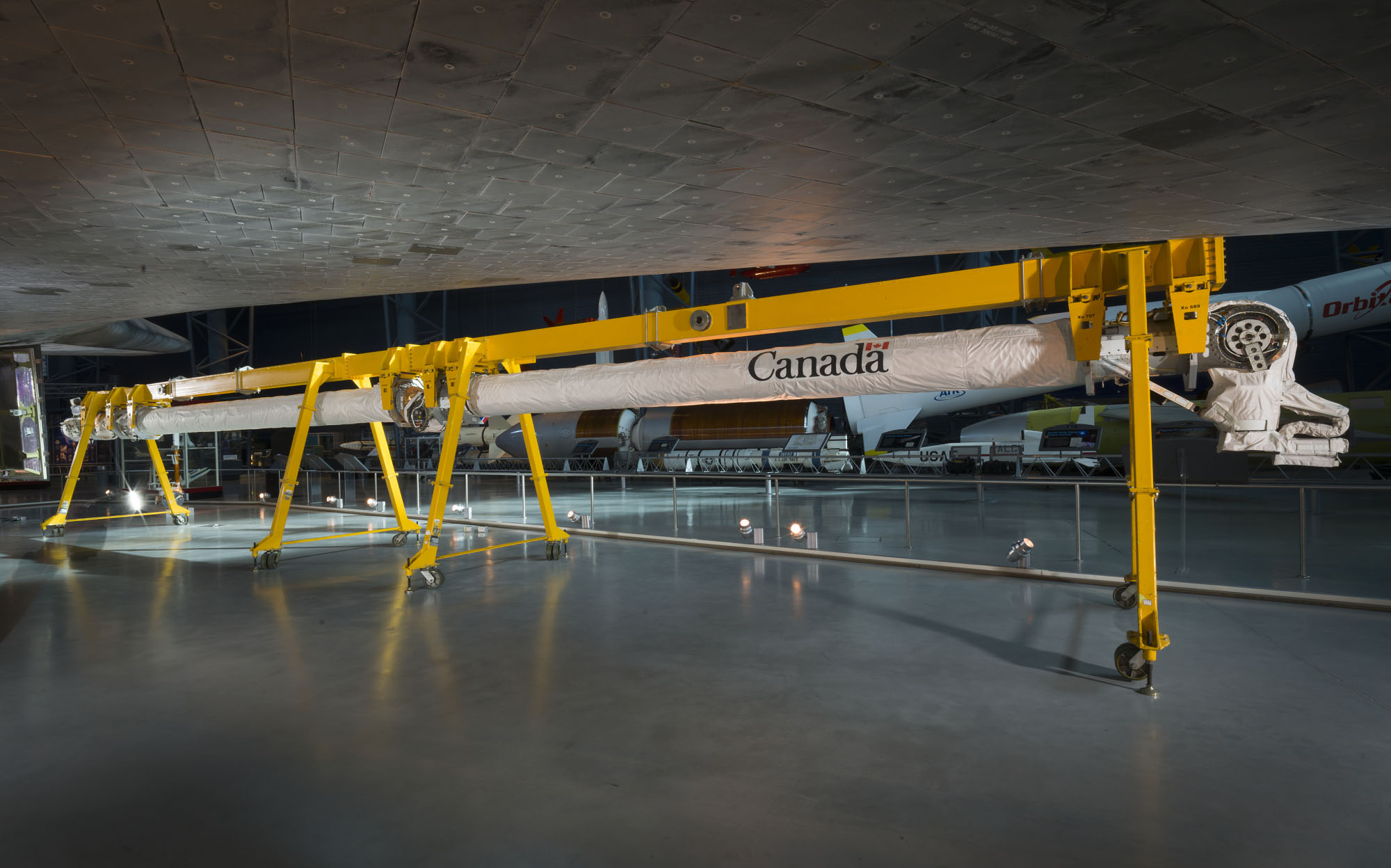
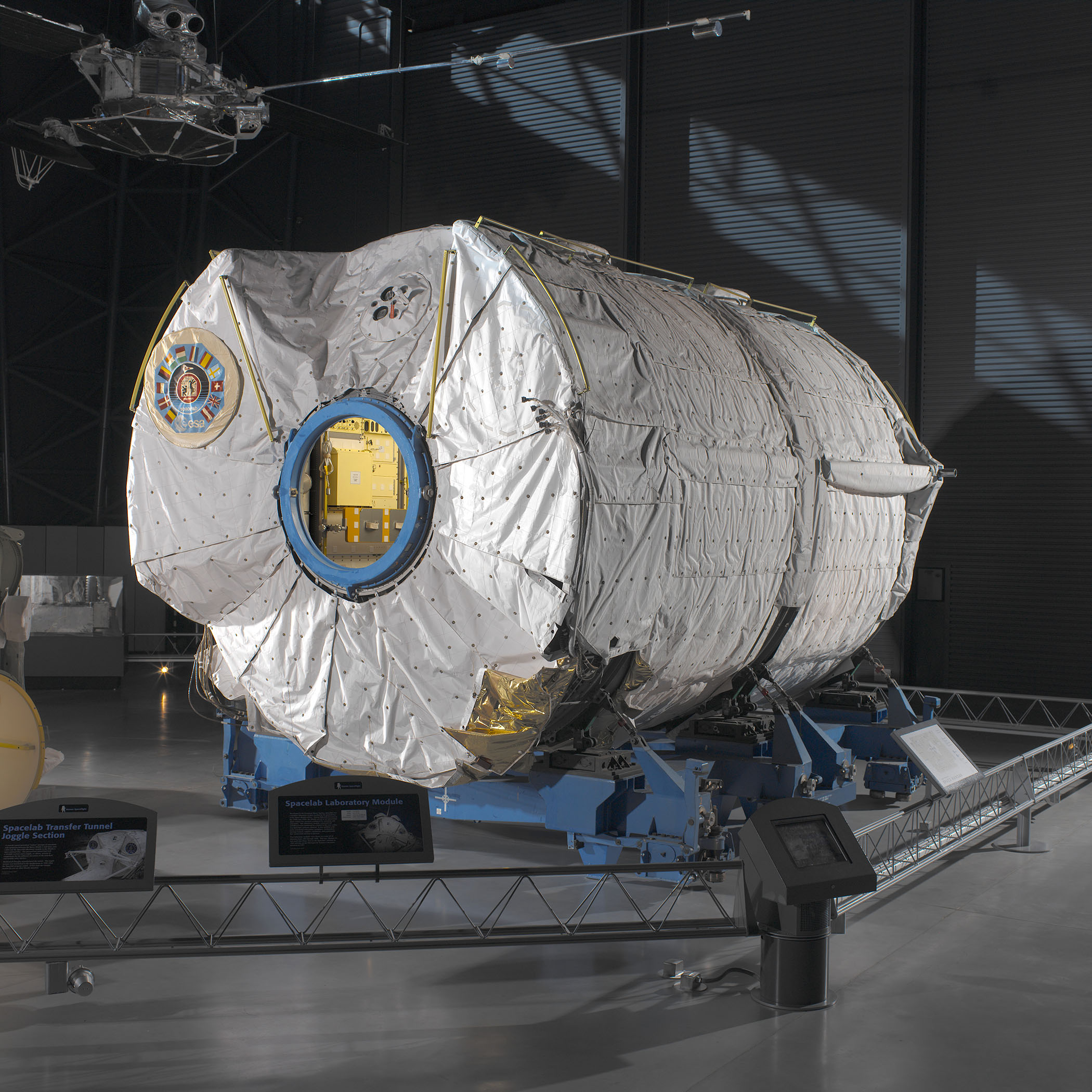
The Canadarm and MMU nearby show two approaches to working beyond the cabin. Spacelab illustrates another: placing a scientific laboratory inside the payload bay. Together, these artifacts explain why the shuttle was shaped around carrying people and substantial equipment to the same place at the same time.
A vehicle that changed character during flight
At launch, the orbiter was part of a rocket system with an external tank and solid rocket boosters. In orbit it maneuvered with smaller thrusters. During atmospheric return, its heat-protection system managed intense heating as it shed orbital energy. It then approached the runway as an unpowered glider.
Each phase demanded different systems and skills. The broad wings did not carry Discovery into orbit like an airliner; they became essential during the return through the atmosphere. That changing character is one of the shuttle’s most remarkable engineering features.
The marks are part of the history
Discovery was preserved as intact as practical after its final flight. Its surface does not look like a factory-fresh model because it is a flown spacecraft. Tiles, seams, discoloration, and repairs belong to the record of repeated operation.
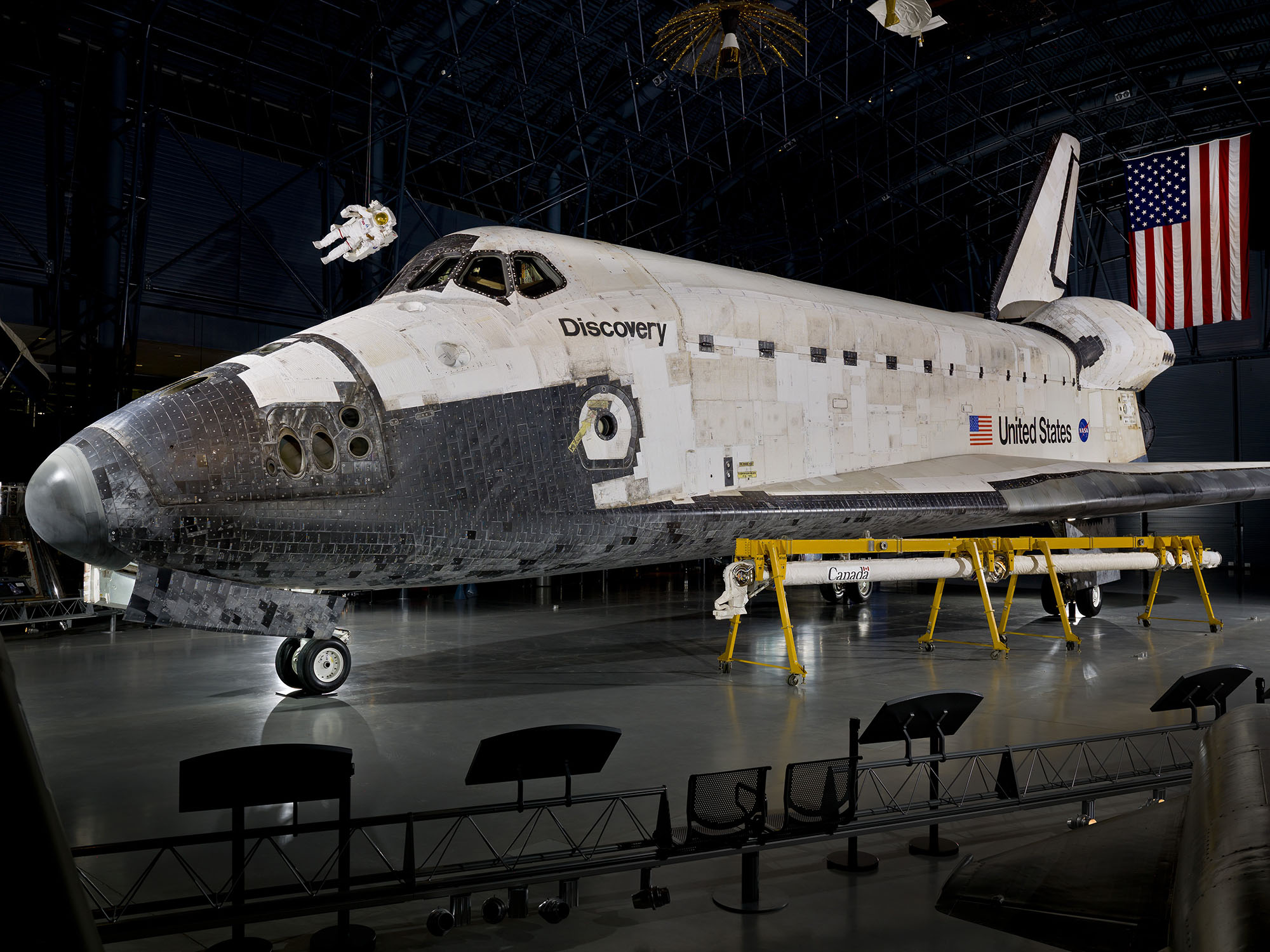
In the panorama, follow the transition from the nose and cockpit to the payload bay and engine area. The scale makes the achievement tangible. This is the machine that carried people, telescopes, supplies, and national expectations into orbit—and repeatedly brought its crews home.