Air Force Museum
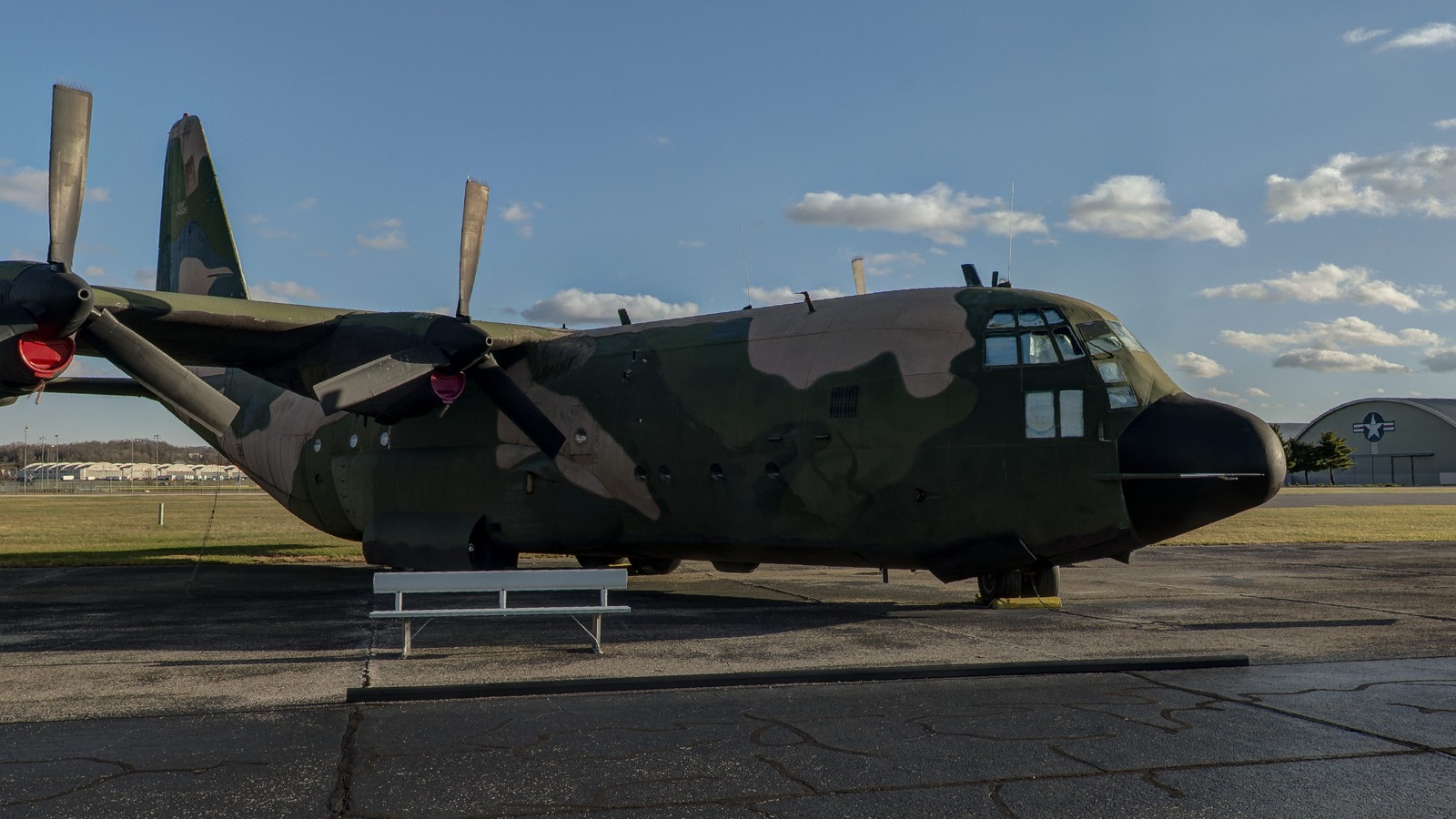
AC-130A
The AC-130A transformed a transport aircraft into a heavily armed gunship able to circle a target while its side-firing weapons remained aimed inward. This aircraft was the prototype for 28 C-130 conversions. Work at Wright-Patterson Air Force Base combined sensors, navigation, fire control, and weapons into one coordinated system before combat evaluation in Southeast Asia in 1967.
In depth
The story behind the display
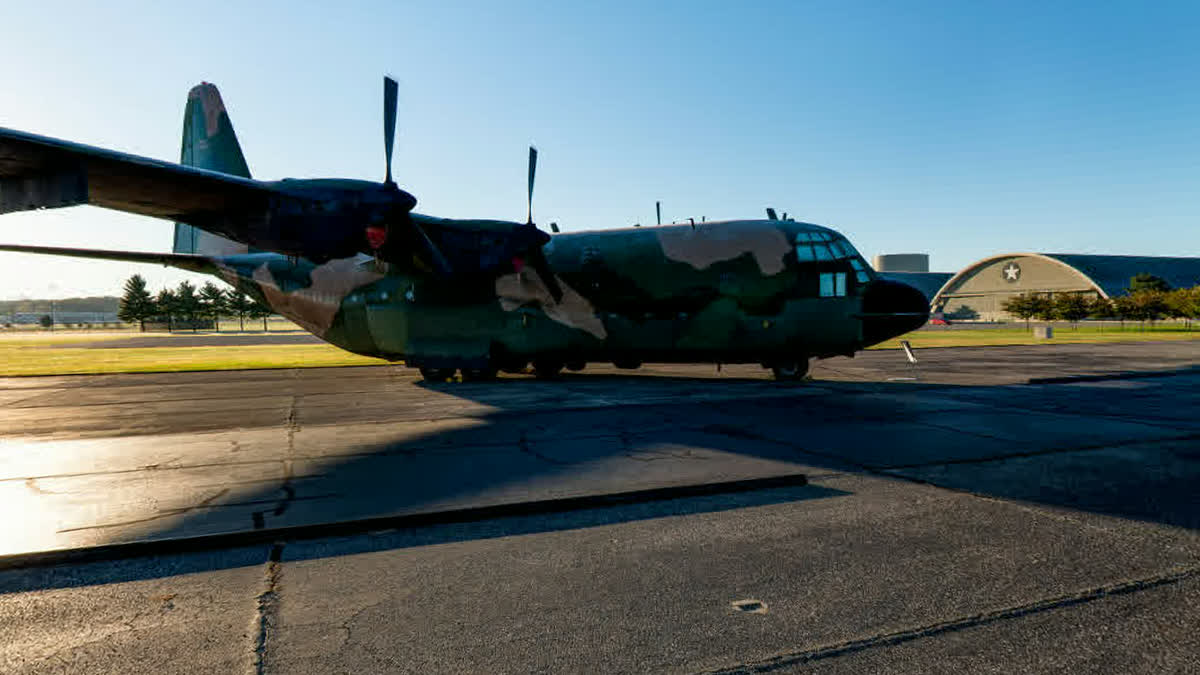
This aircraft was the prototype for 28 C-130 conversions. Work at Wright-Patterson Air Force Base combined sensors, navigation, fire control, and weapons into one coordinated system before combat evaluation in Southeast Asia in 1967. The aircraft retired in May 1976 after helping establish a gunship concept that remains in service in newer forms.
History & service
The C-130 was originally designed as an assault transport capable of operating from unpaved, hastily prepared airstrips. On Aug. 23, 1954, the Hercules made its first flight. By 1976 more than 1,200 C-130s had been ordered, including aircraft equipped for radar weather mapping and reconnaissance, mid-air space capsule recovery, search and rescue, ambulance service, drone launching, and mid-air refueling of helicopters.
The C-130 could transport up to 92 combat troops and their gear or 45,000 pounds of cargo. Where facilities were inadequate, the Hercules could deliver its cargo by parachute or by low altitude ground-cable extraction without landing.
Twenty-eight C-130s were converted to side-firing gunships, primarily for night attacks against ground targets. This AC-130A was modified at Wright-Patterson Air Force Base, Ohio, as the prototype for the gunship version and was initially equipped with four 20mm and four 7.62mm multi-barrel guns, a searchlight and target sensors. After testing in Southeast Asia in 1967, it was used as a test bed for additional armament, sensor and fire control development.
Later AC-130 gunships mounted improved sensors, a digital fire control computer and heavier armament.
The aircraft on display was retired to the museum in May 1976.
Details that tell the story
Prototype for the AC-130A conversion program · Combat evaluation began in Southeast Asia in 1967 · Side-firing weapons were integrated with sensors and fire control
The aircraft in figures
Armament: Two 7.62mm mini-guns, plus two 20mm, two 40mm and one 105mm cannon · Engines: Four Allison T-56-A-11 turboprops of 4,050 hp · Maximum speed: 380 mph · Cruising speed: 335 mph · Range: 2,500 miles · Service ceiling: 33,000 ft. · Span: 132 ft. 7 in. · Length: 97 ft. 10 in. · Height: 38 ft. 6 in. · Weight: 124,200 lbs. maximum
What survives after the mission
A museum object begins a second life when it stops performing its original job. An aircraft that once carried a crew becomes a place for public memory. A jacket, letter, medal, or small piece of equipment can preserve a much more intimate connection. The object is valuable both for what it reveals physically and for the documented story that gives it meaning.
Famous aircraft and individuals can make a complicated history approachable, but they are only part of it. Many people left no celebrated machine behind. Memorials, personal possessions, unit records, and photographs help recover the experiences of those whose service was less visible. They also preserve loss, separation, captivity, recovery, and the consequences of war for families and communities.
Preservation involves choices. Restoring an aircraft may make its design easier to understand, while retaining wear or damage may protect evidence of its use. A reproduction can explain how a machine worked, provided its identity remains clear. Linking objects across collections helps fill the gaps created when surviving material is dispersed. A uniform in one gallery, an aircraft in another, and a memorial elsewhere can illuminate the same history from different directions. The result is more than a record of machines: it is a way to keep the people, decisions, and experiences connected to them in view.