National Mall
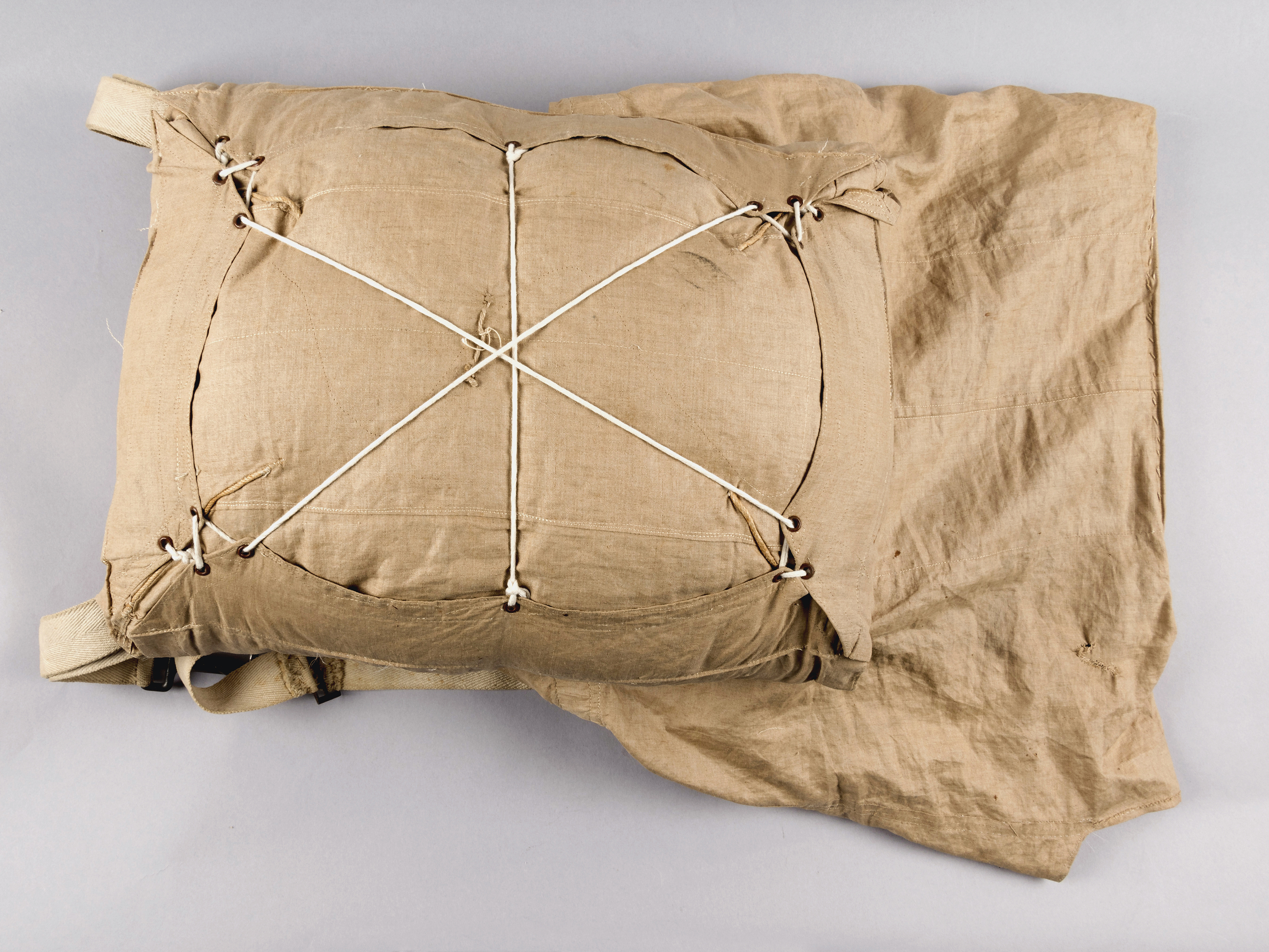
Tiny Broadwick's Parachute
Georgia 'Tiny' Broadwick began parachuting from balloons and became the first woman to parachute from an airplane in 1913. Her nickname described her size, not her courage or skill. A parachute must remain secure until needed, release cleanly, unfold without tangling, inflate, and slow a person before landing. Broadwick's demonstrations helped make emergency escape from aircraft imaginable.
In depth
A safety system depends on deployment
Broadwick's career belonged to public exhibition culture, but her parachuting also contributed evidence about aerial escape. Her story shows how marginalized performers could generate operational knowledge while institutions later formalized safety practices.
The mission was to bring someone home
Rescue and medical evacuation changed the meaning of aviation's reach. Speed could shorten the time between an injury and treatment. Aircraft could cross terrain that made a ground journey slow or impossible. But the ability to reach a person did not guarantee the ability to recover them. Weather, enemy fire, limited landing space, weight, and the patient's condition shaped every decision.
Rescue depended on a chain of people and equipment. Someone had to locate the survivor, communicate the position, assess the danger, provide protection where necessary, and bring a recovery aircraft to the right place. Medical personnel then worked in an environment that could be noisy, cramped, and poorly suited to care. The aircraft's range and payload mattered, but so did preparation, coordination, and judgment.
The personal equipment in these galleries makes that work concrete. A radio could turn a search into a precise approach. Protective clothing could keep a survivor alive long enough to be found. A helicopter could lift someone from a place with no runway. A transport could carry casualties toward a hospital. These connections span civil and military aviation and link the museums through a shared purpose. Heroism here often means accepting risk in order to reduce another person's danger, while relying on a carefully organized team to make the attempt possible.