National Mall
Voyager Spacecraft
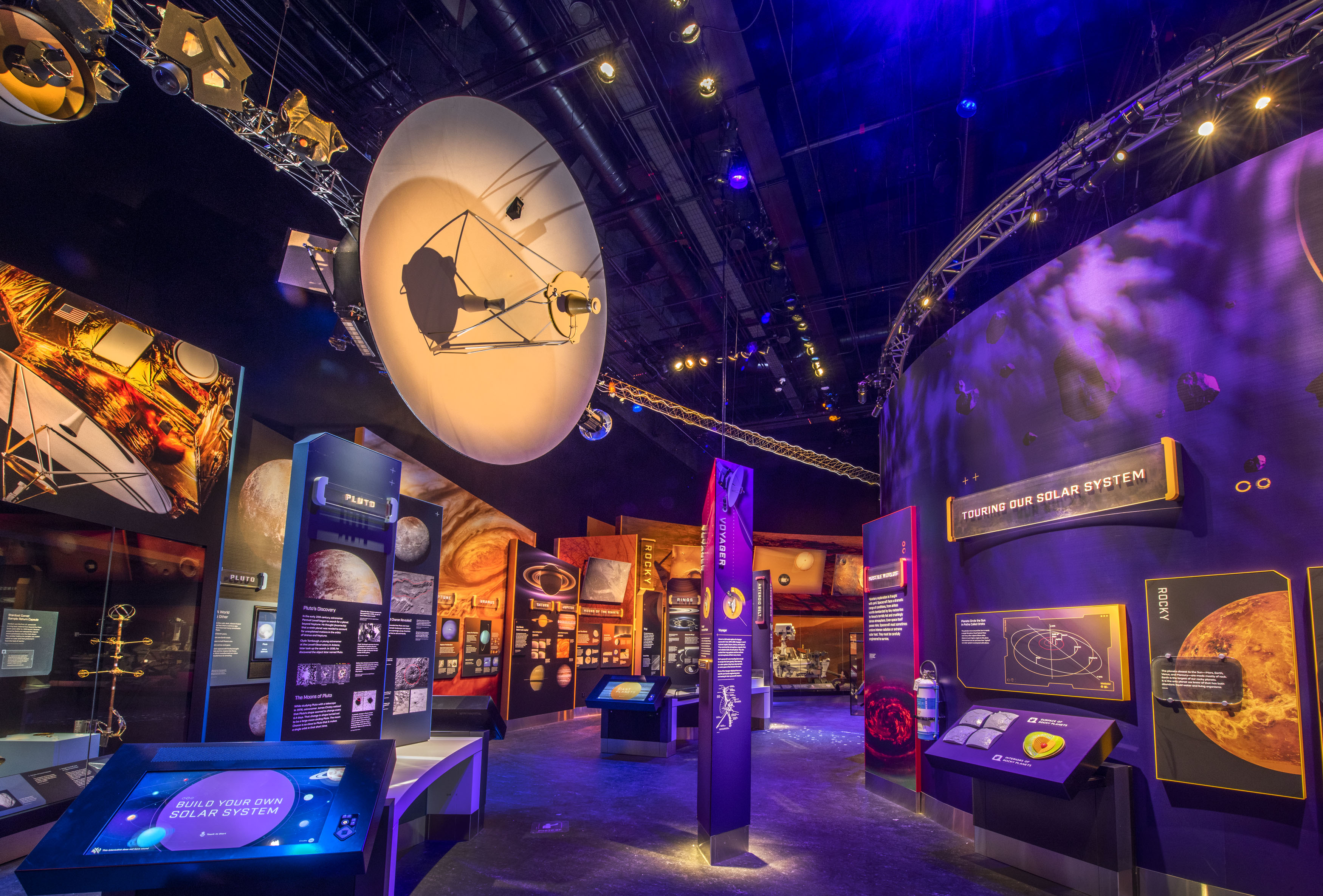
Voyagers 1 and 2 carried cameras and other instruments past the giant planets. Their large dish antennas sent discoveries across billions of kilometers, and their power systems kept working far from sunlight. The Voyagers had to gather data, survive radiation and cold, control their orientation, produce power, and communicate across enormous distances. Their planetary encounters used carefully timed flight paths rather than engines powerful enough to stop at every world.
In depth
A spacecraft is a coordinated system
Voyager’s grand tour converted a rare planetary alignment into a sequence of gravity-assisted encounters. Long communication delays and limited onboard resources required robust systems, disciplined command planning, and scientific priorities set years in advance.
Exploration by instruments and patient teams
A planetary spacecraft must operate in conditions its builders can test only imperfectly on Earth. Launch vibration, radiation, temperature, power, communications, and long periods without immediate intervention all affect the design. The most useful mission is not necessarily the one carrying the most instruments; it is the one whose instruments can make meaningful measurements and return them reliably.
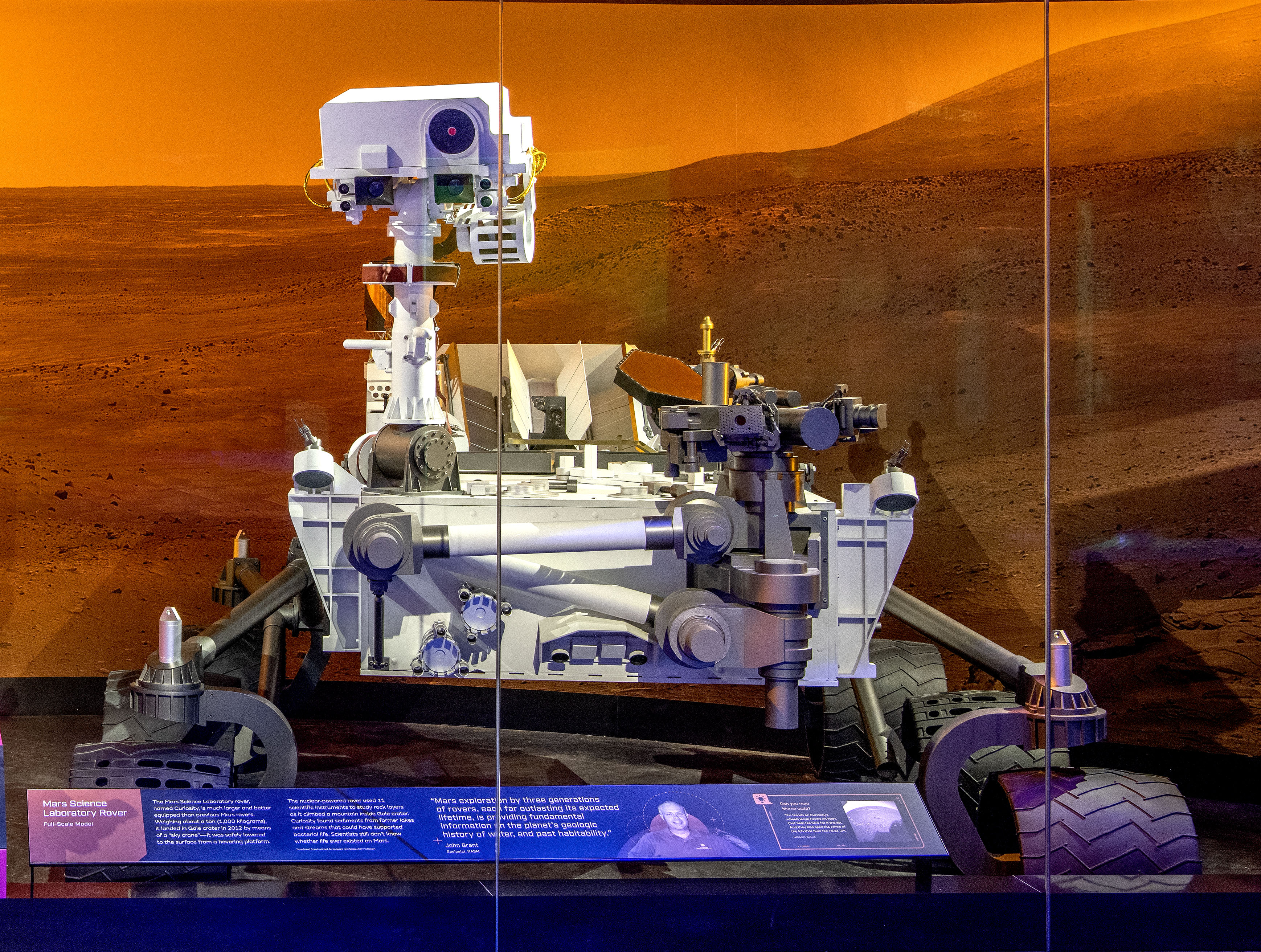
Different mission types answer different questions. A flyby provides a brief encounter and may use a planet's gravity to continue elsewhere. An orbiter can revisit the same world under changing conditions. A lander examines one location closely, while a rover trades additional mechanical complexity for the ability to move between sites. Sample-return missions add the extraordinary challenge of bringing material home for analysis with instruments too large or complex to fly.
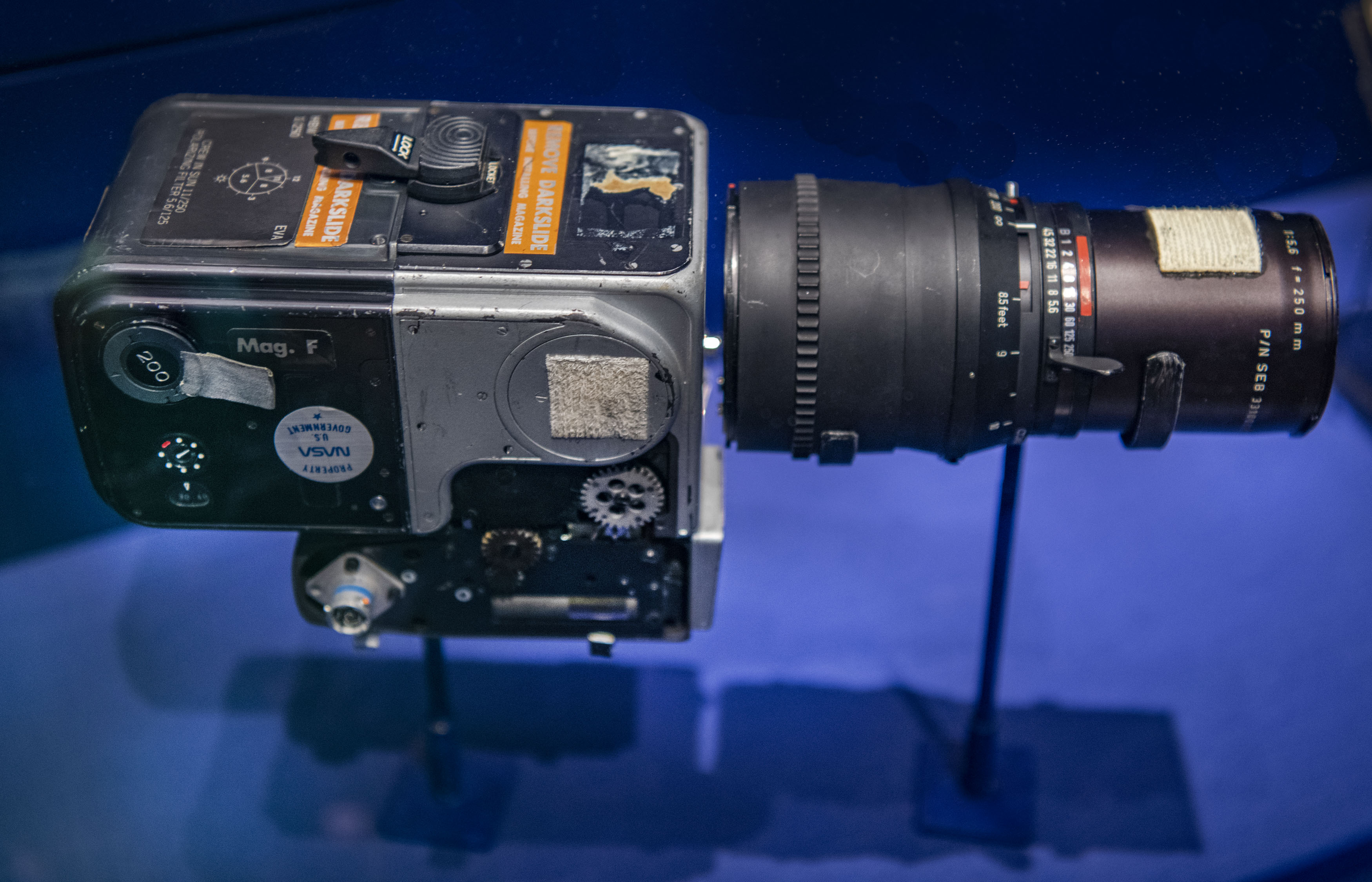
The discoveries are collective achievements. Engineers keep the spacecraft functioning, mission planners choose observations, and scientists compare the results with existing explanations. An unexpected image or measurement can redirect years of work. The cameras, rovers, globes, and spacecraft models in these galleries show successive ways of turning a distant point of light into a world with a history. Their connections to aviation run through navigation, imaging, materials, computing, and communications. The pilot may be absent, but human judgment remains present throughout the mission.