National Mall
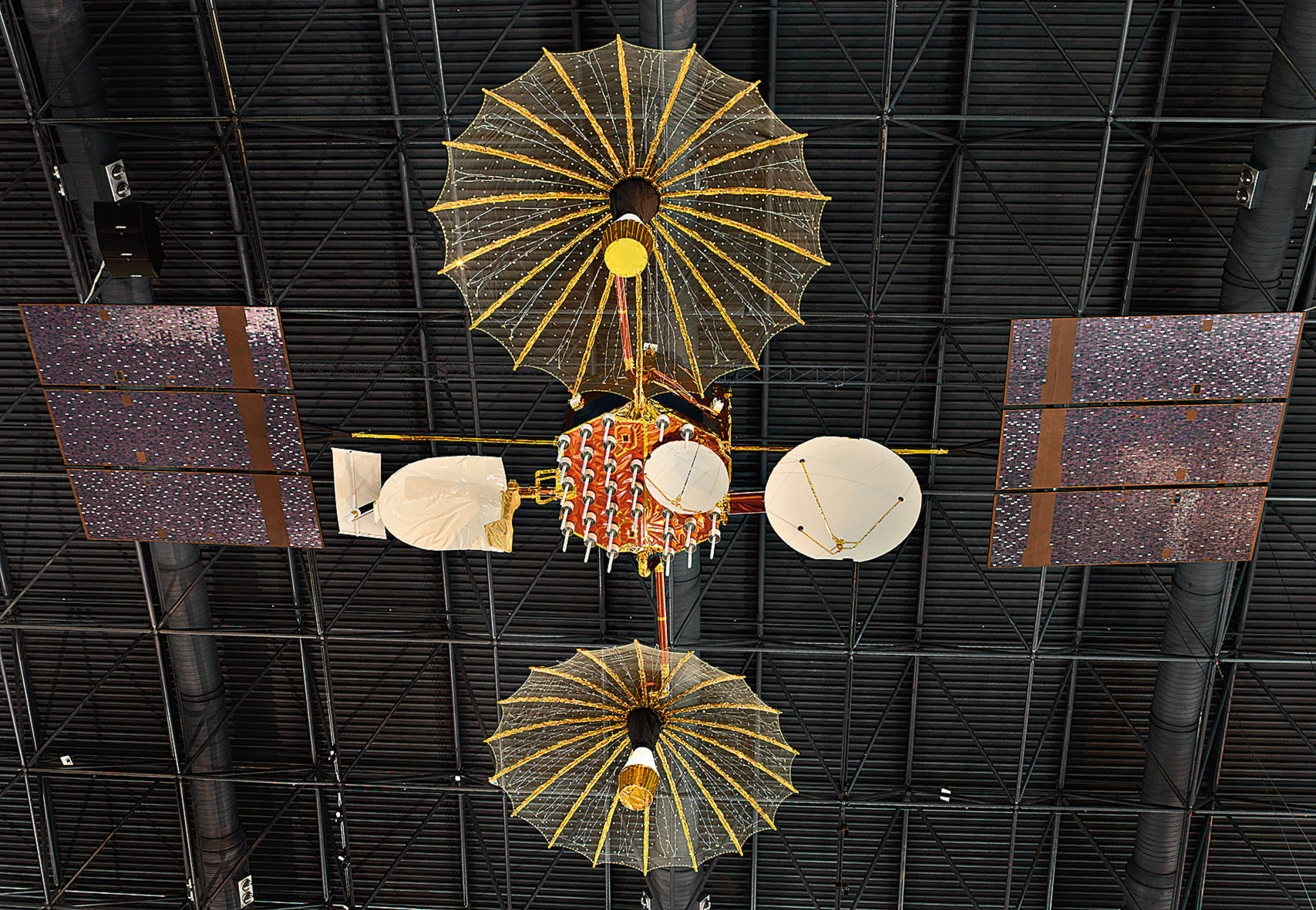
ATS-6
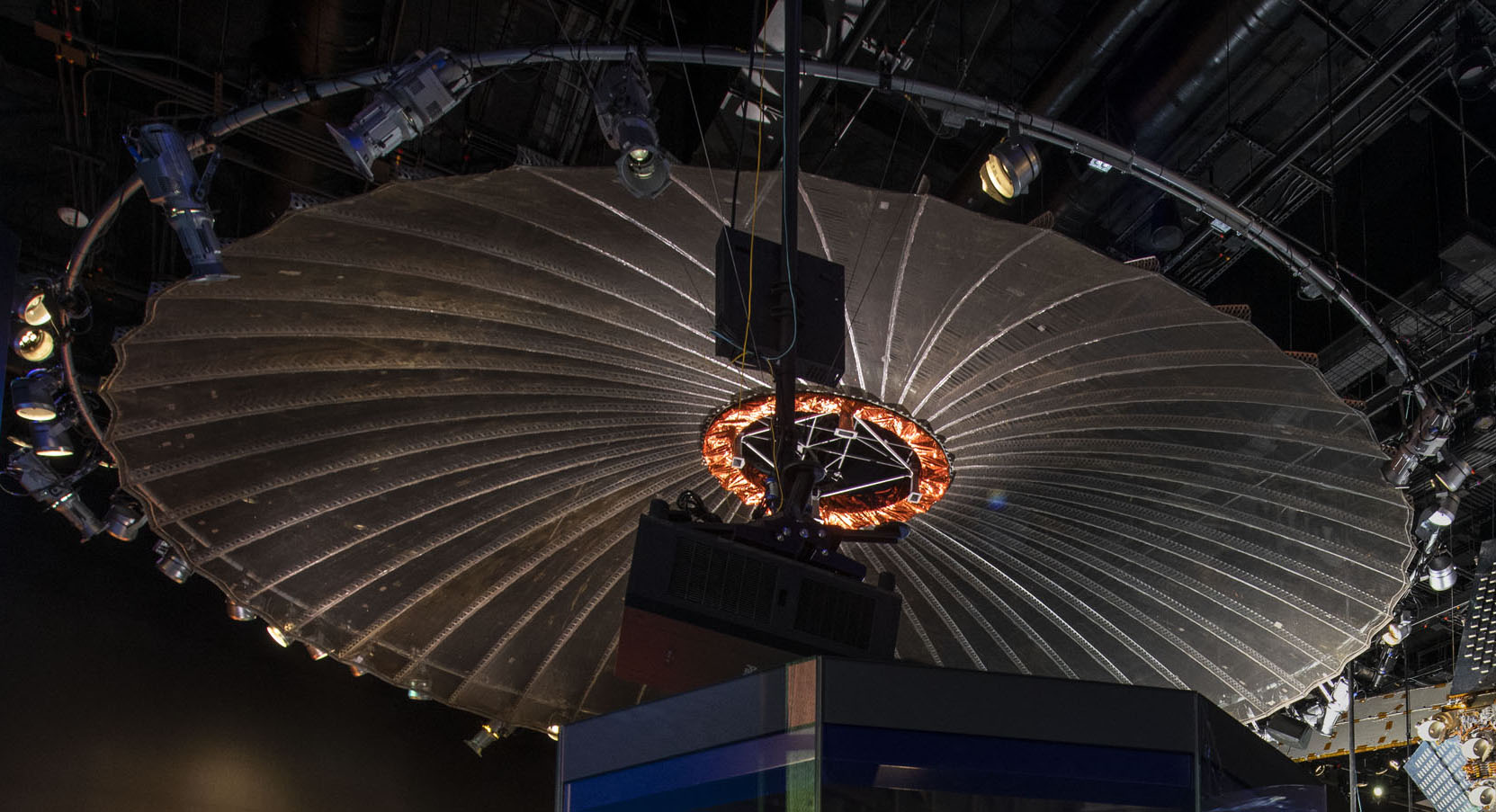
ATS-6 tested space-communications technology and supported educational programs on health, agriculture, and schooling in rural India. This engineering model helped test launch and space conditions. Once deployed, reflector shape and pointing concentrated radio energy so communities could receive useful signals with smaller ground equipment.
In depth
Deployment, vibration, temperature, and signal strength had to agree
The Satellite Instructional Television Experiment linked aerospace infrastructure to development policy. Program design, language, local authority, receiver placement, and feedback mattered alongside transmission.
A network above the horizon
Communications and observation satellites changed what it means for a place to be distant. Signals could cross oceans without depending on a continuous chain of ground stations, and instruments in orbit could repeatedly observe weather and the Earth's surface. The spacecraft mattered, but so did the ground equipment, antennas, computers, standards, and organizations that turned those signals into useful services.
Different orbits serve different purposes. A satellite that remains above roughly the same region can support continuous communication, while a lower orbit can bring an instrument closer to the surface it observes. Each choice creates tradeoffs in coverage, delay, power, lifetime, and the number of spacecraft needed. The shape of an antenna or the size of a solar array often makes those priorities visible.
The effects reach well beyond the space industry. Weather information helps aircraft plan routes. Communications connect passengers, ships, isolated communities, and emergency operations. Earth observations support science and public decisions. Images such as Earthrise also altered the cultural imagination, giving people a new view of the planet they shared. Cross-gallery links between airliners, satellites, cameras, and computers reveal how these systems grew together. The connected world is the result of many specialized machines and institutions cooperating across a distance that none could bridge alone.