National Mall
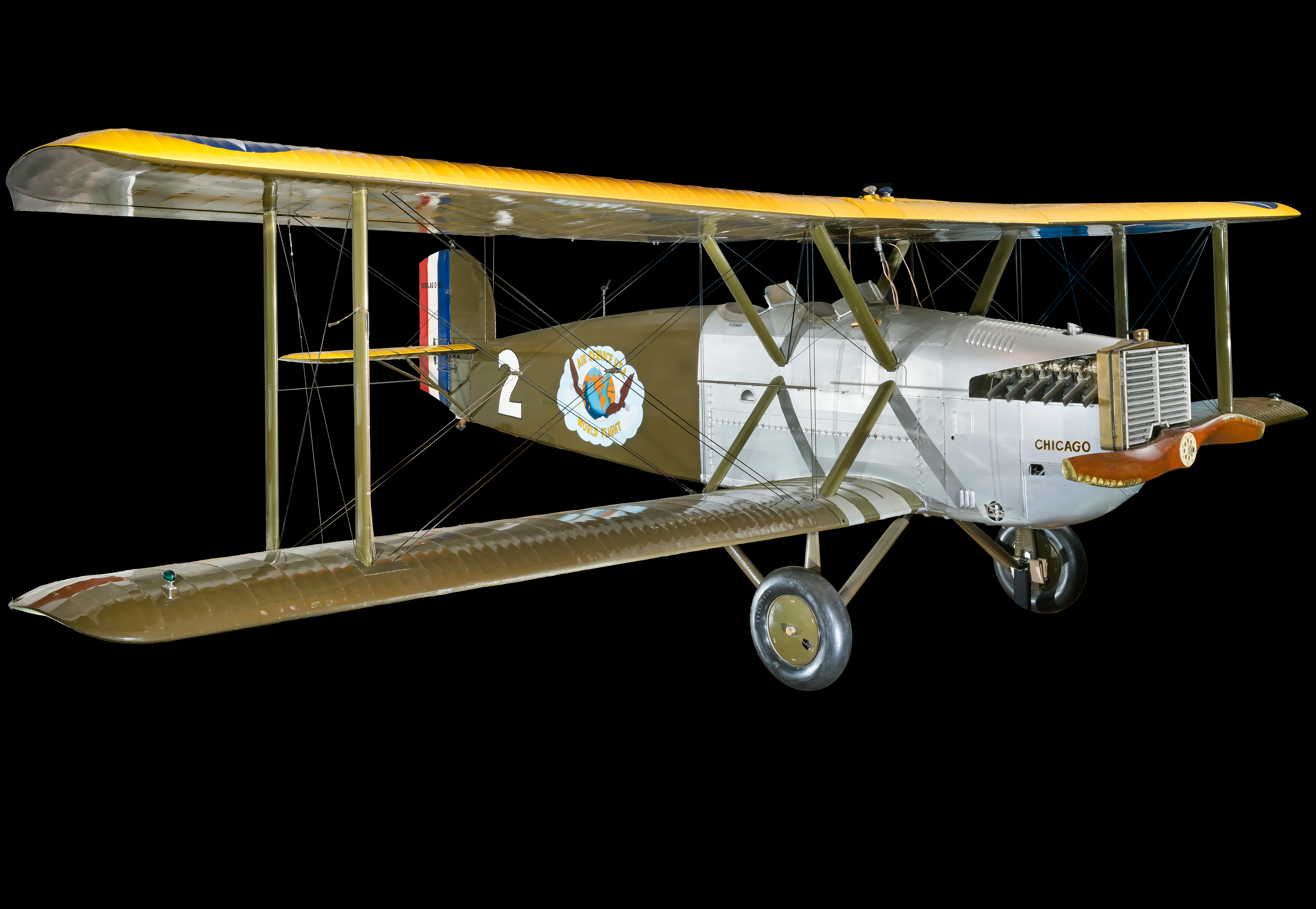
Douglas World Cruiser Chicago
Chicago was one of the airplanes used for the first flight around the world. Its wheels could be changed for floats, but the pilots still depended on mechanics, fuel, spare parts, ships, and carefully planned stops.
In depth
A world flight was a chain of solvable problems
The World Cruisers adapted a military design with more fuel, stronger structure, improved cooling, and interchangeable landing gear. Success depended on logistics distributed along the route as much as on the aircraft itself.
The 1924 world flight demonstrated American military aviation capability while relying on diplomatic access, advance supply, naval support, and repair networks. The achievement complicates the familiar image of a lone heroic pilot.
The work behind a record flight
Long-distance flying exposed the difference between an aircraft's advertised performance and the demands of a real journey. More fuel extended range but increased takeoff weight. A route that looked direct on a map might cross hostile weather, mountains, or ocean with few options for landing. Navigation, fatigue, engine reliability, and access to fuel could matter as much as speed.
Record flights made individual pilots famous, but their preparation drew on a much wider circle. Mechanics inspected and modified aircraft. Weather specialists helped assess routes. Manufacturers supplied parts and advice. Ground organizations arranged fuel, communications, and recovery. Some journeys were feats of endurance; others were surveys intended to show where dependable future routes might run.
The human stories are strongest when those practical details remain visible. A pilot's courage did not remove risk; it operated alongside planning, experience, and judgment. The surviving aircraft can reveal what the mission demanded through its fuel capacity, cockpit arrangement, engine installation, and provisions for navigation. Related objects in other museums supply the rest of the picture: an engine, a pressure suit, a radio, or a later transport that made the once-exceptional route routine. A record becomes more meaningful when it can be connected to what followed.