National Mall
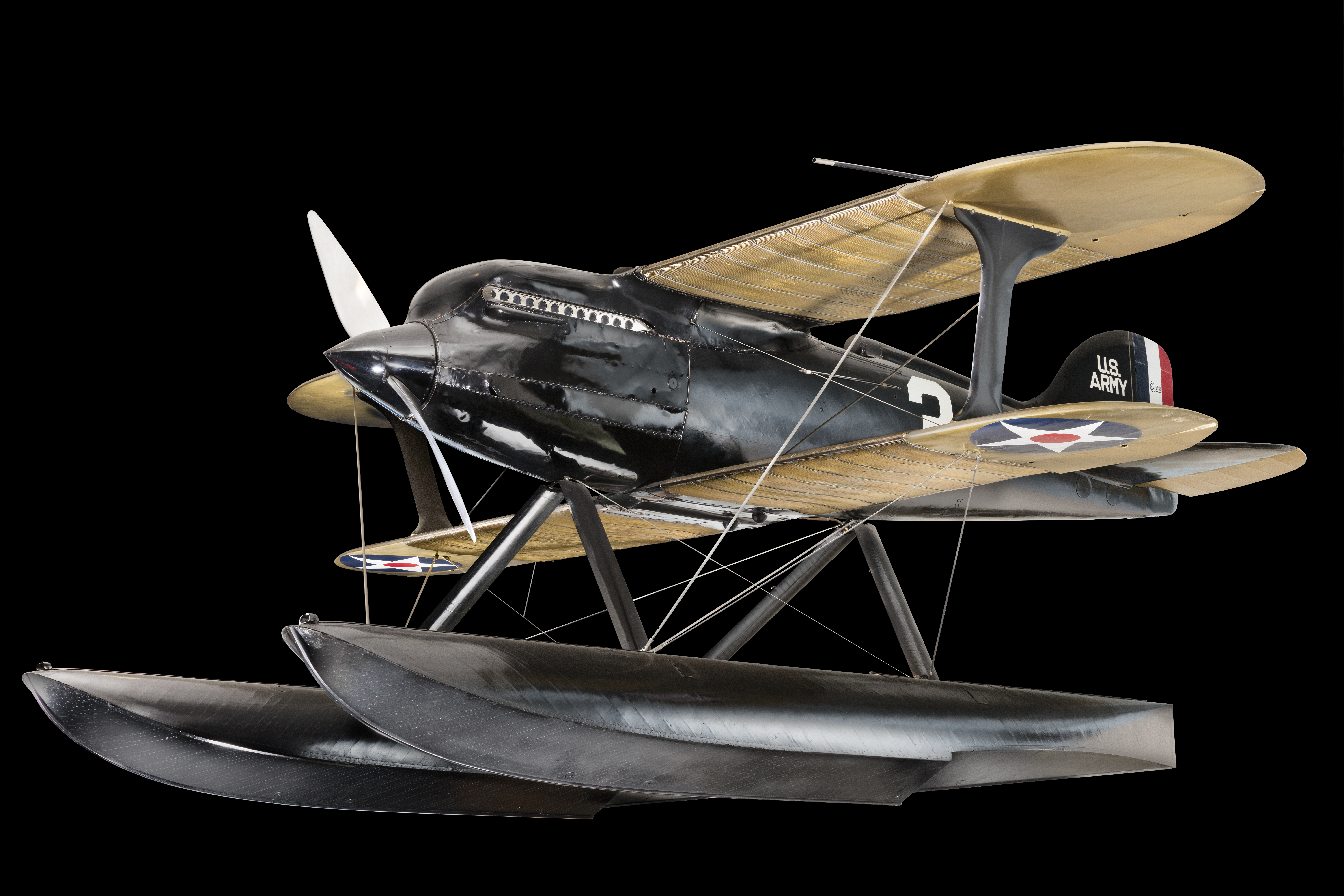
Curtiss R3C-2
Jimmy Doolittle flew this small seaplane to win the 1925 Schneider Trophy and set a speed record the next day. Smooth surfaces, thin wings, a powerful engine, and as little extra bracing as possible helped it fly fast.
In depth
Every shape trades one advantage for another
The R3C-2 reduced drag with a monocoque fuselage, close engine cowling, thin airfoils, and limited bracing. Its floats enabled water operations but also added surface area and resistance.
The R3C program turned competition into a high-pressure laboratory for structures, cooling, propellers, and streamlining. Doolittle’s 1925 victory and subsequent 245.7 mph record made performance publicly legible while pushing military aeronautical knowledge.
Going beyond the known envelope
Flight testing turns a prediction into evidence. Engineers may calculate how an aircraft should behave, but actual flight brings structures, engines, controls, instruments, weather, and a human operator together. The safest useful test changes conditions deliberately and records enough information to explain what happened. The aim is knowledge, not simply a dramatic number.
Research aircraft often look unusual because they were built to answer a narrow question. A shape that is valuable for studying high-speed flight may be unsuitable for ordinary transport. A rocket engine can reach a demanding test condition but offers only a short powered flight. The carrier aircraft, tracking stations, telemetry, ground crews, and recovery procedures become part of the experiment.
The pilot's contribution is both technical and human. Training makes it possible to recognize a developing problem, follow a planned sequence, and describe behavior that instruments alone may not capture. Courage matters, but so does the discipline to end a test when conditions no longer match the plan. The X-1, X-15, rocket motors, pressure suits, and wind-tunnel equipment connect across museums because they belong to this shared process. Each represents a way of making the unknown smaller so that later aircraft and spacecraft could operate with greater confidence.