Udvar-Hazy
Concorde
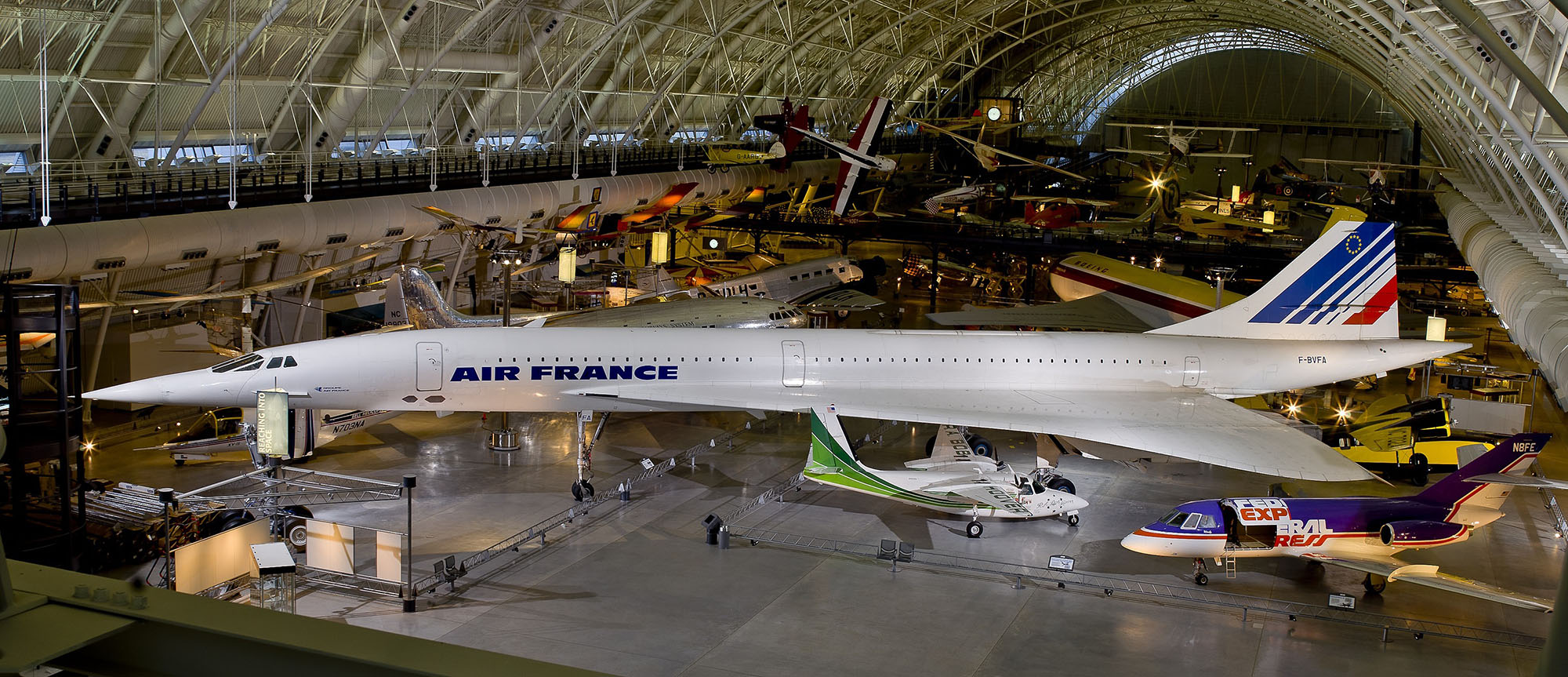
Concorde made a spectacular promise: cross the Atlantic in less than four hours. Its passengers traveled at about twice the speed of sound, far faster than an ordinary airliner. The slender body, sweeping triangular wings, and pointed nose were designed around that speed. Air France’s Fox Alpha flew its final journey to Dulles in 2003. It represents an extraordinary achievement—and the challenge of making a very fast airplane work as an everyday business.
In depth
A different answer to the jet age
While much of the airline industry pursued larger cabins and lower costs per passenger, Concorde offered time. Joint British and French development produced an airliner that could cruise around Mach 2, with roughly 100 passengers aboard. Scheduled services began in 1976, connecting supersonic flight with the practical routines of tickets, baggage, catering, maintenance, and airport operations.
The attraction was unmistakable. A transatlantic crossing could take less than four hours. For a passenger, the achievement was measured in hours recovered from a journey. For the crews and engineers, it required managing a machine operating in a very different aerodynamic and thermal environment from subsonic transports.
A shape dictated by speed
The long, narrow fuselage and slender delta wing are the aircraft’s defining features. At high speed, airflow compressibility and shock waves become central design considerations. The wing also had to support takeoff and landing, when Concorde flew much more slowly and at a noticeably nose-high attitude.
Its lowering nose helped the pilots see the runway during those phases. That mechanism is a wonderfully direct example of a design compromise: the shape desirable for fast flight did not provide the view needed for landing. A movable nose allowed one aircraft to serve both conditions.
Supersonic flight also heated the airframe. British Airways records that Concorde’s length increased by several inches in flight as its structure warmed. Thermal expansion was therefore an operating reality, not simply a laboratory calculation.
The price of saving time
Four Olympus engines supplied the thrust, and afterburning was used for takeoff and acceleration through the transonic region. Cruise did not require continuous afterburning. Fuel use, maintenance, noise, route restrictions, and the size of the premium market all influenced the economics.
Concorde achieved the speed its designers sought, yet that success did not guarantee a large worldwide fleet. The aircraft’s history is especially interesting because technical accomplishment and commercial expansion followed different paths. Its service remained exceptional rather than becoming the standard form of passenger travel.
Fox Alpha’s final destination
Air France’s F-BVFA helped inaugurate the airline’s Concorde routes to Rio de Janeiro, Washington, and New York. It arrived at Dulles on June 12, 2003, completing its final flight before entering the national collection.
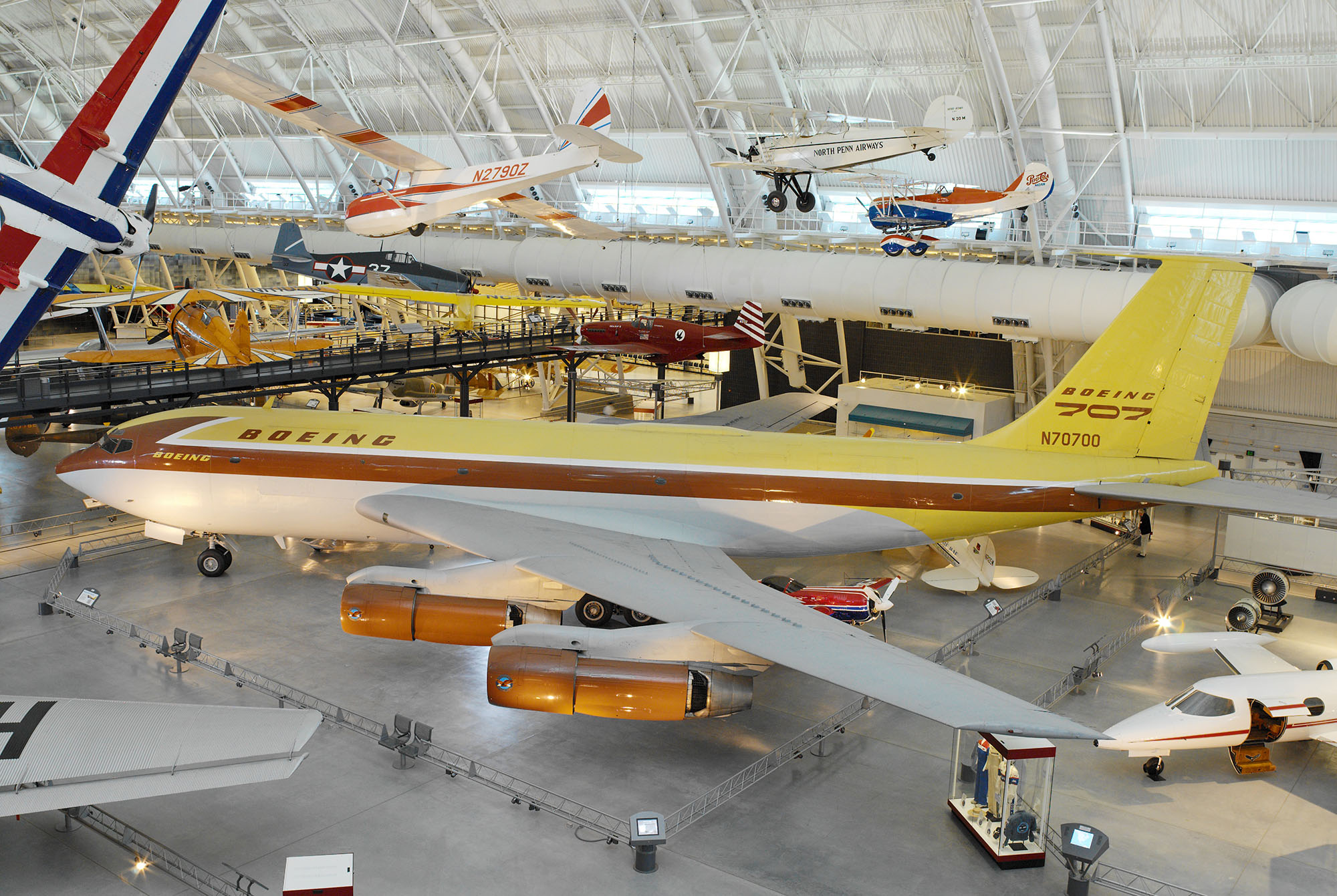
Seen beside the Dash 80, Concorde presents a striking fork in the history of air travel. One family of ideas spread through thousands of widely used jet transports. Another sustained a small, celebrated supersonic service. Both changed what people believed an airliner could do.