Udvar-Hazy
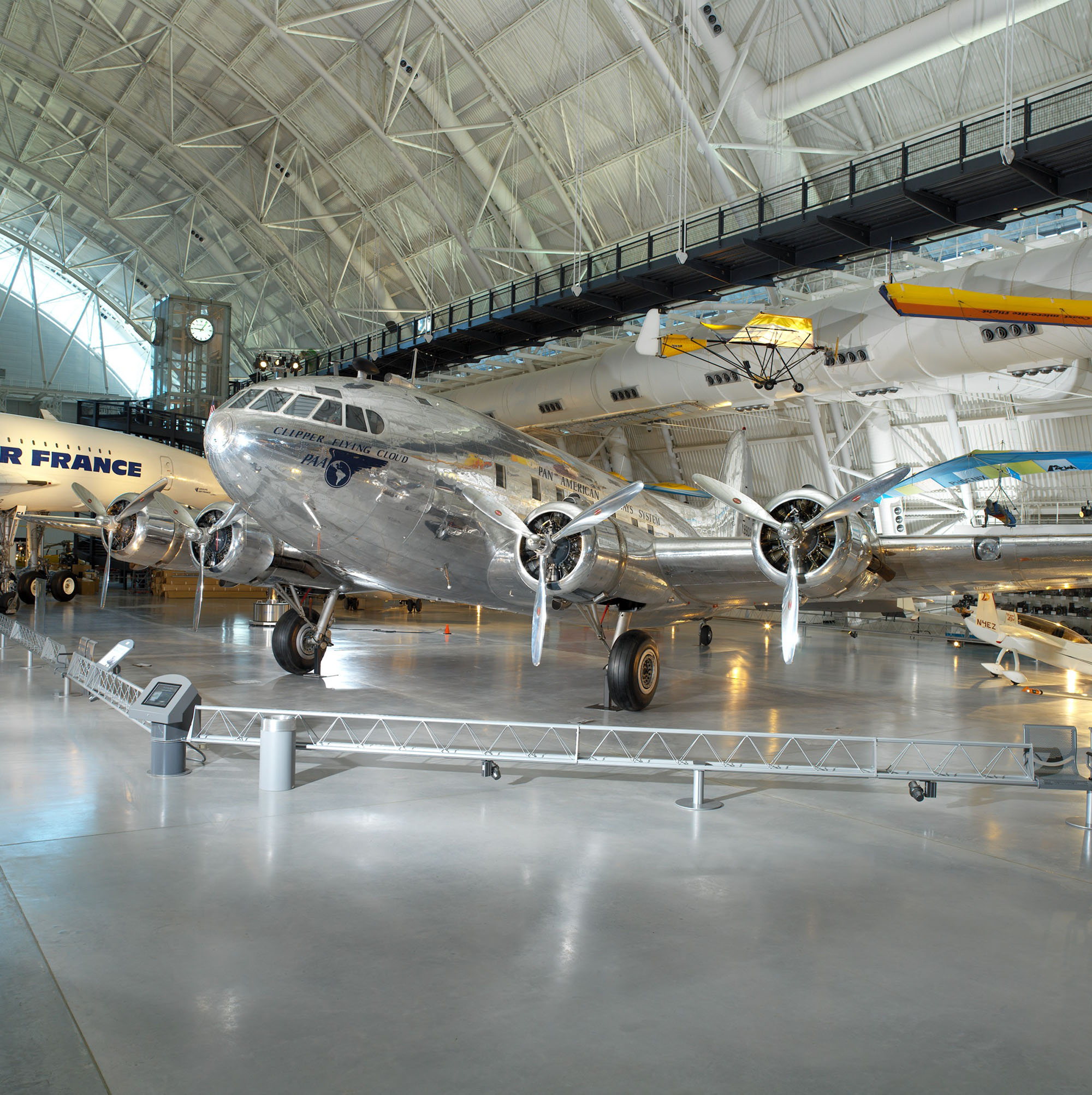
Boeing 307 Stratoliner Clipper Flying Cloud
The Boeing 307 helped make high-altitude travel comfortable. Its pressurized cabin kept passengers breathing air at a more comfortable pressure while the aircraft flew higher, often above rougher weather. Clipper Flying Cloud combined parts of Boeing’s bomber technology with an airliner’s wider cabin and passenger comforts. Only ten Stratoliners were built, but their central idea became ordinary: an airliner should carry its passengers in a controlled environment, wherever the weather outside may be.
In depth
The cabin becomes part of the machine
Before cabin pressurization became familiar, climbing higher created a problem for everyone aboard. Lower atmospheric pressure reduced the oxygen available with each breath. The Boeing 307 addressed that problem by controlling the cabin environment rather than asking passengers to tolerate the outside conditions.
First flown in 1938, the Stratoliner could cruise around 20,000 feet while maintaining a cabin pressure equivalent to roughly 8,000 feet. It did not eliminate weather hazards or make every flight smooth. It offered crews more useful choices about altitude and gave passengers a more comfortable setting for a long journey.
Bomber ancestry, civilian priorities
The design incorporated wings, tail surfaces, and engines associated with the B-17 family, but paired them with a broad passenger fuselage. Reclining seats and sleeping accommodations expressed a different purpose from that of a military bomber. The same industrial knowledge could support both military capability and civilian travel.
Pressure also changes what a fuselage must do. A cabin becomes a vessel with a pressure difference across its skin, windows, and doors. Strength, sealing, and reliable systems are part of the passenger experience even when they remain invisible from the seat.
A small production run with a large legacy
Ten Stratoliners were built. Airlines including Pan American and TWA operated the type, while Howard Hughes acquired a specially modified aircraft. This example flew for Pan American as Clipper Flying Cloud and later underwent restoration by Boeing.
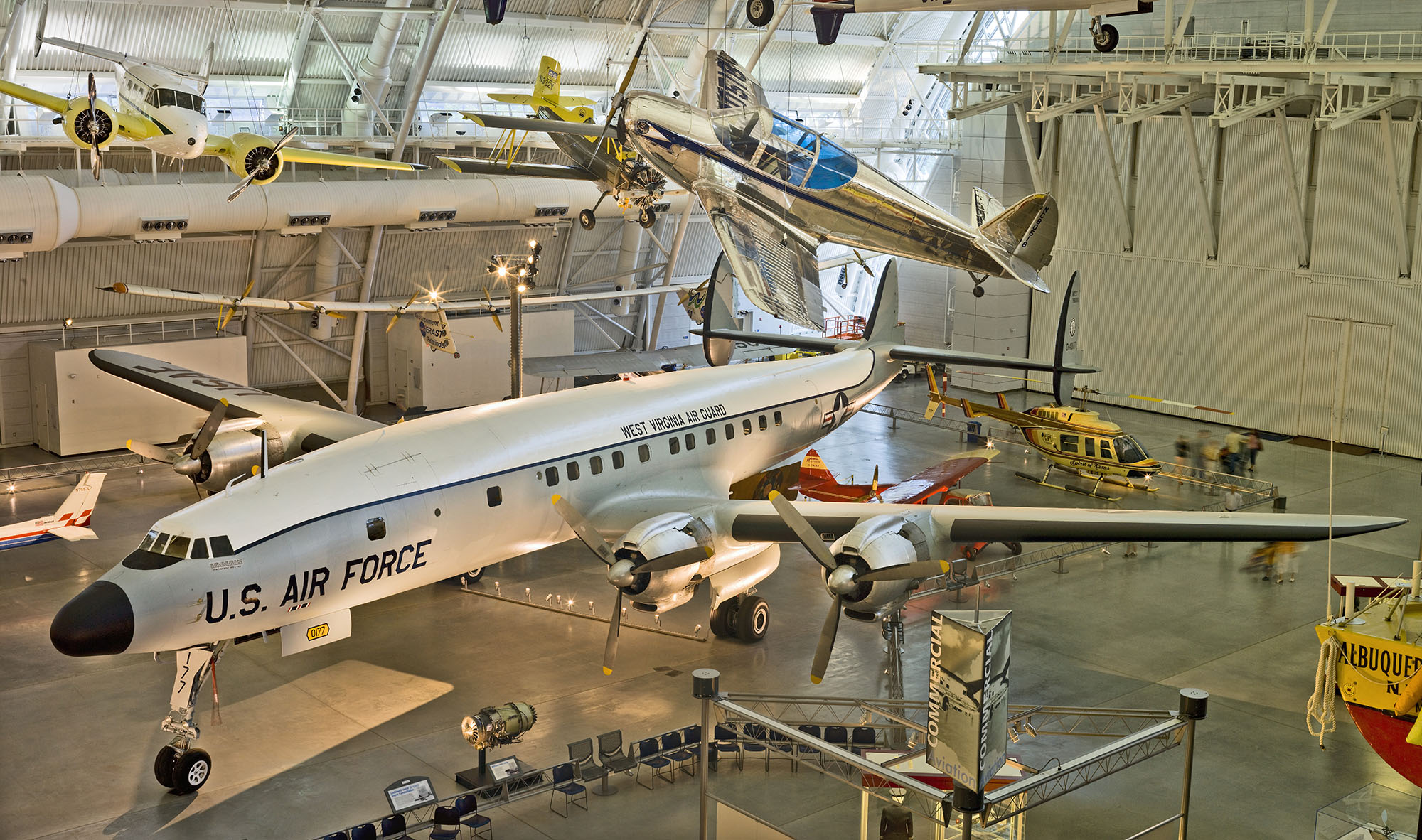
Follow the progression from the 307 to the Super Constellation and the Dash 80. The familiar modern airliner did not arrive in a single invention. Pressurization, better engines, larger cabins, and more capable airline networks gradually made distant places feel closer.