National Mall
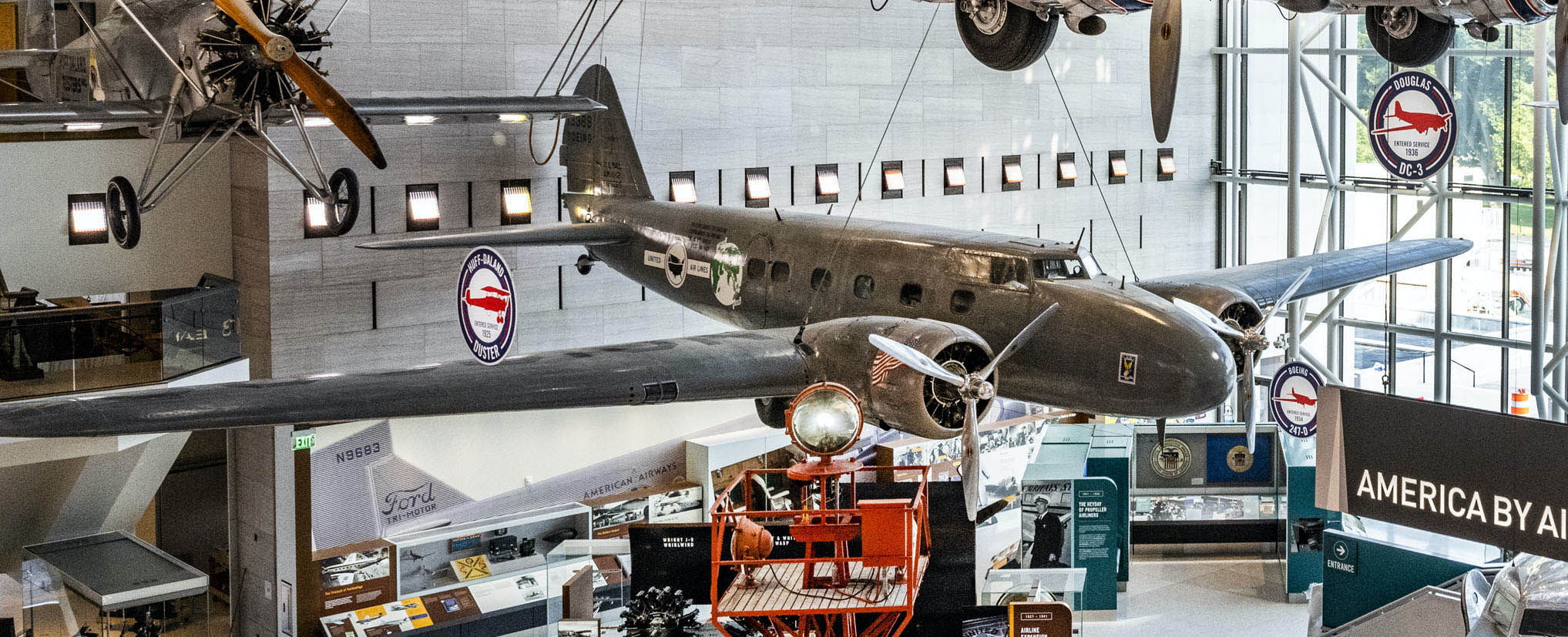
Boeing 247-D
The Boeing 247 brought twin engines, retractable landing gear, a low metal wing, and a streamlined body together in one fast airliner. Those features helped define what a modern transport would look like. The 247 was faster because drag, structure, power, propellers, icing protection, and landing gear were treated as one system. Its 1934 air-race result also demonstrated airline technology over a long route.
In depth
Performance comes from connected changes
The 247 established an integrated modern-airliner architecture, yet capacity limits and airline access decisions created opportunities for Douglas competitors. Innovation reshaped both engineering standards and market structure.
Making distance ordinary
An airliner is only the most visible part of an airline. A scheduled journey also depends on weather reports, navigation, trained crews, maintenance, passenger handling, and an airport at each end. Early commercial aircraft had to prove that this whole arrangement could work often enough for people and businesses to rely on it. Carrying mail helped sustain routes while passenger service developed.
Cabin design and operating economics shaped one another. More seats could spread costs across more passengers, but the aircraft still needed enough range and performance for its routes. Enclosed cabins, better engines, improved navigation, and later pressurization made travel more comfortable and more predictable. The move to jets and then wide-body aircraft expanded what airlines could offer, while also requiring larger airports and more extensive support systems.
The aircraft in these galleries preserve that growth at different scales. Small utility transports served places that a large airliner could not reach. The DC-3 connected commercial practicality with a design that also became a military workhorse. Later aircraft carried far more people across oceans and continents. Following those connections avoids treating airline history as a contest to build the biggest machine. Its deeper achievement was to make an exceptional experience into an ordinary expectation: depart at a published time, reach a distant city, and return home.