Udvar-Hazy
Boeing 367-80 “Dash 80”
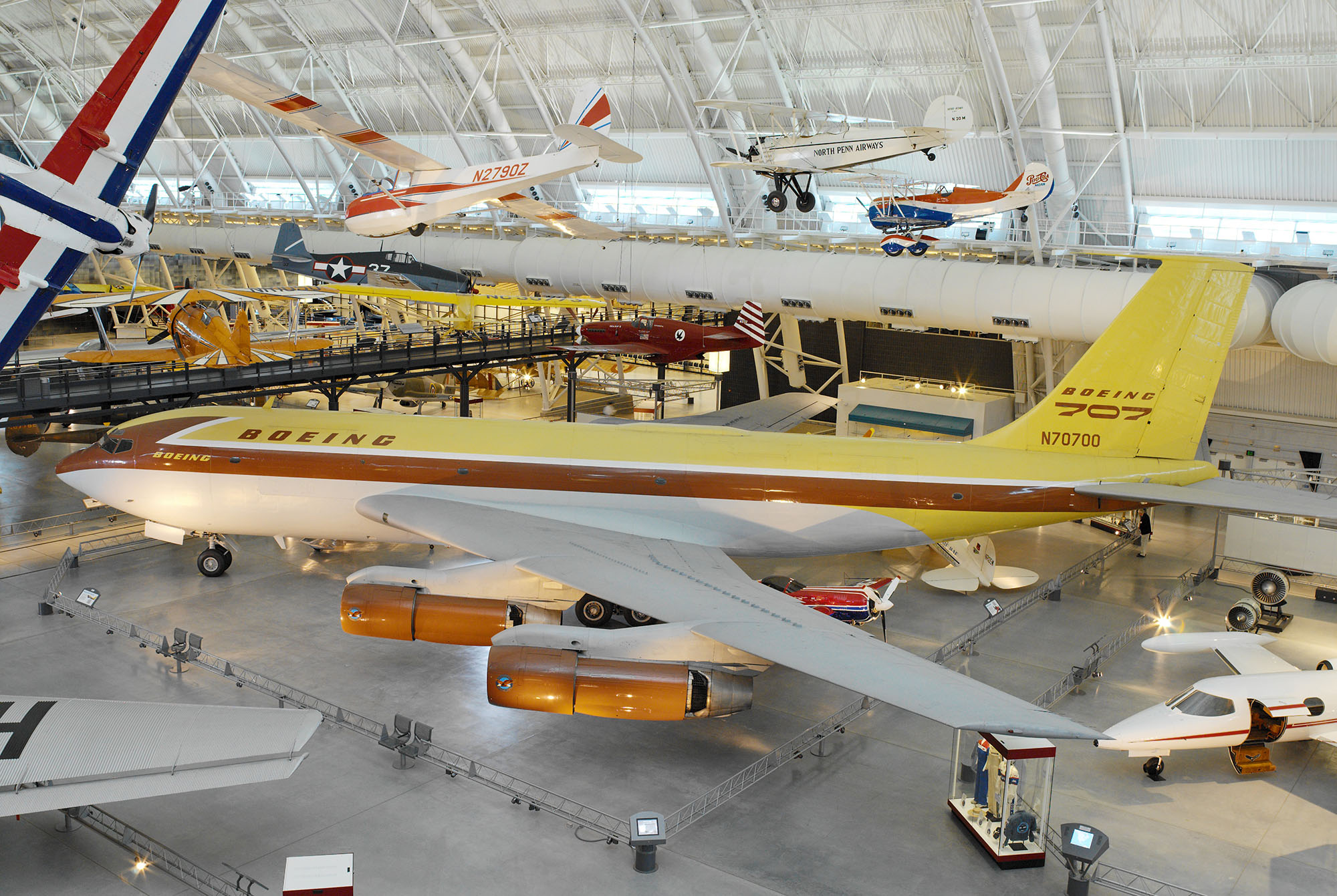
The Dash 80 was Boeing’s full-size argument for a jet-powered future. First flown in 1954, it helped establish the technology behind the KC-135 tanker and the 707 airliner. It was a demonstrator and a long-serving test aircraft, so engineers kept using it to try new ideas. Its swept wings and podded engines now look familiar because aircraft descended from this approach transformed air travel around the world.
In depth
A company places a bet
Boeing began the Dash 80 project in 1952 without a production contract. Building a flying demonstrator allowed the company to make a tangible case to both military and airline customers. Drawings promised performance; a working airplane could demonstrate handling, reliability, and the practical character of a new transport.
The aircraft first flew on July 15, 1954. The military tanker requirement became the KC-135 program, while airline requirements shaped the 707. These were related developments, not simply one airplane with different paint. The airline fuselage grew wider to accommodate six-abreast seating, illustrating how a customer’s cabin requirements can reshape an entire design.
Familiar shapes were once new decisions
Look along the wing sweep and the engines carried beneath the wings. Sweep helped the aircraft operate efficiently at high subsonic speeds. Separating engines into nacelles also affected structure, maintenance access, airflow, and the way loads entered the wing.
Those choices are easy to take for granted after decades of seeing similar airliners. Here they are part of a machine built to establish whether a particular combination could become dependable transport. The transformation of aviation required manufacturers and operators to solve these practical details together.
The day Tex Johnston rolled it
At Seattle’s 1955 Seafair gathering, test pilot Alvin “Tex” Johnston demonstrated the Dash 80 with barrel rolls over Lake Washington. The sight of a large jet transport rolling through the sky stunned spectators and alarmed Boeing’s leadership. The museum recounts Johnston’s explanation that he was showing the airplane’s capabilities to potential customers.
The episode became inseparable from the aircraft’s legend. It brought together exceptional piloting, salesmanship, and a prototype that could make a new kind of transport feel convincing. It was a specialized demonstration by a test pilot in an aircraft he knew intimately, rather than an example of normal airline operation.
More than a prototype’s first flight
The Dash 80 remained useful as a research aircraft, testing engines, nacelles, wing arrangements, flaps, and control surfaces. A prototype can have a second career as a platform for questions its original designers did not yet know they would ask.
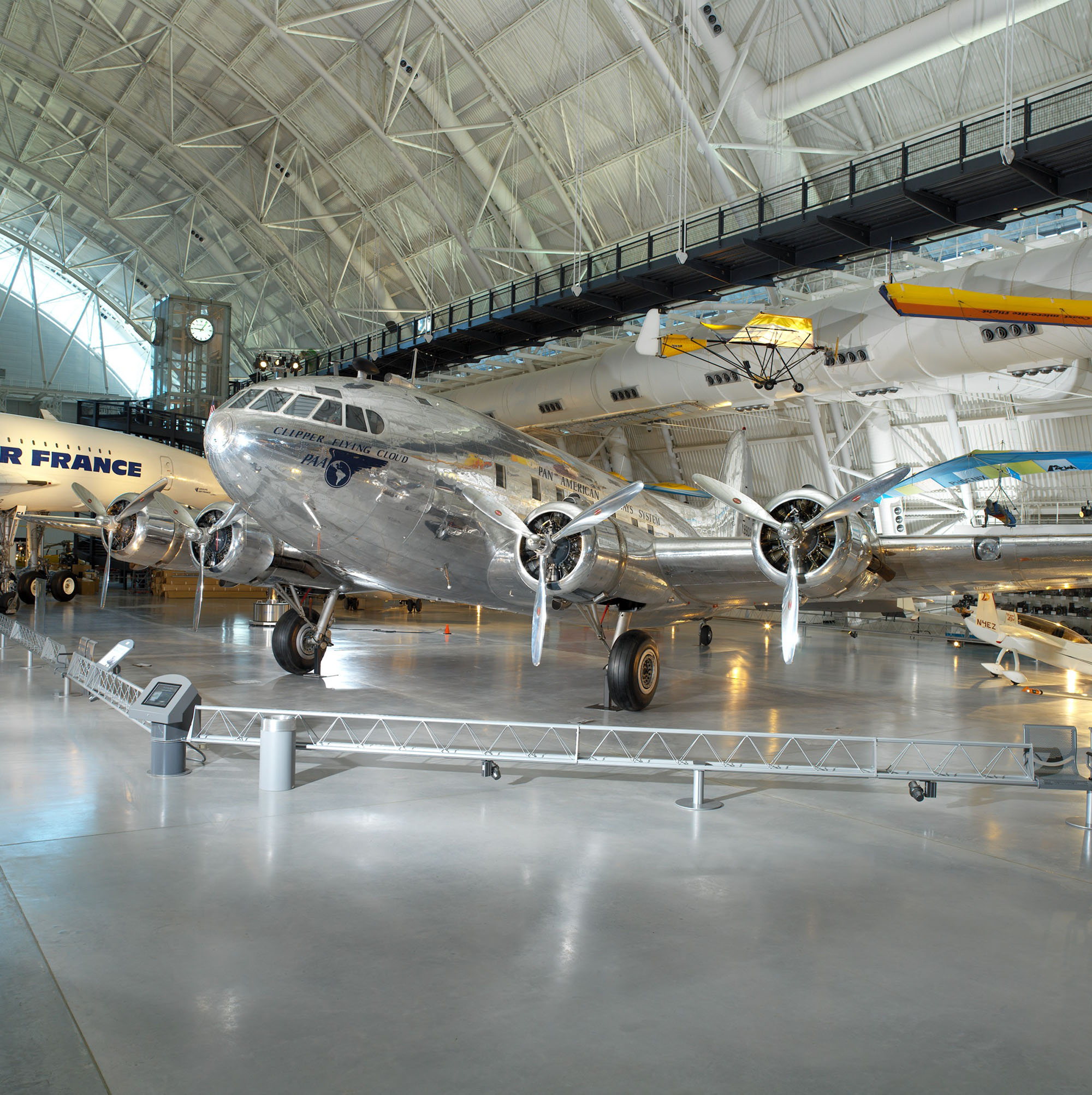
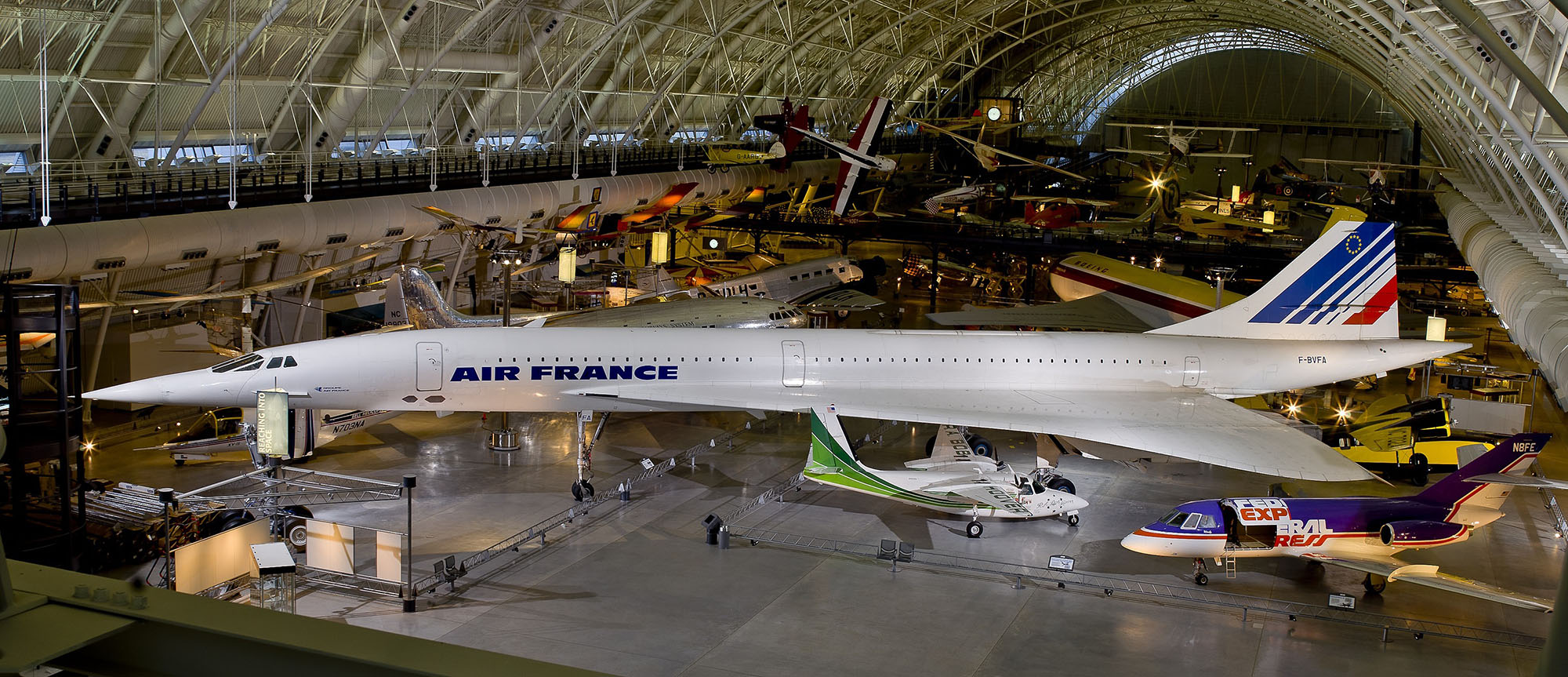
Boeing donated it to the Smithsonian in 1972 and later restored it. Seen beside the Stratoliner and Concorde, it occupies a pivotal place between two ambitions: making jet travel widely available, and pushing passenger speed beyond the sound barrier. The Dash 80’s enduring influence came through the transport families and operating systems that followed it.