Udvar-Hazy
Lockheed 1049F (C-121C) Super Constellation
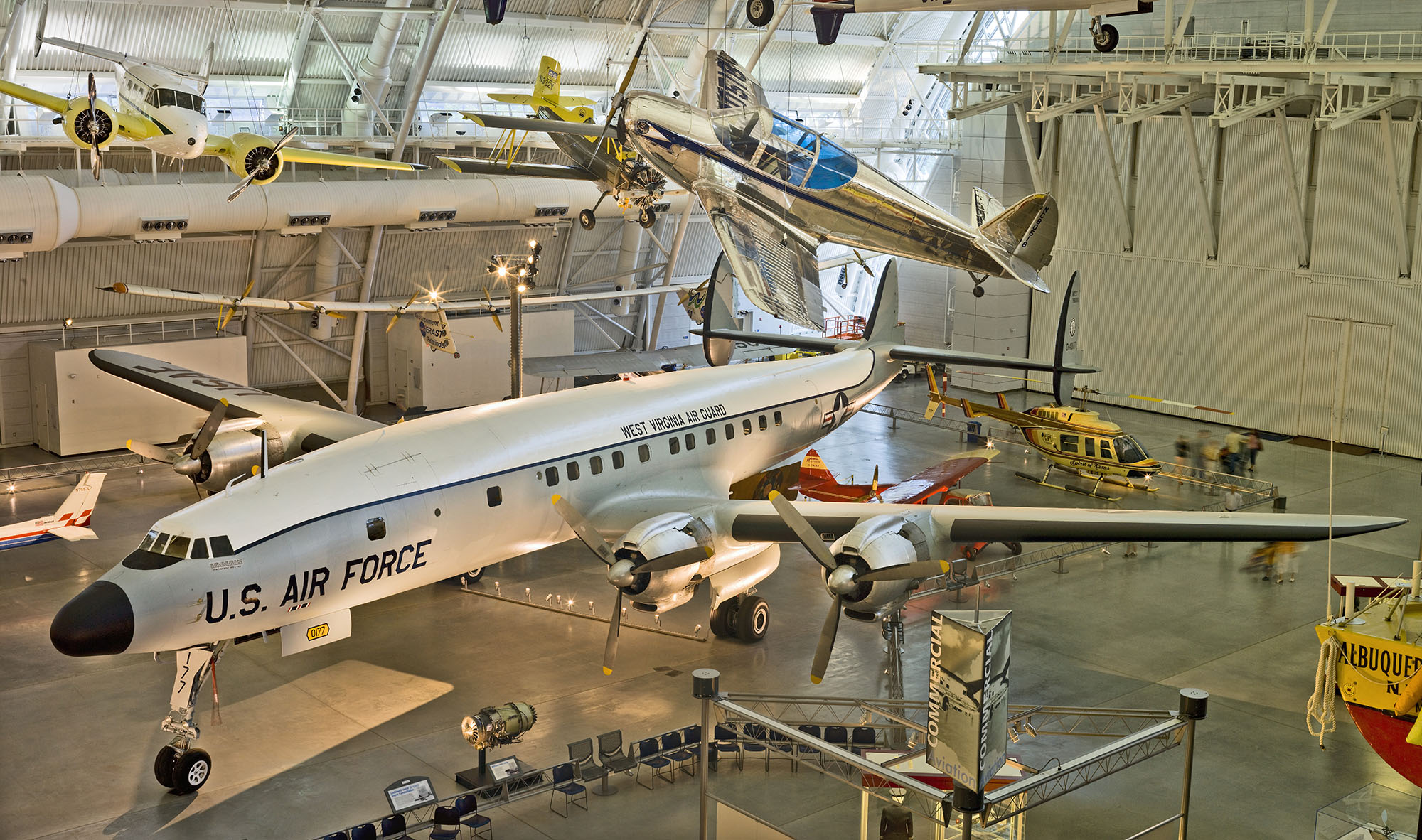
The Super Constellation’s curved body and triple tail made it one of the most recognizable large propeller aircraft. Airliners in this family carried passengers on long routes, while military versions transported people and equipment. This example is a C-121C, built for the U.S. Air Force and later flown by Air National Guard units. It wears the markings of West Virginia’s 167th Military Airlift Squadron, preserving a working military career behind an elegant shape.
In depth
Long-distance travel acquires a signature shape
Lockheed’s Constellation family became closely associated with postwar long-distance travel. Pressurized cabins and increasingly capable engines supported journeys that had once required more stops and less comfortable conditions. The Super Constellation extended the family with a longer fuselage and greater capacity.
Its three vertical tail surfaces and curved fuselage distinguish it immediately from later jet transports. The design is often admired as a sculpture, but it was also a tightly organized collection of engines, structures, controls, passenger or cargo space, and maintenance demands.
The military career behind this example
The aircraft here was built as a C-121C transport, with features including cargo doors and strengthened landing gear. It served Air Force and Air National Guard organizations for nearly 22 years. Its present markings recall the West Virginia Air National Guard unit that operated it from 1967 to 1972.
That service should not be confused with the glamorous airline journeys often used to illustrate the Constellation family. Military airlift involved moving people and equipment where they were needed. Dependability, scheduling, and the work of maintenance crews were central to the aircraft’s usefulness.
At the edge of the jet transition
Large piston-engine transports achieved considerable range and comfort, but their powerplants and supporting systems demanded sustained attention. Jet transports offered a different route to speed and operating capability. For a period, both generations shared the same airways.
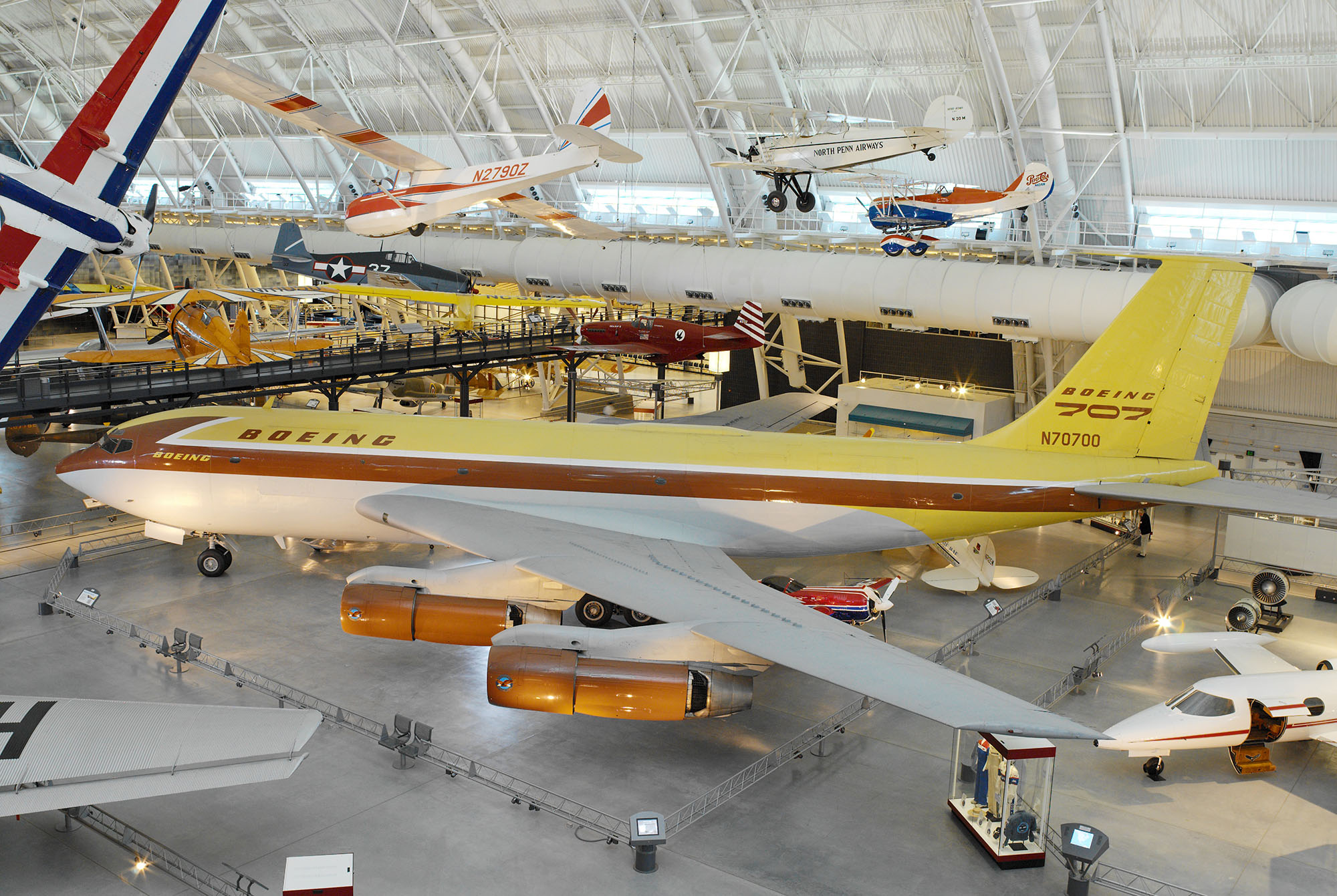
The nearby Dash 80 makes that transition tangible. The comparison is not merely propellers versus jets: it is a change in cruising speed, maintenance practices, passenger expectations, and the economics of airline networks. The Constellation stands near the high point of one technical tradition as another was beginning to reshape the world.