Udvar-Hazy
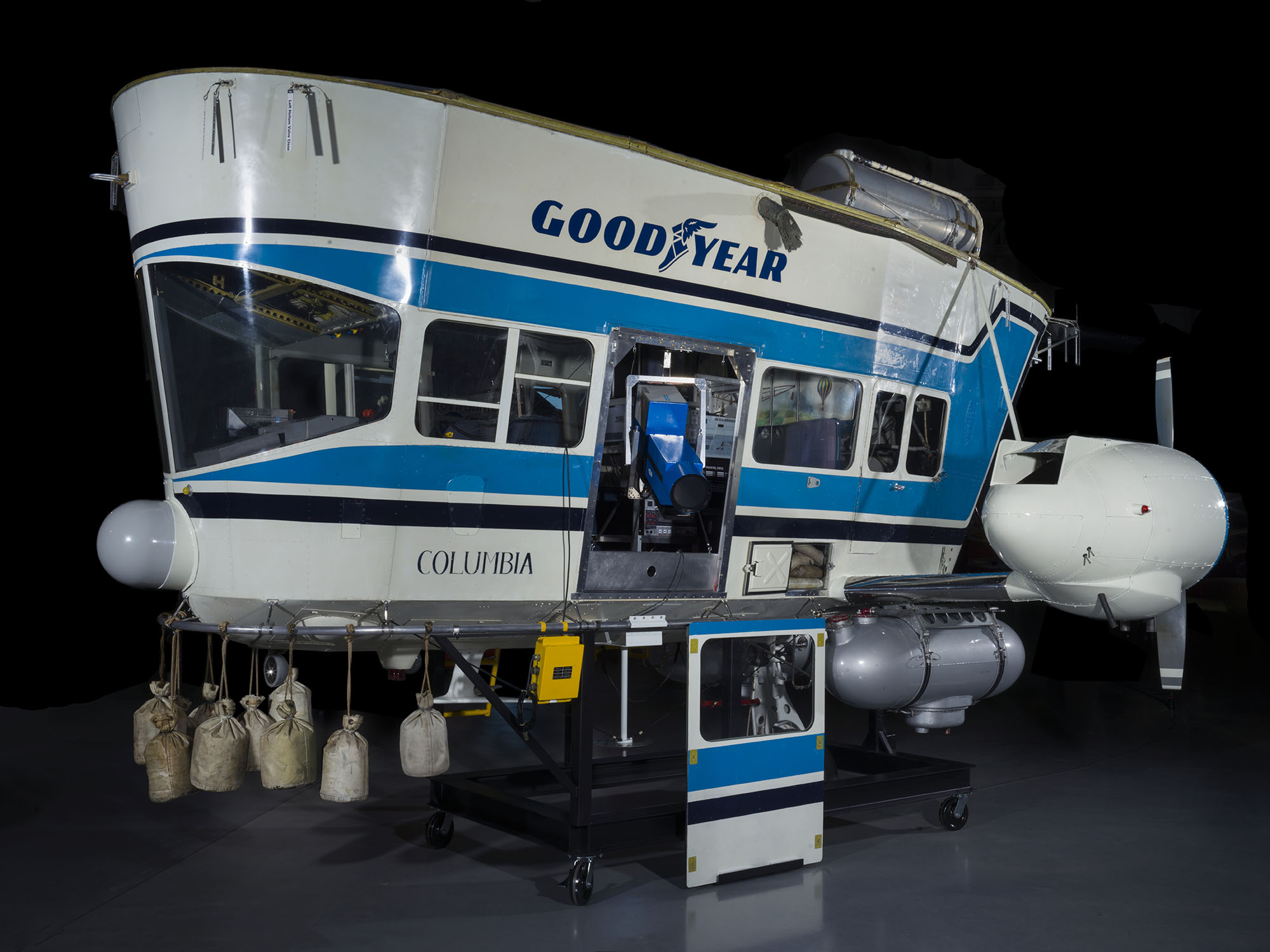
Goodyear Airship Control Car C-49
This control car spent decades beneath changing Goodyear airship envelopes. It began flying in 1934, served wartime duties, and later appeared above major sporting events and in films. The huge gas-filled envelope provided lift; the car carried people, controls, and equipment. Its long working life connects military patrol, corporate travel, television, and the familiar sight of a blimp lingering over a stadium.
In depth
The part below the balloon
A blimp’s most visible feature is its envelope, but the control car contains much of the working human environment. Pilots need instruments, controls, visibility, and a place to manage the craft. Passengers experience the flight from this smaller structure suspended beneath the lifting volume.
A pressure airship maintains its envelope shape through internal pressure rather than a rigid framework of the kind used in Zeppelin-type airships. Buoyancy supplies lift, while propulsion and aerodynamic controls allow the craft to move and maneuver. Its strengths differ substantially from those of a fast airplane.
One car, several lives
C-49 first flew as part of Enterprise in 1934. During World War II it supported training and patrol-related work, including checking blackout compliance in northern Ohio and later Navy service in California. Goodyear reacquired it after the war and eventually rebuilt it for a GZ-20 airship.
As Columbia IV, it returned to flying in 1975. Its appearances over Super Bowls, World Series games, parades, and the 1984 Los Angeles Olympics made it part of widely shared public spectacles. It also appeared in the film Black Sunday.
Endurance has its own kind of value
An airship’s ability to remain near an event makes it useful in ways that do not depend on record speed. The viewing platform and visible presence above a crowd are part of its appeal. The same leisurely motion that would frustrate a jet passenger can serve an observer well.
This car retired in 1986, more than half a century after its first flight. Its history demonstrates how rebuilds and changing roles can extend the life of an aviation artifact. Compare it with the Sparrowhawk to see two very different ways Americans put airships to work.