Udvar-Hazy
Mercury Capsule 15B Freedom 7 II
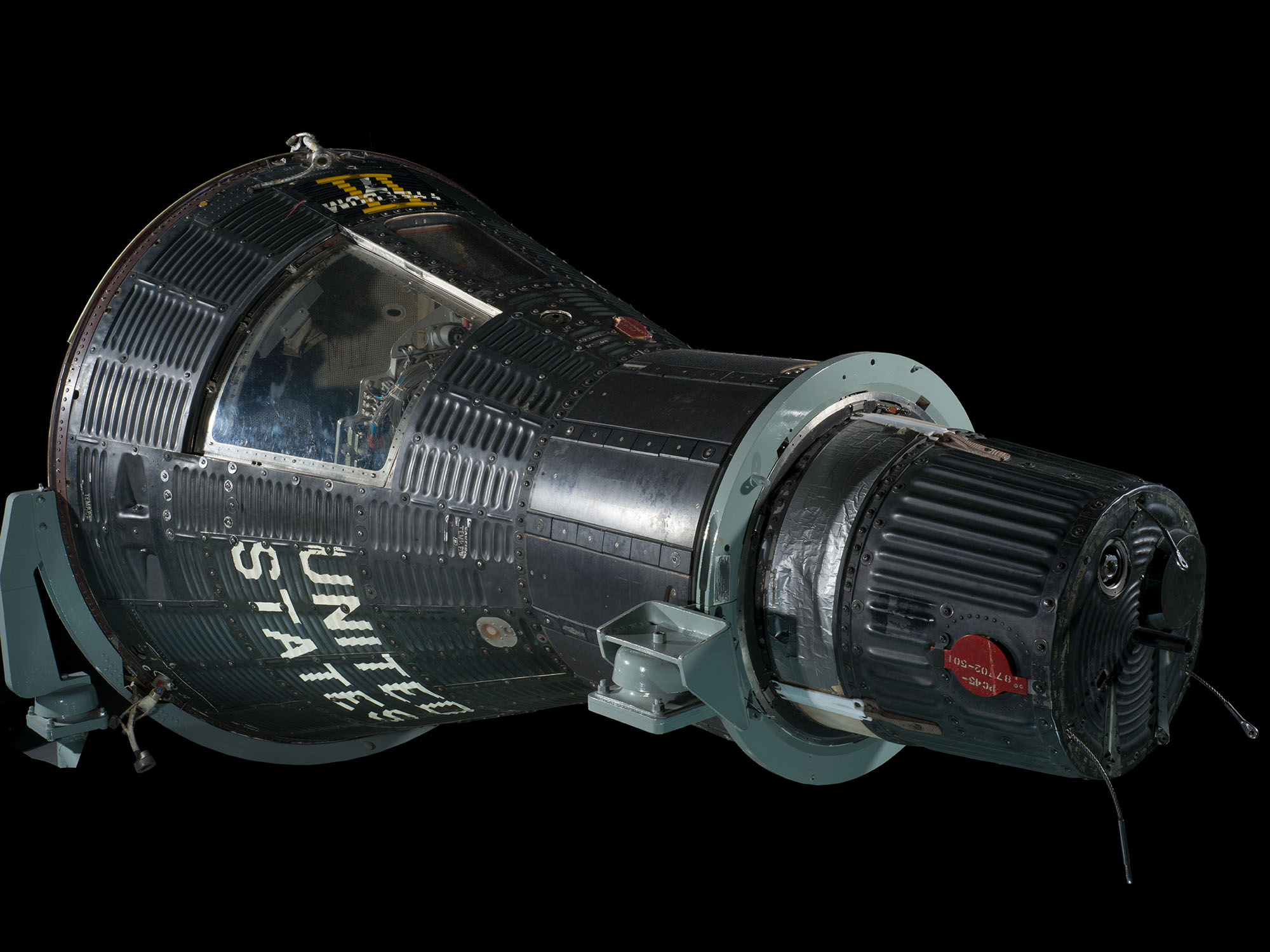
Alan Shepard hoped to fly this capsule on another Mercury mission and had it named Freedom 7 II. The flight never happened: NASA ended Mercury and moved on to Gemini. Unlike a capsule recovered from a mission, this spacecraft still shows equipment prepared for an orbital flight, including its retrorocket package. It preserves a fascinating turning point—the mission that was ready in concept, but overtaken by the next stage of America’s space program.
In depth
The flight that did not happen
Shepard became the first American in space in 1961. He later hoped to fly Mercury-Atlas 10, a proposed longer orbital mission, in this spacecraft. Naming it Freedom 7 II connected that ambition to his first flight.
After Gordon Cooper’s successful Mercury-Atlas 9 mission in May 1963, NASA cancelled the additional flight and concentrated on Gemini. The decision reflected a larger objective: developing the capabilities needed for the journey to the Moon. Continuing an existing program had to be weighed against building the next one.
A complete system around one person
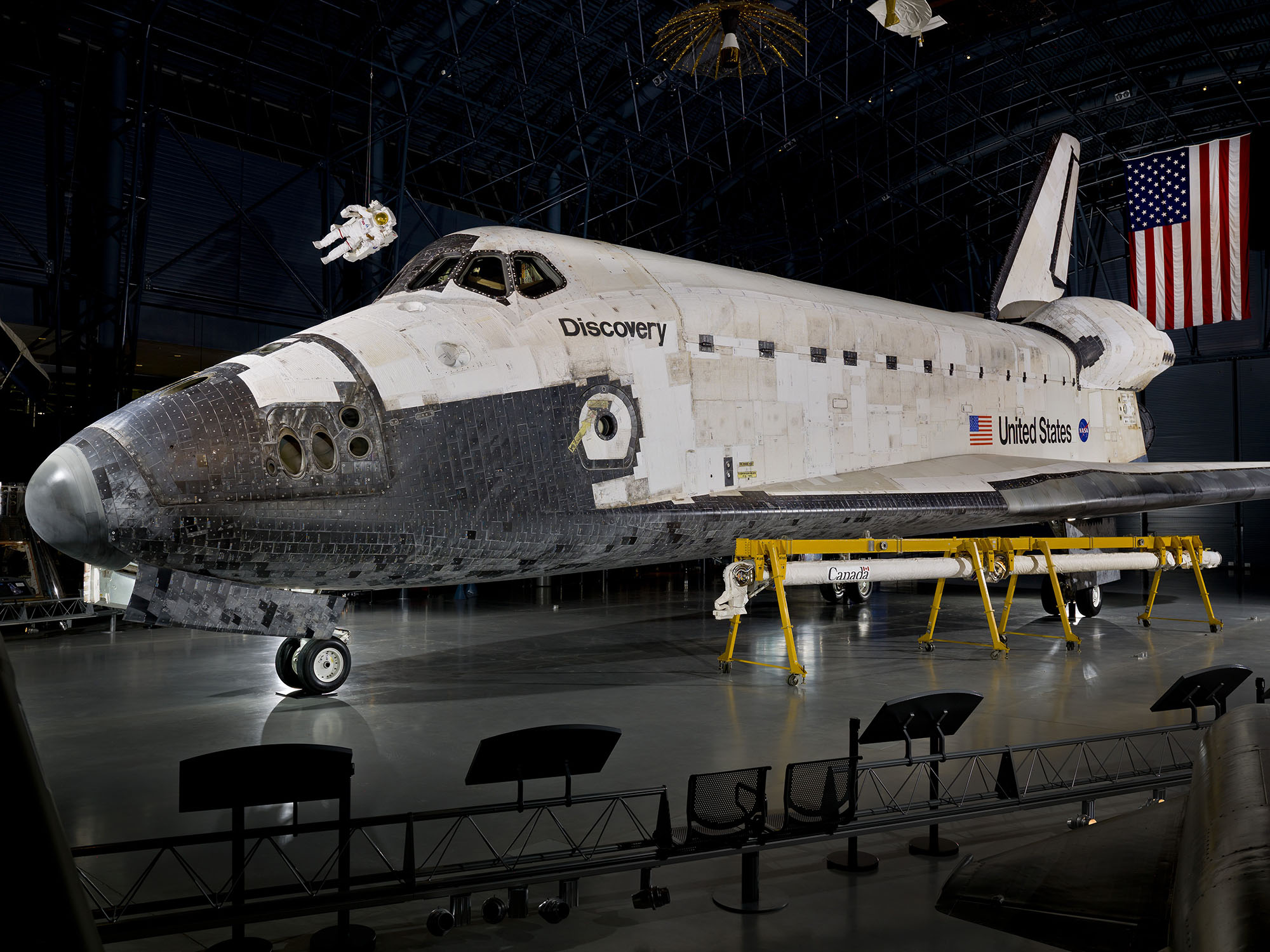
Mercury packed a human being, life-support equipment, controls, communications, and recovery systems into a small capsule. The astronaut’s limited space makes the contrast with Discovery especially striking. The two spacecraft represent very different ideas about what a crew should be able to do in orbit.
The retrorocket package is particularly revealing. An orbital spacecraft has to reduce its forward speed to begin returning through the atmosphere. The package supplied that change in velocity. The parachute compartment and heat-shield arrangement belonged to the subsequent sequence that would bring the astronaut down safely.
An unused spacecraft can tell a complete story
This capsule retains an orbital configuration that is uncommon among surviving Mercury spacecraft. Components normally discarded or changed during a mission remain part of the display. Its lack of flight history therefore preserves information that a recovered capsule may not show in the same way.
Freedom 7 II is also a human artifact: it records an astronaut’s desire to fly again and a program’s decision to move forward. Space exploration contains these unrealized branches as well as famous launches. They reveal how schedules, resources, and long-term goals shape which possibilities become missions.