National Mall
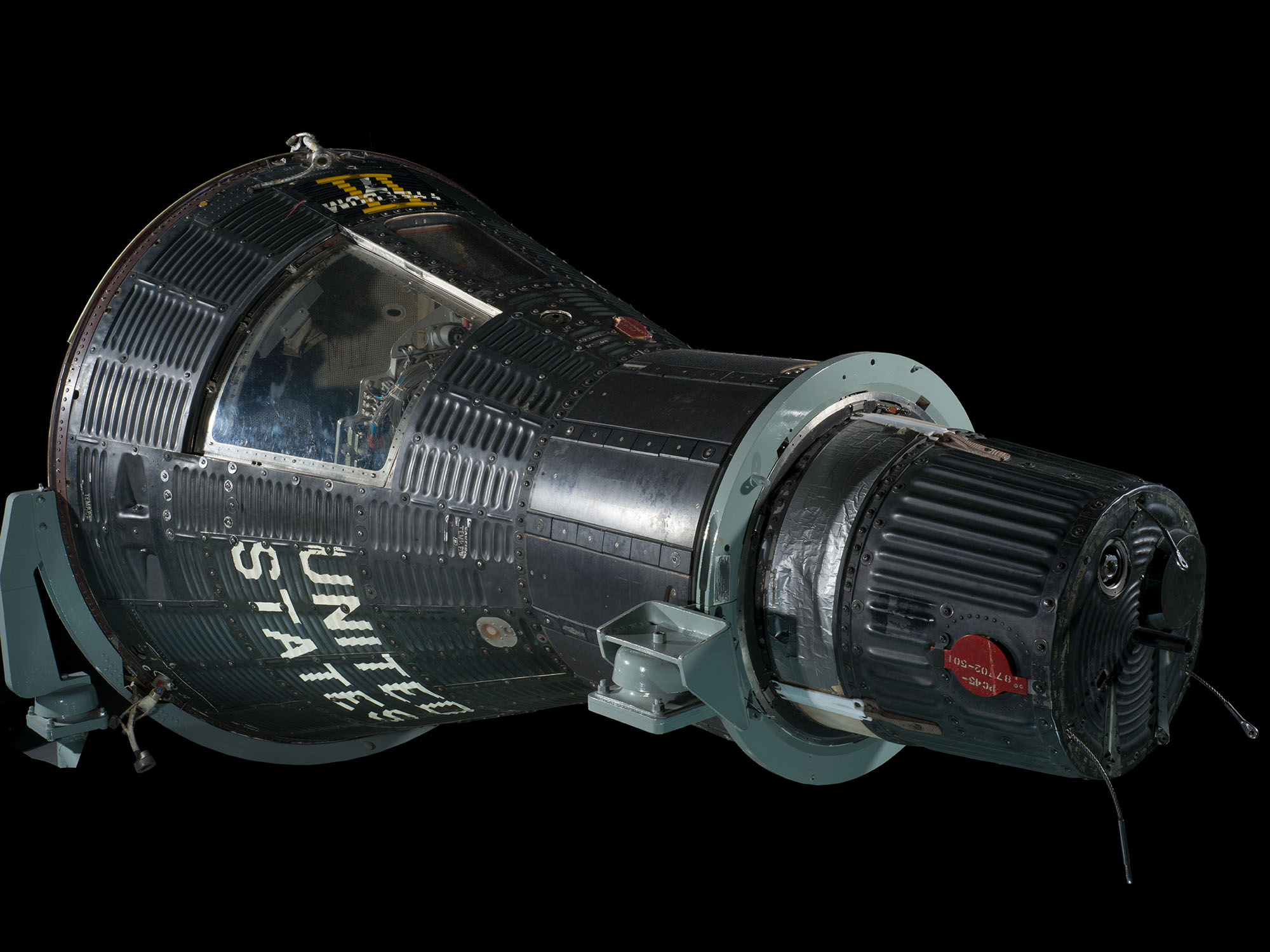
Mercury “Friendship 7”
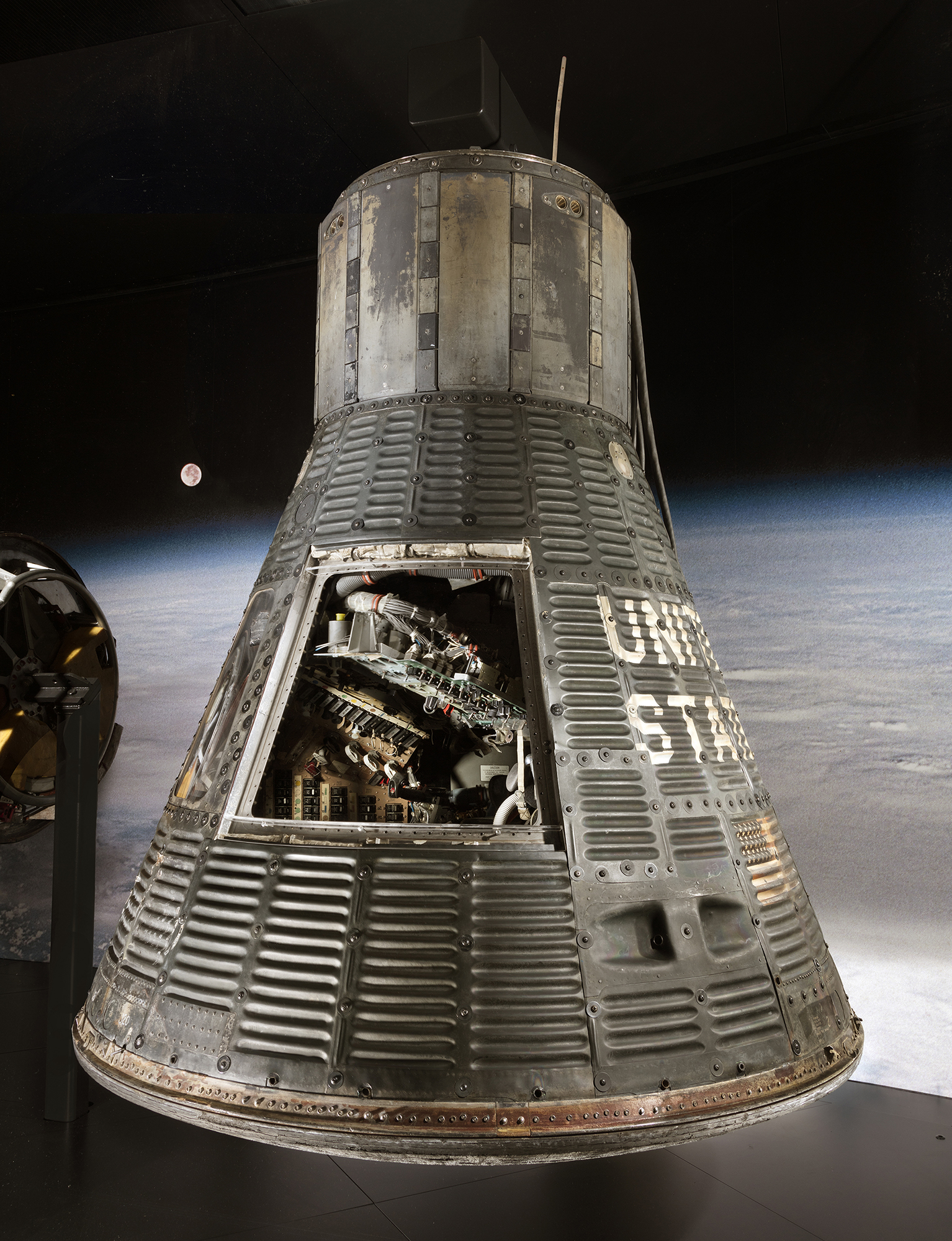
Friendship 7 carried Glenn around Earth three times on February 20, 1962. The flight made him the first American to orbit the planet. The capsule managed launch, orbit, attitude, communication, retrorocket firing, reentry, parachute descent, and ocean recovery. Glenn monitored and sometimes intervened in a tightly integrated sequence.
In depth
Mercury joined a human pilot to an increasingly automated spacecraft
Glenn’s flight matched an achievement the Soviet Union had already demonstrated and became a national spectacle. The artifact therefore documents technical capability, personal courage, media attention, and Cold War competition.
Keeping people alive beyond the atmosphere
A crewed spacecraft carries a small, controlled environment into a place that cannot support unprotected human life. Pressure, temperature, oxygen, carbon dioxide removal, water, electrical power, and waste management all become engineering responsibilities. The flight suit or capsule displayed in a museum is therefore part of a larger life-support system, not simply clothing or a vehicle body.
Early missions established capabilities in stages. Launch and recovery, orbital flight, longer duration, maneuvering, rendezvous, and work outside a spacecraft each introduced different demands. Ground controllers, tracking stations, medical teams, recovery forces, and manufacturers supported the crew. A successful mission depended on that network as much as on the people visible in the cabin.
Artifacts preserve evidence of those demands at a human scale. A small hatch suggests the difficulty of entering or leaving in bulky equipment. A glove makes clear that pressure protection can restrict dexterity. The shape of a returning capsule reveals the importance of managing atmospheric heating and deceleration. Connections to high-altitude aviation are especially strong: pressure suits, research aircraft, and instrumented test flights helped build knowledge that spacecraft designers could use. The history is a sequence of carefully developed capabilities, with extraordinary journeys resting on many ordinary systems that had to keep working together.