National Mall
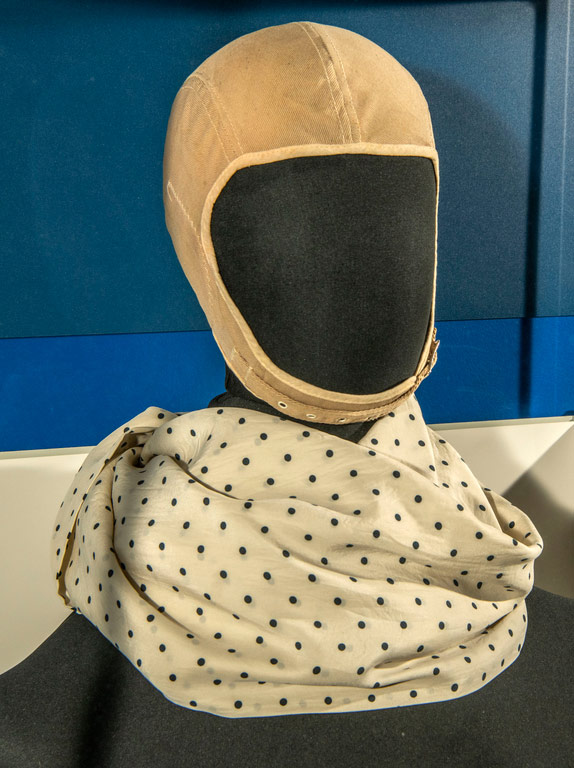
Dale White's Silk Scarf and Helmet
Dale White and Chauncey Spencer flew from Chicago to New York and Washington in 1939 to challenge the lack of opportunities for African American aviators. White and Spencer faced denial of hangar space and continued to Washington, where they discussed discrimination with Senator Harry S. Truman. Navigation and aircraft skill could not remove institutional exclusion.
In depth
The route revealed barriers on the ground
The scarf and helmet connect embodied flight experience to political advocacy before military integration in 1948. The story shows how technological citizenship—access to training, facilities, and professions—can become part of a larger demand for equality.
Service, skill, and the right to take part
Aviation has often been presented as a field open to anyone with enough skill and determination. The historical record is more complicated. Race, gender, money, institutional rules, and access to training shaped who could fly, maintain aircraft, receive commissions, or be recognized for their work. Those barriers were not separate from aviation history; they helped determine whose talents the field could use.
The people represented by uniforms, clothing, photographs, and personal equipment made achievements within those conditions. Their stories include technical proficiency and courage, but also persistence, organization, advocacy, and support from others. Military service could create opportunities while also exposing the contradiction between serving a country and being denied equal treatment within it.
Individual milestones should therefore be connected to the wider community. Pilots relied on instructors, mechanics, administrators, medical personnel, and families. Changes in policy were influenced by public pressure and documented performance as well as by exceptional individuals. Moving between the civil and military galleries makes those connections visible. A flight suit, a scarf, a jacket, or a cockpit can mark both a particular career and a larger expansion of opportunity. The inspirational force of these objects grows when the difficulties are described accurately and the less visible contributors are included.