Air Force Museum
Flights of Explorer I and II
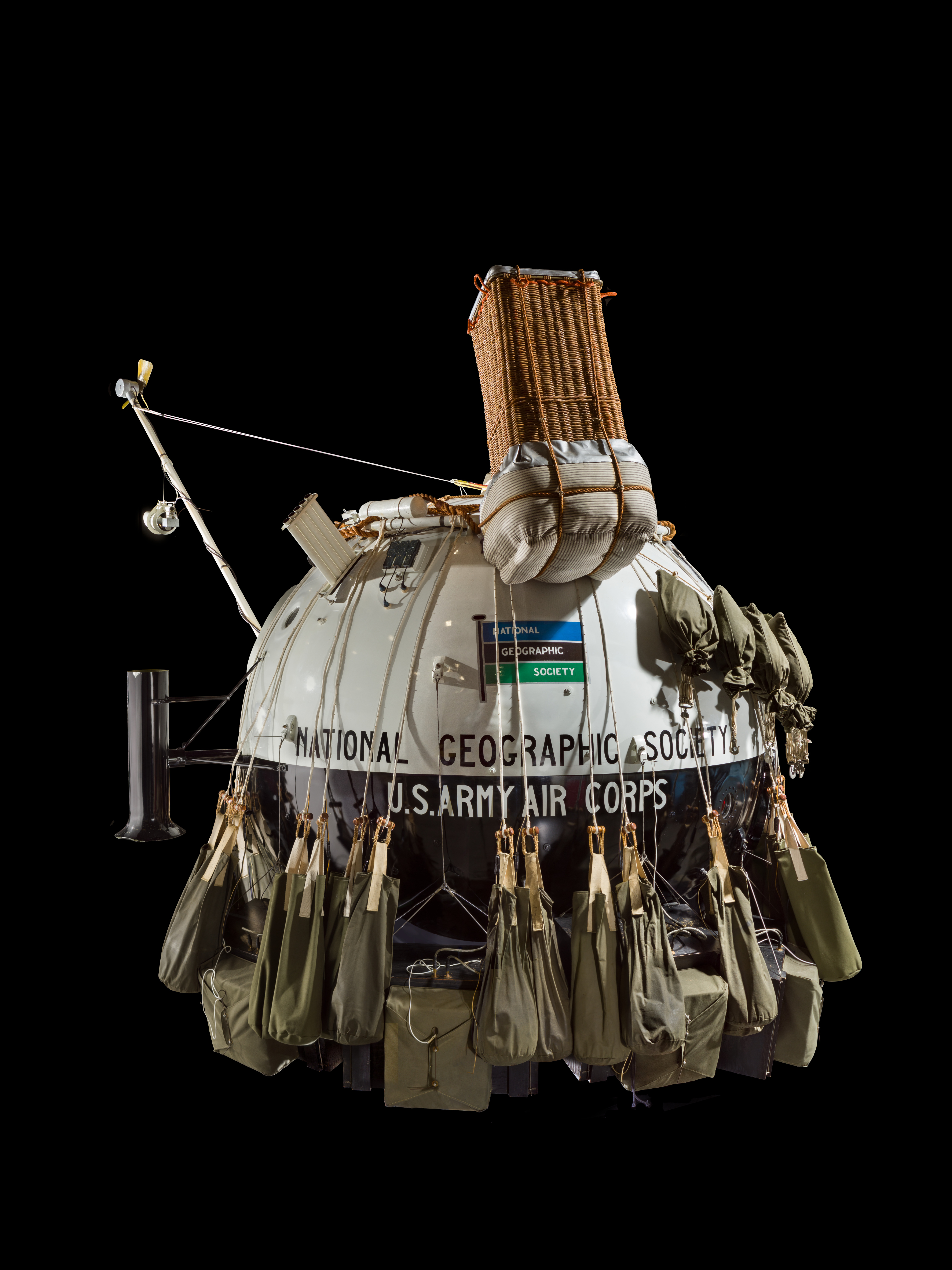
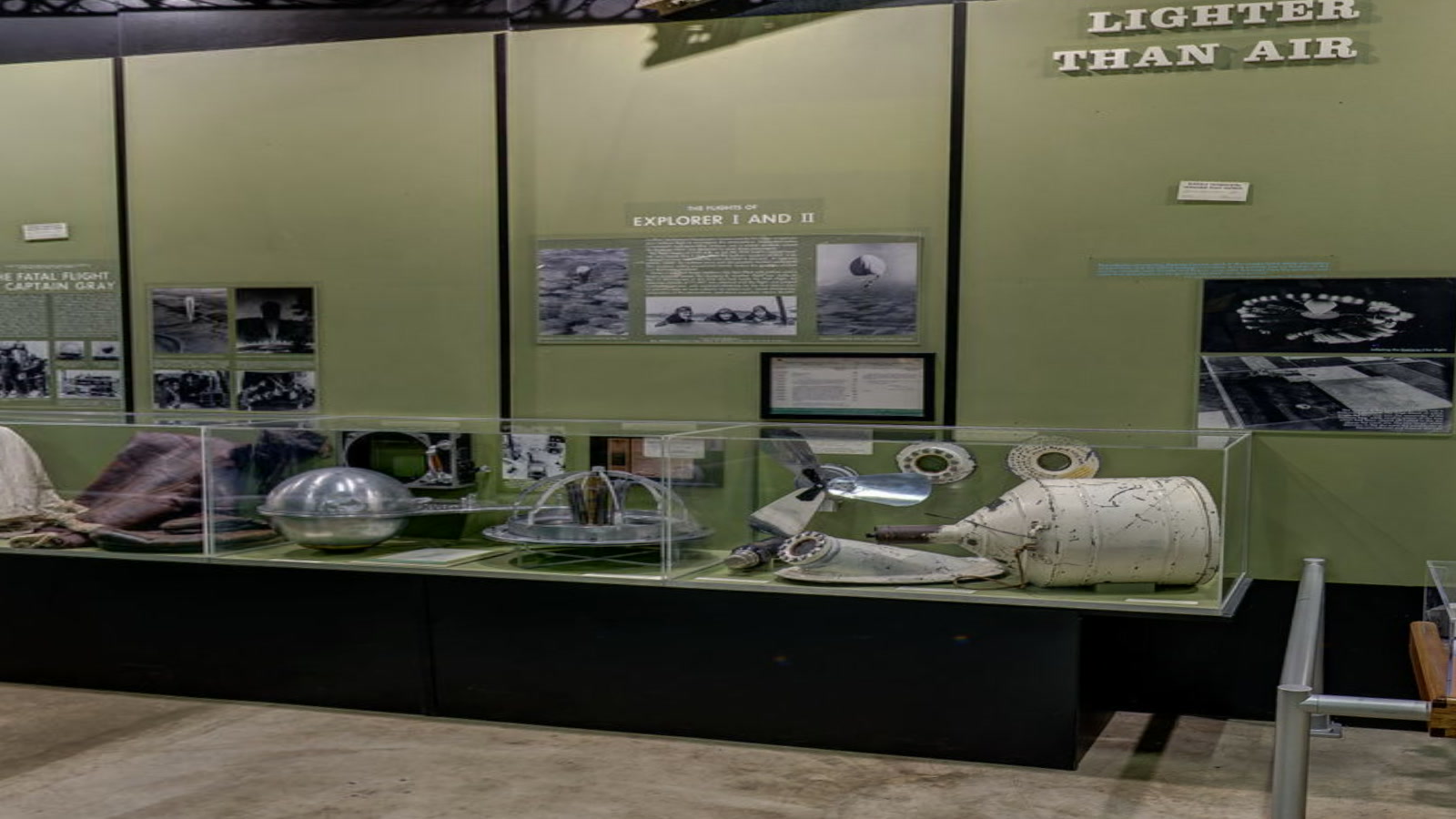
Explorer I and Explorer II were Army Air Corps–National Geographic Society balloon projects designed to carry people and instruments into the stratosphere. Explorer I failed in 1934, and its crew escaped by parachute after the balloon ruptured.
In depth
Scientific exploration and risk
Explorer II succeeded on November 11, 1935, reaching 72,395 feet with Albert Stevens and Orvil Anderson aboard a sealed gondola. Their instruments and photographs expanded knowledge of the upper atmosphere and demonstrated technologies relevant to later high-altitude aircraft and spaceflight.
History & service
In 1934 the National Geographic Society and the Air Corps co-sponsored a balloon flight to investigate the stratosphere. Suspended below a mammoth hydrogen-filled balloon was the sealed gondola named the Explorer, which was designed to carry three passengers.
The flight began at 5:45 a.m. on July 28, 1934, from a "natural bowl" site near Rapid City, S.D. When the balloon reached 60,613 feet, it developed several tears and the crew decided to descend. At approximately 3,000 feet, the balloon burst and the gondola hurtled earthward. The crewmen safely parachuted shortly before the gondola crashed in a Nebraska cornfield.
Using a new and larger balloon, this time filled with helium, and a larger gondola named the Explorer II, another flight was made on Nov. 11, 1935, by two of the crew who had made the 1934 flight. An amazing altitude of 72,395 feet was attained and the flight was judged a complete success, with mankind obtaining for the first time a mass of scientific data on such subjects as cosmic rays, ozone distribution, composition of the atmosphere and micro-organisms above 36,000 feet.
Details that tell the story
Explorer I flew in 1934 and its crew escaped · Explorer II flew November 11, 1935 · Explorer II reached 72,395 feet · The sealed gondola carried scientific instruments and cameras
A new invention becomes a public world
Before airplanes became routine transport, public demonstrations helped establish what they could do. Exhibition flights, races, and crossings placed fragile machines before crowds, officials, and potential customers. The audience saw courage and spectacle. Behind the spectacle were less visible questions about reliable engines, controllable wings, suitable landing grounds, and how to recover when the weather changed.
Different configurations competed at the same time. Some designers placed the propeller behind the pilot; others put it at the front. Biplanes used bracing to make light structures sufficiently rigid. Monoplanes reduced some of that external framework but posed their own structural and handling problems. Balloons and dirigibles remained part of the same aviation world, offering capabilities that early airplanes could not simply replace.
The famous firsts matter, but so does the period immediately after them. Flight schools, licensed manufacture, military trials, mechanics, and spare parts carried an invention outward. An aircraft could influence aviation through the pilots trained on it or the designs adapted from it, even after its own performance became outdated. The machines in Washington and Dayton preserve different points along that process. Their differences show how quickly an experimental achievement became an international industry, and how many people had to turn a remarkable flight into a repeatable service.